Best US Unlocked Alternatives: 13 Options Compared (2026)

Edward Taylor

Halocard is the strongest US Unlocked alternative for most people. It is a US-issued Visa credit card that behaves like a domestic card at checkout, for customers in the US and 120+ countries, with no credit check, funded by debit/credit card, Apple Pay, Google Pay, bank transfer, stablecoins, or crypto. StatesCard is the closest prepaid substitute, Privacy.com wins for US residents who want merchant-locked cards, and RedotPay or Ezzocard suit crypto spenders. The right pick depends on your country and how you want to load funds.
If you are here, US Unlocked probably left you with a restricted account, a stuck balance, or a load fee that felt too steep. It is a virtual card provider that issues US-issued virtual Visa cards with a US billing and shipping address, so international shoppers can buy from online stores in the USA, subscribe to online services like HBO Max, or purchase goods a foreign card cannot. Like most prepaid debit cards, its cards spend a balance you load rather than a credit line, letting users in different countries present a US profile at checkout.
Two things drive people away. The pricing, a $4.95/month membership plus 2% to 5% + $1 load fees and a balance cap of $3,000, and the reliability, a Trustpilot score of 1.9/5 with recurring complaints of accounts frozen after the first deposit while the fee keeps billing. To be fair, US Unlocked is a legitimate service with genuinely useful merchant-locked and one-time cards, not a scam. This guide compares 13 virtual card and payment services that do the same job with fewer of those headaches.
Key Takeaways
-
Halocard is the best all-round US Unlocked alternative. A US-issued Visa credit card for customers in the US and 120+ countries, 0% fees on USD online payments, a custom billing address on every card, and no credit check or SSN for non-US residents.
-
The right fit depends on your goal. StatesCard is the nearest prepaid substitute, Privacy.com leads for US residents wanting merchant-locked cards, RedotPay and Ezzocard suit crypto funding, and Wise, Revolut, Payoneer, or Airwallex fit multi-currency and business needs.
-
Load fees matter more than the monthly fee. US Unlocked's 2% to 5% + $1 deposit fees are the number to beat; several alternatives let you deposit funds by crypto, bank transfer, or card for far less.
-
Virtual cards are built to cut fraud risk. A unique card number, one-time cards that close after a single transaction, and merchant-locked cards all limit exposure, which matters as e-commerce fraud keeps growing worldwide.
-
US Unlocked is legitimate but beatable. It still shops US websites competently, but its fees, balance cap, and account-review complaints make the stronger options below easy to prefer.
Quick Comparison Table
| Provider | Card / Account Type | Availability | Virtual Card Capacity | Key Pricing and Fees | Best For |
|---|---|---|---|---|---|
| Halocard | US-issued Visa credit card (virtual) | US and 120+ countries; no US residency; no SSN for non-US residents | 3, 12, or 60 personal cards by plan | $12–$75/mo personal; 0% USD, 1.5% + $0.30 non-USD | International users needing a reliable US virtual card |
| StatesCard | US-issued virtual prepaid Visa debit | International users; Delaware billing address | Open-to-buy, store-locked, one-time cards | $16.99 sign-up, $3.95/month; loads 5% to 8.5% | Basic US streaming and shopping from abroad |
| Privacy.com | US virtual payment cards | US citizens/residents, 18+, US checking account | 12–60 new cards/month by plan | $0–$25/mo; 3% FX on lower tiers | US residents wanting merchant-locked cards |
| RedotPay | Stablecoin-funded virtual/physical card | Reported 100+ countries | Account and card limits vary | $10 virtual card; $100 physical; Pro $12.90/mo | Crypto and stablecoin spenders |
| Wise | Multi-currency account + debit card | Broad international | Multiple virtual cards | No monthly fee; card ~$9 US; mid-market FX | Cheap cross-border transfers plus card spend |
| Revolut | Multi-currency account + virtual/disposable debit | UK, EEA, US and more (varies) | Up to 20 active; 5 new per 30 days | $0–$16.99/mo; fair-use FX after allowance | Multi-currency spending and disposable cards |
| Payoneer | Business payment account + Mastercard | Broad international; business users | Hundreds to thousands at scale | $29.95 annual card fee; up to 3.5% with conversion | Cross-border business earnings |
| Airwallex | Business account + Visa corporate cards | 20+ currencies; businesses in 69 countries | Unlimited corporate cards on US Explore | Explore $0; user fees on higher tiers | Multi-currency business spending |
| N26 | European bank account + Mastercard debit | Supported European markets | Up to 6 active virtual cards | Free to €16.90/mo; extra card €2.59 on Standard | European digital banking |
| SiraPay | Privacy-focused virtual card | Claims 150+ country coverage | Up to 5 cards | Free plan; $0.99/mo or $4.99/yr card | Low-cost, low-friction private cards |
| Payz (ecoPayz) | E-wallet + virtual/physical Mastercard | 170+ countries, 40+ currencies | Virtual card; physical for VIP tiers | ~€1.80 card issue; ~4% virtual card fee | Multi-currency e-wallet and gaming/trading |
| Ezzocard | Anonymous prepaid virtual Visa/Mastercard | Global, crypto-funded | Single, non-reloadable cards | Card price + markup; crypto only | Anonymous one-off prepaid cards |
| DoNotPay | Free-trial virtual card | US-focused; US billing address | Free-trial cards only | Part of a subscription app | Dodging free-trial charges only |
Best US Unlocked Alternatives for Virtual Cards and US Merchant Access
Below are the 13 best alternatives to US Unlocked, starting with the option that fixes its most common weaknesses, then moving through direct prepaid rivals, crypto-funded cards, multi-currency accounts, and a couple of niche tools.
1. Halocard
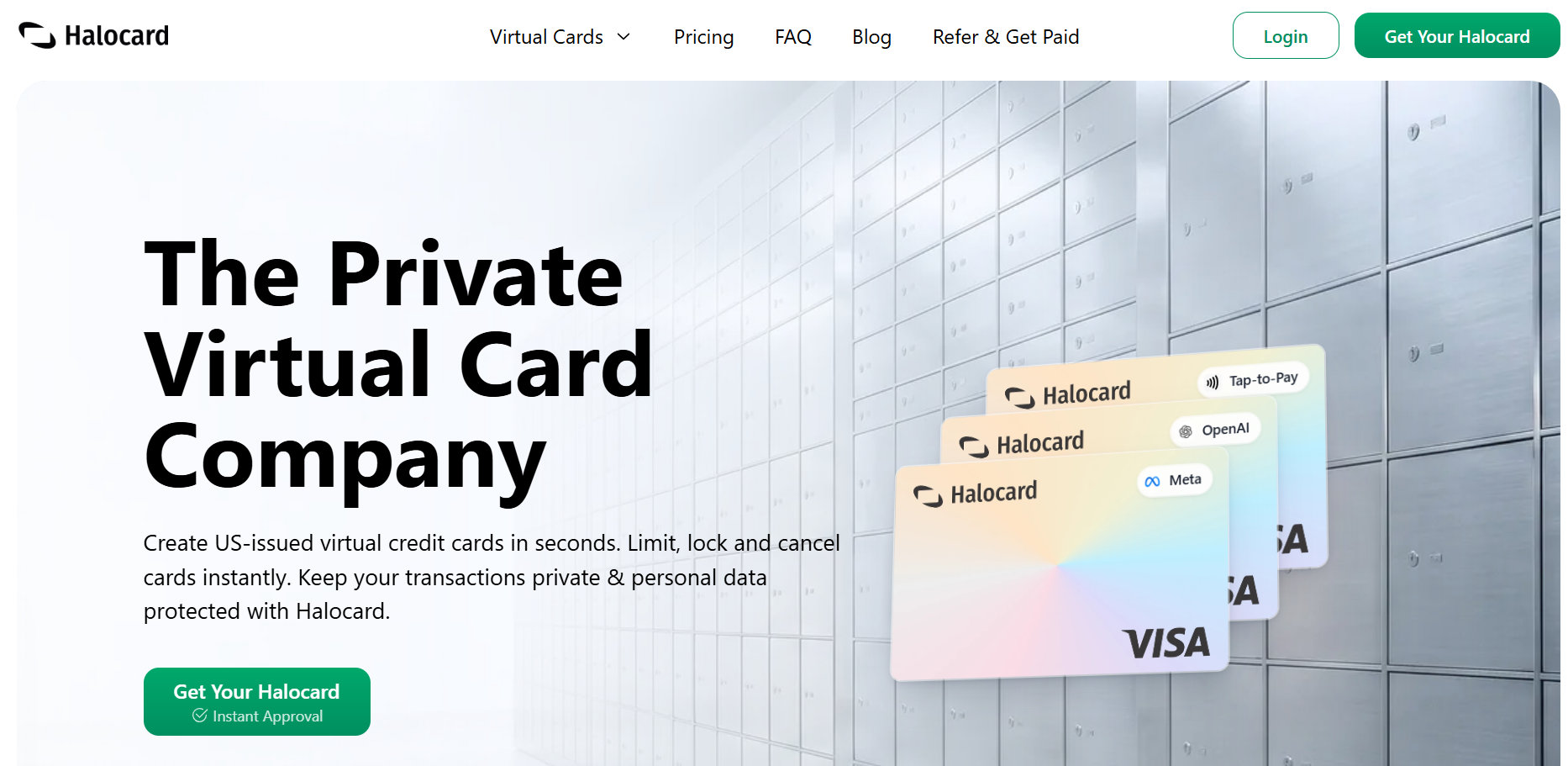
Halocard is a US-based fintech platform offering virtual and physical payment cards, built around a US-issued Visa virtual credit card that reads as domestic at American checkouts. Where US Unlocked gives you prepaid cards from a capped wallet and charges 3% to 5% to top up, Halocard verifies you once, then lets you spin up multiple cards across several plans, each with its own security code, spending limit, and billing address. For an international shopper whose home card keeps bouncing on US websites, it is the most complete upgrade here.
How Halocard Works
You sign up in a browser, no app needed, and clear a quick identity check. Non-US residents verify with a passport or national ID in under three minutes and need no SSN, while US residents supply an SSN or ITIN. Phone numbers from any country are supported. After funding, you generate virtual cards from the dashboard, naming each one and attaching a spending limit and a custom billing address.
Halocard lets you set spending limits per card, and the Pro plan lifts you from 3 cards to 12 for heavier use. Halocard cards are issued through financial partners under Visa and work for online purchases, recurring payments, and in-person taps through Apple Pay and Google Pay across more than 175 million merchants, with 3D Secure by Visa adding a layer of checkout security.
Halocard Costs & Fees
-
Essential: 3 virtual cards for $12/month or $144/year
-
Pro: 12 cards for $15/month or $180/year
-
Elite: 60 cards for $75/month or $900/year
-
Business plans from $29/month (Core, 30 cards) to $299/month (Enterprise, 500 cards)
-
USD online purchases: 0% purchase and FX fee
-
Non-USD purchases: 1.5% + $0.30 foreign transaction fee
-
Funding: debit/credit card, Apple Pay, Google Pay, bank transfer, stablecoins, or crypto
- Essential is free with 3 referrals
Set against US Unlocked's 2% to 5% + $1 load fees and $4.95/month membership, Halocard's dollar purchases carry no transaction fees at all.
Halocard Spending Limits and Funding
Halocard runs on a deposit-first model, so your ceiling is simply your loaded balance, with no credit check and no repayment cycle. Halocard customers may prefer loading funds via diverse methods including crypto or mobile payments, and the platform supports loading funds through debit/credit card, Apple Pay, Google Pay, bank transfer, stablecoins, or crypto, with bank transfers in USD, CAD, EUR or GBP.
Each card takes per-transaction, daily, and monthly spending limits, plus instant freeze and cancel, so you can kill a card the second a free trial threatens to convert. Because Halocard prioritizes privacy, security, and control in transactions, funding by crypto also keeps the deposit off your main bank account.
Halocard Key Advantages
-
US-issued virtual Visa cards recognized as domestic at US checkouts
-
No US residency, no SSN for non-US residents, and no credit check
-
A custom billing address on every card, which clears most US address-verification checks
-
Multiple funding methods, including stablecoins, crypto, cards, and bank transfer
-
0% fee on USD online payments
-
Apple Pay and Google Pay on every plan
- Physical card, free with any annual plan or $100 on a monthly plan
-
Strong separation between your purchases and your primary account details
Halocard Specific Drawbacks
-
No cash back or rewards
-
No native accounting integrations, bill pay, or receipt matching
-
A 1.5% + $0.30 FX fee applies outside USD
-
The built-in bank account is USD only
-
No permanent free plan unless you hit the referral threshold
Who Halocard Is Best For
Halocard suits freelancers, digital nomads, international shoppers, SaaS and AI-tool buyers, media buyers running Facebook and Google Ads, and privacy-focused users who need a dependable US card that a foreign debit card cannot replace. Its target customers value privacy and security over traditional banking visibility, a theme explored in our guide to virtual cards with a US billing address.
Why Someone Would Choose Halocard Over US Unlocked
The math is quick. US Unlocked charges 2% to 5% + $1 to load and caps your balance at $3,000; Halocard adds 0% on USD spend and has no such ceiling. US Unlocked's reviews describe accounts frozen after a first deposit; Halocard holds a small but positive rating, 4.2/5 (11 reviews). Halocard also gives you several cards with individual controls rather than a capped prepaid wallet. Our full Halocard vs US Unlocked comparison breaks the two down point by point.
2. StatesCard
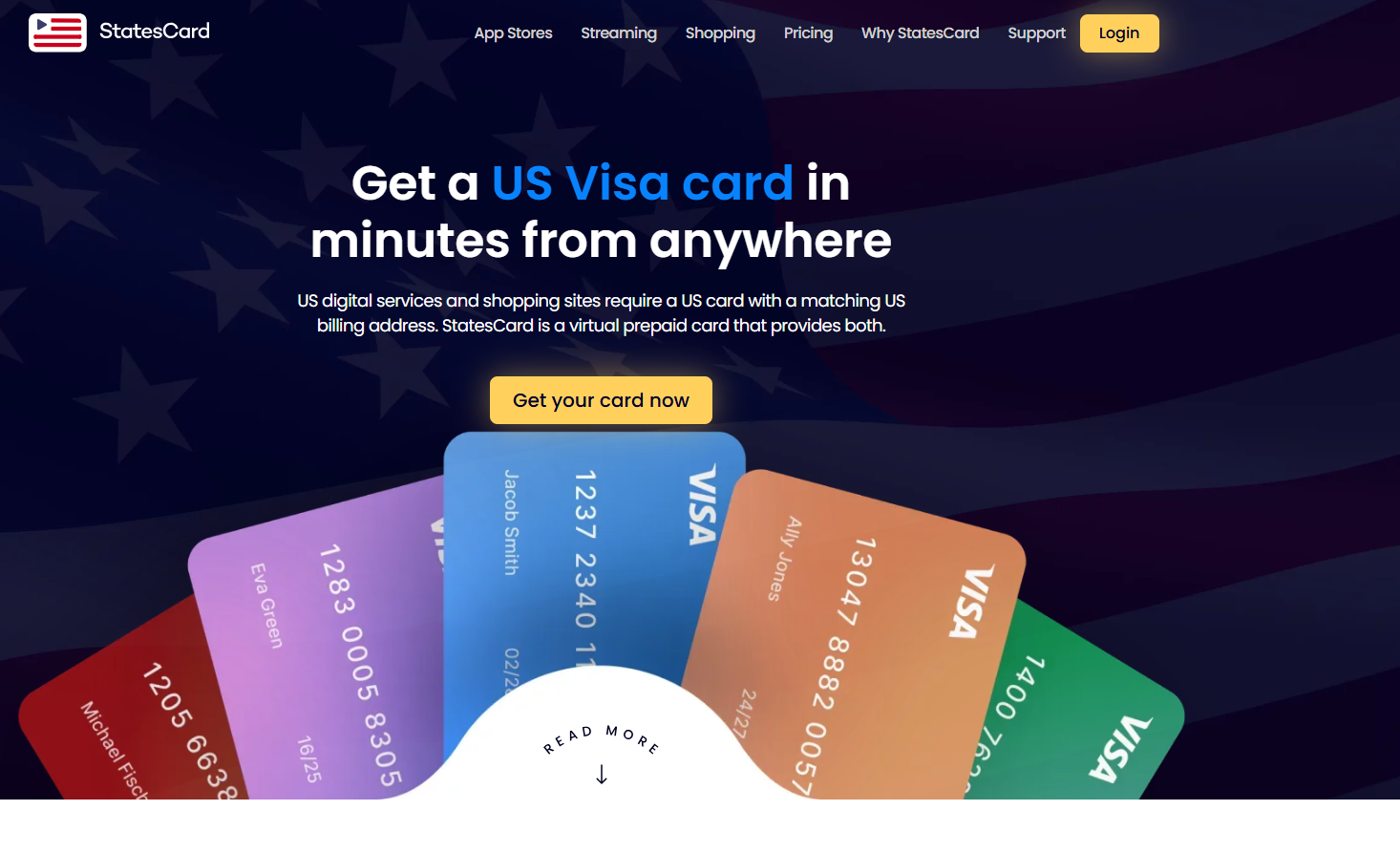
StatesCard is the most direct US Unlocked competitor, a virtual prepaid Visa debit card that hands international users US card details and a Delaware billing address for streaming, app stores, gaming, and US online shopping. If US Unlocked's model suited you but its account reviews did not, StatesCard covers nearly identical ground.
How StatesCard Works
You sign up, often in a few minutes with no upfront verification, then load funds and generate a virtual US card with its own card number, expiration date, and security code. StatesCard issues an open-to-buy card for general use plus store-locked and one-time options, and pairs each with a US billing address so checkouts that run address verification will approve. It recommends a VPN so the geolocation at checkout matches the card's US origin.
StatesCard Costs & Fees
-
One-time issuing fee: $16.99
-
Monthly fee: $3.95/month
-
No per-transaction sales fee
-
Load fees: credit card 7.5% + $0.30, PayPal 8.5% + $0.30, bank transfer around 5% + $0.30
-
StatesCard notes these load fees are set by the payment networks and issuing bank, not by StatesCard
StatesCard Spending Limits and Funding
This is a prepaid model, so you can only spend what you deposit. Loading methods include credit and debit cards, PayPal, Apple Pay and Google Pay, and bank transfer, but crypto is explicitly barred, and StatesCard blocks money-transfer and cryptocurrency merchants outright. Loading limits are modest without ID verification, typically around $100 per top-up on cards and PayPal.
StatesCard Key Advantages
-
Fast signup with a US billing address in Delaware
-
Store-locked and one-time cards for recurring payments and one-off purchases
-
No transaction fee on spending, only on loading
-
Works for HBO Max, Hulu, Prime, app stores, and general US shopping
-
No credit check and no bank account required
StatesCard Specific Drawbacks
-
The steepest load fees on this list, up to 8.5%
-
No crypto funding, which rules out many international users
-
A prepaid Visa debit BIN gets declined by merchants that reject prepaid cards
-
A Trustpilot score in the low-2s, with recurring stuck-balance complaints
Who StatesCard Is Best For
StatesCard fits non-US users who want the simplest possible route to basic US streaming and shopping and do not mind paying a premium to load.
Why Someone Would Choose StatesCard Over US Unlocked
Signup is faster and needs no immediate verification, and the Delaware billing address is a clean US profile. But its load fees run higher than US Unlocked's, and its review record is similar, so this is a lateral move rather than a clear upgrade. For a bigger step up on fees and reliability, weigh both against Halocard in our Halocard vs StatesCard comparison.
3. Privacy.com
Privacy.com is the mature US name in virtual payment cards, built to wall off each online purchase from your real checking account. It is the reference standard for merchant-locked cards, with one catch that rules out most US Unlocked users: it serves US residents only.
How Privacy.com Works
Privacy is open to US citizens or legal residents aged 18 and up who link a checking account at a US bank or credit union; non-US users and foreign bank accounts are not supported. Once connected, you create cards that lock to a single merchant, close after one use, or cap at a transaction, monthly, or total limit. A browser extension autofills fresh card details at checkout, so generating a new card per site takes seconds.
Privacy.com Costs & Fees
-
Personal: $0/month, up to 12 new cards per month
-
Plus: $5/month or $60/year, up to 24 cards
-
Pro: $10/month or $120/year, up to 36 cards
-
Premium: $25/month or $300/year, up to 60 cards
-
Personal and Plus: 3% foreign transaction fee (minimum $0.50)
-
Pro and Premium: 0% FX plus 1% cash back up to $4,500 a month
Privacy.com Spending Limits and Funding
Cards draw from your linked US checking account, so this is not a loaded prepaid balance. You can cap or close any card without touching your main bank account, and merchant-locked cards can only be charged by the retailer you assign, which reduces fraud risk if a number leaks. Single-use cards close automatically after one transaction.
Privacy.com Key Advantages
-
A genuinely useful free tier for US residents
-
Merchant-locked cards that limit charges to one vendor
-
One-time cards for disposable, single purchases
-
Granular spending limits and a fast browser extension
-
A strong, deep review record and mature security
Privacy.com Specific Drawbacks
-
US-only, requiring a US checking account, which excludes most US Unlocked users
-
KYC and identity verification required
-
3% international fee on the free and Plus tiers
-
No multi-currency or international transfer tools
Who Privacy.com Is Best For
Privacy.com is ideal for US residents managing subscriptions, free trials, and online purchases who want per-merchant card exposure rather than one shared card number.
Why Someone Would Choose Privacy.com Over US Unlocked
For anyone actually in the US, Privacy.com is the better product on nearly every axis: a free tier, merchant-locked and one-time cards, and a far stronger reputation. It only loses on eligibility. If you are outside the US, Privacy.com cannot help and Halocard or StatesCard will. We pit it against Halocard in our best Privacy.com alternatives roundup and in focused pieces like Privacy.com vs IronVest vs Halocard.
4. RedotPay

RedotPay is a crypto and stablecoin payment platform rather than a classic card issuer, aimed at people whose money already sits in digital assets. It reports more than 8 million users across 100-plus countries and says its cards are accepted at over 130 million merchants.
How RedotPay Works
You verify your identity, top up a RedotPay balance with crypto or stablecoins, and issue a virtual or physical card. Virtual cards link to Apple Pay, Google Pay, or PayPal, so once created you spend through familiar digital wallets. It is a clean example of loading funds via crypto to enable international transactions while adding a layer of anonymity between your assets and the merchant.
RedotPay Costs & Fees
-
Virtual card issuance: $10 one-time
-
Physical card: $100
-
RedotPay Pro: $12.90/month or $129/year
-
Pro gives 3% cash back on qualifying Apple Pay and Google Pay spend, capped at $18/month
-
Some merchants, including Facebook Ads, carry a 1.5% transaction fee (minimum $0.50) after three monthly waivers per card
RedotPay Spending Limits and Funding
RedotPay draws its balance mainly from crypto and stablecoins, with swaps, transfers, and P2P tools built into the wider app. How much a card can spend depends on your tier and how far you have verified.
RedotPay Key Advantages
-
Stablecoin and crypto funding for international spending
-
Virtual and physical cards
-
Apple Pay and Google Pay support
-
A large claimed global footprint and merchant network
-
A crypto-to-payment ecosystem in one app
RedotPay Specific Drawbacks
-
Requires identity verification and is not a bank account
-
Crypto-linked products add complexity and market risk
-
Some merchants carry extra fees, and it is a non-US BIN
-
A Trustpilot score around 3.1, with a high-risk-investment notice on the profile
Who RedotPay Is Best For
RedotPay is best for users whose finances already start in crypto and who want to turn stablecoins into everyday card spending.
Why Someone Would Choose RedotPay Over US Unlocked
If you hold USDT or USDC, RedotPay turns it into card spending more directly than US Unlocked's crypto-load-then-prepaid route. It does not, however, issue a US card or US billing address, so it solves a different problem. Our RedotPay vs Halocard comparison covers where a US-issued card wins.
5. Wise
Wise, formerly TransferWise, is a multi-currency account with virtual and physical debit cards, best known for transparent transfers at the mid-market rate. It is less a US Unlocked replacement than a broader money tool, but for many international users it removes the need for a specialist US card.
How Wise Works
You open an account, hold balances in 40+ currencies with local bank details in several, and issue virtual and physical debit cards. Cards spend in 160-plus countries with automatic conversion at the mid-market rate, and you can hold multiple virtual cards, freeze them instantly, and assign each to a purpose. Transfers show a visible percentage fee rather than a hidden markup.
Wise Costs & Fees
-
No monthly subscription fee
-
One-time account opening fee, around €50 in the EEA, varying by region
-
Physical card from roughly $9 in the US; virtual cards generally free
-
Transfer fees typically 0.33% to 1.0% of the amount
-
ATM withdrawals free to a monthly threshold, then a small fee plus percentage
Wise Spending Limits and Funding
Wise cards run on a balance model, so spending is limited to your available funds across currencies. You can create multiple virtual cards, freeze them, and auto-convert at spend time when a currency balance is empty.
Wise Key Advantages
-
No monthly fee and genuinely transparent pricing
-
Mid-market exchange rates with no hidden markup
-
Balances in 40+ currencies, card spend in 160-plus countries
-
Multiple virtual cards, free to create
-
Broad international availability with no US-entity requirement
Wise Specific Drawbacks
-
Not a US-issued card, so it is not tuned for US billing-address checks
-
No credit product, rewards, or cash back
-
Some ATM and conversion fees still apply
-
Not a spend-management or subscription-control tool
Who Wise Is Best For
Wise fits freelancers, travelers, and small international businesses whose priority is cheap cross-border payments and simple multi-currency card spend rather than a card that mimics a US profile.
Why Someone Would Choose Wise Over US Unlocked
Wise wins on transparency and multi-currency reach, with no monthly fee and no punishing load charges. It falls short if your specific problem is a US billing address that foreign cards fail, since it issues a home-region card. Where US Unlocked is a narrow US-access tool and Wise is a broad platform, Halocard sits between them, as our Revolut vs Wise vs Halocard comparison explains.
6. Revolut
Revolut bundles international transfers, currency exchange, budgeting, and both regular and disposable virtual cards in one app. For US Unlocked users, its appeal is disposable cards and multi-currency spending rather than US-specific access.
How Revolut Works
You create regular virtual cards instantly, up to 20 active at once, with a cap of five new cards in any rolling 30-day window. Revolut also offers a single-use disposable card whose details regenerate after each purchase or 24 hours, though disposable cards cannot be used for subscriptions, recurring payments, deposits, ATMs, or mobile wallets. Standard virtual cards, unlike the disposable ones, do work with Apple Pay and Google Pay.
Revolut Costs & Fees
-
Standard: $0/month
-
Premium: $9.99/month or $94.99/year
-
Metal: $16.99/month or $149.99/year
-
Bank-transfer funding: no Revolut load fee; card funding up to 1% to 3%
-
Currency exchange: the first $1,000 a month free during market hours, then 1%, with 1% off-market
Revolut Spending Limits and Funding
Revolut checks the transaction currency, then your base balance, then another funded balance, letting you handle multiple currencies without converting before each purchase. Spending is limited to your available funds.
Revolut Key Advantages
-
A free plan with up to 20 active virtual cards
-
A disposable single-use card for one-off purchases
-
Multi-currency features and international transfers
-
Apple Pay and Google Pay
-
Budgeting tools, savings, and broader banking-style services
Revolut Specific Drawbacks
-
Features and pricing vary a lot by country
-
Standard users hit fair-use and off-market FX fees
-
Not designed to give non-US residents US card credentials
-
Disposable cards cannot handle subscriptions
Who Revolut Is Best For
Revolut fits travelers, expats, and internationally active users who want disposable cards, budgeting, and multi-currency spend in one app.
Why Someone Would Choose Revolut Over US Unlocked
Revolut offers a free tier and genuine multi-currency tools US Unlocked lacks. Like Wise, though, it does not solve the US-billing-address problem, so shoppers who keep failing US checkouts may still need a US-issued card alongside it.
7. Payoneer
Payoneer is a business-focused cross-border payments platform for freelancers, agencies, sellers, and companies receiving international payments. It is less about private shopping and more about receiving revenue and spending it via cards.
How Payoneer Works
Eligible customers create virtual cards quickly and can issue hundreds, or thousands at scale, for advertising, suppliers, subscriptions, and other company spend. Cards draw directly from balances in USD, EUR, GBP, CAD, or JPY, so the flow is receive, hold, spend.
Payoneer Costs & Fees
-
Annual card fee: $29.95
-
Additional virtual cards: free
-
Purchases without conversion: up to 1.8%, some same-currency purchases free
-
Transactions involving conversion: up to 3.5%
-
A separate $29.95 annual account fee may apply below $6,000 received in 12 months
Payoneer Spending Limits and Funding
Corporate cards support very high daily spend, subject to approval, and eligibility generally needs at least $100 received into the account in the prior six months. Payoneer does not currently issue cards to addresses in Russia or India.
Payoneer Key Advantages
-
Business accounts for cross-border earnings
-
Hundreds of virtual cards, with free additional cards
-
Very high approved spending limits and no credit check
-
QuickBooks, Xero, and NetSuite integrations
Payoneer Specific Drawbacks
-
Business use only, not for private shoppers
-
Annual card fee plus a possible annual account fee
-
FX fees up to 3.5% with conversion
-
Trustpilot currently shows a guidelines-breach notice after fake reviews were removed
Who Payoneer Is Best For
Payoneer suits freelancers and businesses already paid by international clients or marketplaces who want to spend those balances via cards.
Why Someone Would Choose Payoneer Over US Unlocked
Payoneer makes sense when your money arrives as international revenue and you want to spend it without first moving it to a bank. For simple personal US streaming or shopping, it is heavier than you need.
8. Airwallex
Airwallex is a global financial platform for businesses, offering multi-currency accounts, low-markup FX, corporate cards, and expense management. As with Payoneer, this is built for companies rather than individuals chasing US access, yet it ranks among the best choices for businesses operating across borders.
How Airwallex Works
Companies set up Global Accounts carrying local bank details across 20-plus currencies, then hand out unlimited Visa corporate cards in virtual or physical form. Cards can link to specific currency wallets to avoid needless conversion, with spending controls and approval workflows per card.
Airwallex Costs & Fees
-
Explore: free in the US, with conditions elsewhere
-
Grow: around $12 per active spend user per month plus a platform fee
-
FX markup: 0.5% on major currencies, 1.0% on others
-
No international transaction fees on cards, with 2% cash back on eligible spend under promo terms
Airwallex Spending Limits and Funding
Card limits are set per card and per wallet, funded from multi-currency balances rather than a credit line. Unlimited virtual and physical cards are available by plan, with instant issuance, freeze, and Apple Pay and Google Pay support.
Airwallex Key Advantages
-
Low FX markup versus traditional banks
-
Multi-currency accounts in 20-plus currencies with local details
-
Genuinely global, with no US-entity requirement
-
Corporate cards, expense management, and payment acceptance together
Airwallex Specific Drawbacks
-
Built for businesses, not personal shoppers
-
Free access outside the US is conditional on balances or deposits
-
Reviewers report account reviews and held funds in some cases
-
A Trustpilot score around 3.0
Who Airwallex Is Best For
Airwallex fits businesses moving money across borders that need multi-currency accounts and corporate cards together, including companies with no US entity.
Why Someone Would Choose Airwallex Over US Unlocked
A cross-border company can fold several tools into Airwallex and get far better FX economics than any prepaid card delivers. For a single person covering a US streaming bill, it is more machinery than the job needs, where a dedicated US virtual card is better sized.
9. N26
N26 is a fully licensed European digital bank, not a dedicated virtual card provider. It earns a slot for European users who want a real bank account with virtual and physical debit cards, though it does nothing to hand you a US billing address.
How N26 Works
The free N26 Standard tier comes with a single virtual Mastercard, unlocked once you top up a one-time €10 activation balance. Standard users can add extra virtual cards for €2.59 each, up to 6 active, while paid plans include extra virtual cards free. Cards spend from your N26 account and work with Apple Pay, Google Pay, Samsung Pay, and Garmin Pay.
N26 Costs & Fees
-
Standard: free
-
Smart: €4.90/month
-
Go: €9.90/month
-
Metal: €16.90/month
-
Standard and Smart charge 1.7% on non-euro ATM withdrawals; Go and Metal waive it
N26 Spending Limits and Funding
Cards spend from your N26 balance, and paid plans include up to 10 Spaces sub-accounts for organizing money and budgeting toward goals.
N26 Key Advantages
-
A full European bank account with deposit protection
-
A free virtual card on Standard, up to 6 virtual cards
-
Physical debit cards and broad mobile-wallet support
-
Budgeting automations and sub-accounts
N26 Specific Drawbacks
-
Limited to supported European markets
-
No US-issued cards or US billing address
-
Premium features require monthly fees
-
A Trustpilot rating of 4.2/5, but with a notable cluster of account-related complaints
Who N26 Is Best For
N26 fits European residents who want everyday banking, budgeting, and card spending in one app, not international shoppers chasing US access.
Why Someone Would Choose N26 Over US Unlocked
For a European who wants a genuine bank account with virtual cards attached, N26 is a far more capable home for your money than a prepaid US wallet. But if your issue is a US service rejecting European cards, N26 does not fix it, and a US-issued option like Halocard does.
10. SiraPay
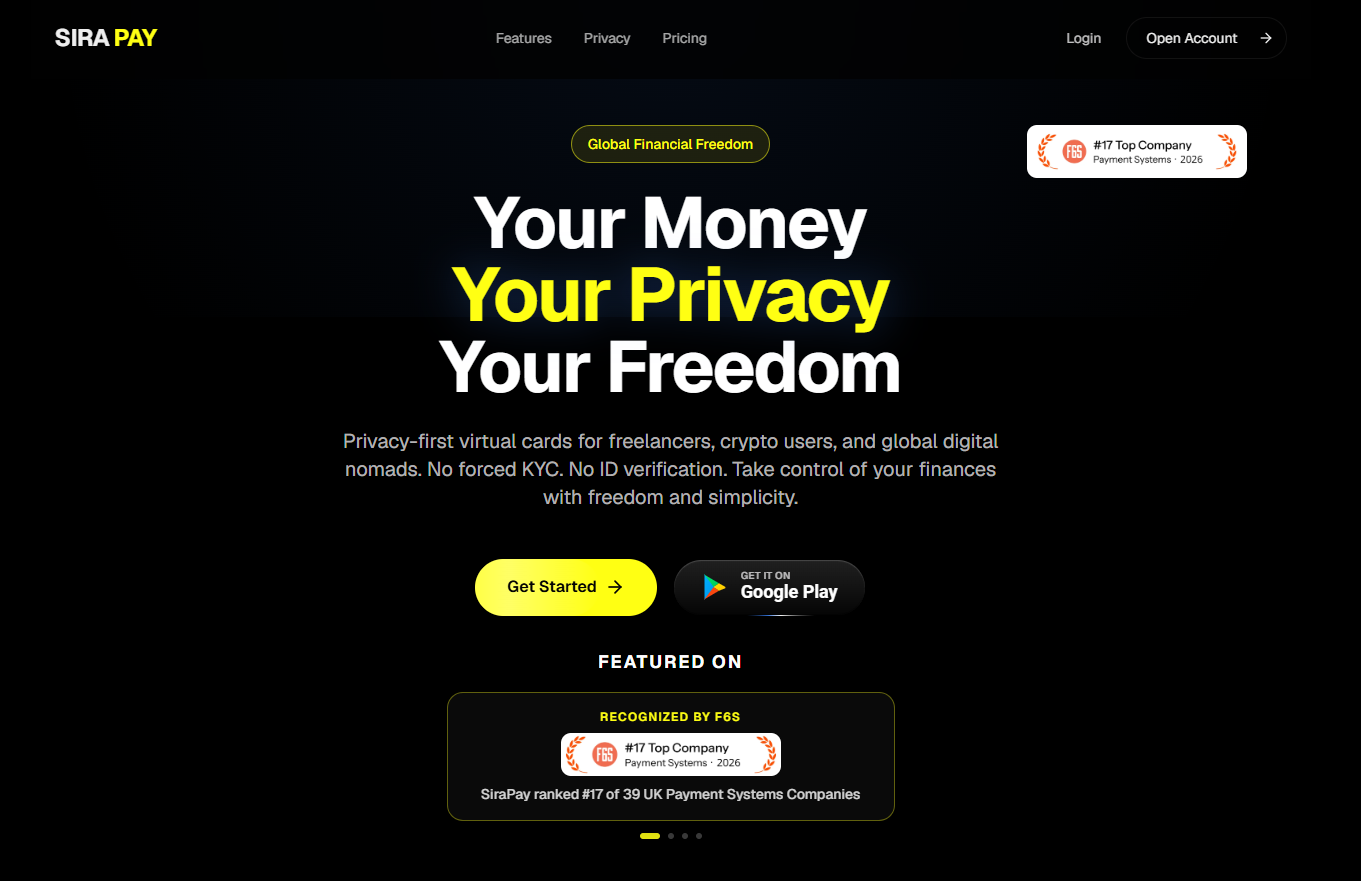
SiraPay is a newer privacy-focused virtual card service marketed at freelancers, crypto users, and digital nomads who want minimal onboarding. It is the lightest-touch option here, with the trade-offs of a short track record.
How SiraPay Works
SiraPay says onboarding needs no facial verification or government ID, collecting only basic details for regulatory purposes; treat that as its current claim rather than a guarantee. You can create up to five virtual cards, and its FAQ cites coverage across 150-plus countries and acceptance at more than 150 million merchants.
SiraPay Costs & Fees
-
A free-forever plan advertised
-
Monthly card: $0.99/month
-
Yearly card: $4.99/year
-
Up to five virtual cards
Its fees page lists a 1.5% fee on payments in a currency other than US dollars, but answers "Check the app" for card prices and top-up fees.
SiraPay Spending Limits and Funding
SiraPay's marketing mentions crypto and fiat top-ups, but its detailed FAQ currently names Binance Pay (USDT) as the accepted deposit method, with more promised later. Confirm current funding options before signing up.
SiraPay Key Advantages
-
Very low published card pricing
-
Up to five virtual cards
-
Privacy-first positioning with minimal onboarding
-
International focus and crypto-native funding
SiraPay Specific Drawbacks
-
A newer service with limited operating history
-
A less transparent fee structure
-
Deposit options currently narrower than the marketing implies
-
Country and onboarding claims should be verified for your location
Who SiraPay Is Best For
SiraPay suits users who prize low cost, crypto funding, and fast onboarding and can accept a younger service.
Why Someone Would Choose SiraPay Over US Unlocked
SiraPay's $0.99 monthly card undercuts US Unlocked's $4.95/month membership sharply, and its onboarding is lighter. The trade-off is maturity: US Unlocked has years of history, while SiraPay is still proving itself. Test it with a small balance first.
11. Payz (formerly ecoPayz)
Payz, known as ecoPayz until its rebrand, is one of the world's longest-running e-wallets, founded in 2000 and operated by the FCA-regulated PSI-Pay in the UK. It offers a multi-currency account with a virtual prepaid Mastercard and, for higher tiers, a physical card, and it is widely used for gaming, betting, and trading.
How Payz Works
You open a Payz account, verify, and load funds, then use the ecoVirtualcard for online payments or the physical ecoCard where eligible. Payz supports more than 40 currencies across 170-plus countries and moves money by bank transfer, card, and crypto. A tiered VIP program (Silver up to Platinum) lowers fees and raises limits as your activity grows.
Payz Costs & Fees
-
Virtual card issuance fee around €1.80
-
Around a 4% fee on transactions made with the virtual card
-
The physical ecoCard prepaid Mastercard is reserved for VIP tiers, not standard users
-
Withdrawal and currency-conversion fees that shrink with VIP status
Payz Spending Limits and Funding
Balances and card limits scale with your VIP tier, and one-time virtual cards are available for more secure, single transactions. Funding runs through bank transfer, cards, and crypto rather than a US-specific rail.
Payz Key Advantages
-
A long, FCA-regulated track record and strong support reputation
-
Virtual and (for VIPs) physical Mastercards
-
40-plus currencies and 170-plus countries
-
One-time virtual cards for secure transactions
-
Popular and accepted across gaming, betting, and trading sites
Payz Specific Drawbacks
-
Around a 4% virtual card transaction fee is high for everyday shopping
-
The physical card requires VIP status
-
No US-issued card or US billing address
-
Oriented to gambling and trading rather than US retail
Who Payz Is Best For
Payz fits users who want a multi-currency e-wallet with a virtual Mastercard, particularly for gaming, betting, or trading deposits rather than US store shopping.
Why Someone Would Choose Payz Over US Unlocked
Payz is more established and covers more currencies and countries, and its support is well regarded. But its roughly 4% virtual card fee and lack of a US billing address make it a poor fit for the core US-shopping job US Unlocked exists to do, so it is an alternative only if your real need is a global e-wallet.
12. Ezzocard
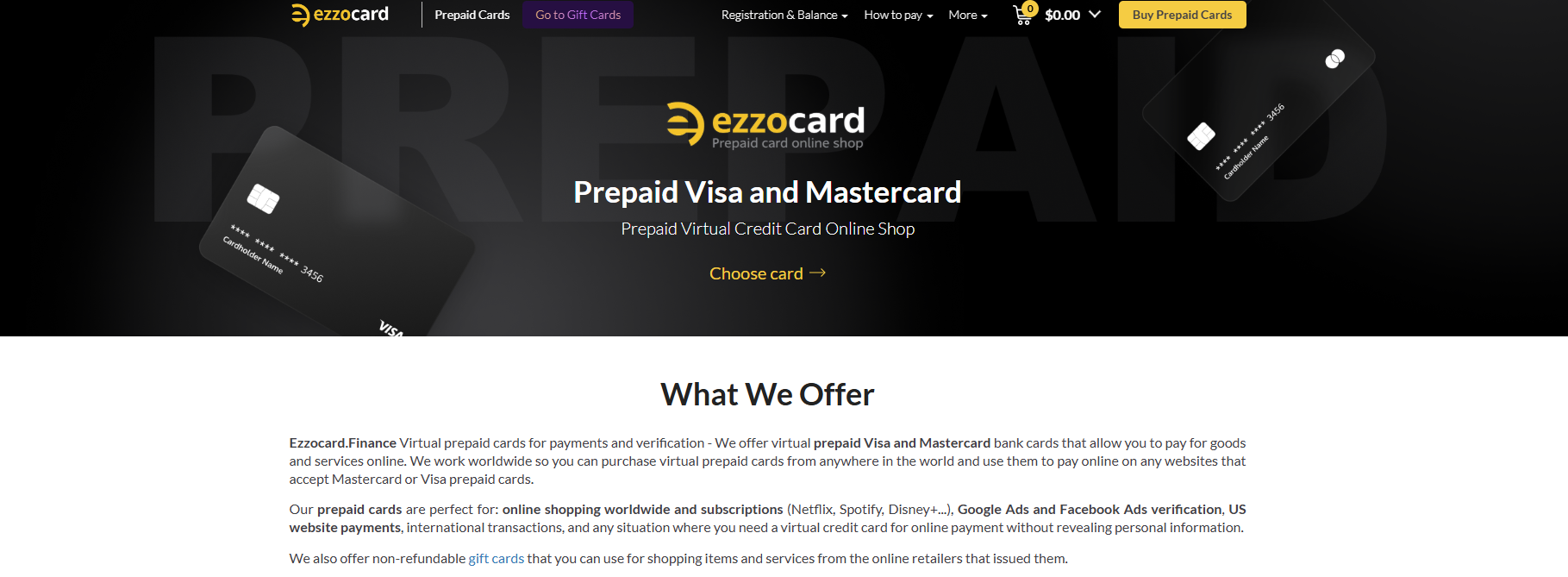
Ezzocard sells anonymous prepaid virtual Visa and Mastercard cards funded with cryptocurrency, aimed at users who want to buy online without an account or ID. It is the most privacy-maximal option here, with the reliability trade-offs that come with it.
How Ezzocard Works
You pick a preloaded card denomination, pay with crypto, and receive the card number, expiration date, and security code, with no registration or KYC. The cards are prepaid and non-reloadable: you spend the balance and discard the card, which makes each one effectively a one-time or short-life instrument.
Ezzocard Costs & Fees
-
You pay the card's face value plus a markup, funded in crypto
-
No monthly fee, since there is no account
-
No reloading, so each new card is a fresh purchase
Ezzocard Spending Limits and Funding
Your limit is the card's preloaded amount, and funding is crypto only. There are no per-card controls, no dashboard, and no billing-address customization, so the card is what it is once issued.
Ezzocard Key Advantages
-
No account, no registration, and no credit check
-
Maximum anonymity, funded by crypto
-
Prepaid balances cap your exposure per card
-
Useful for quick, one-off anonymous purchases
Ezzocard Specific Drawbacks
-
Frequently declined at US checkouts, especially those running address verification
-
No US billing address you can set, and non-reloadable cards
-
No spending controls, dashboard, or meaningful support
-
A weak reliability reputation compared with account-based providers
Who Ezzocard Is Best For
Ezzocard fits users whose top priority is anonymity for a one-off online purchase and who accept a higher chance of a decline.
Why Someone Would Choose Ezzocard Over US Unlocked
Ezzocard needs no account, no ID, and no monthly fee, which appeals to privacy purists. But it lacks the US billing address, reusable cards, and controls that make US Unlocked usable for US shopping, so it trades reliability for anonymity. Our Ezzocard vs Halocard comparison covers the gap.
13. DoNotPay
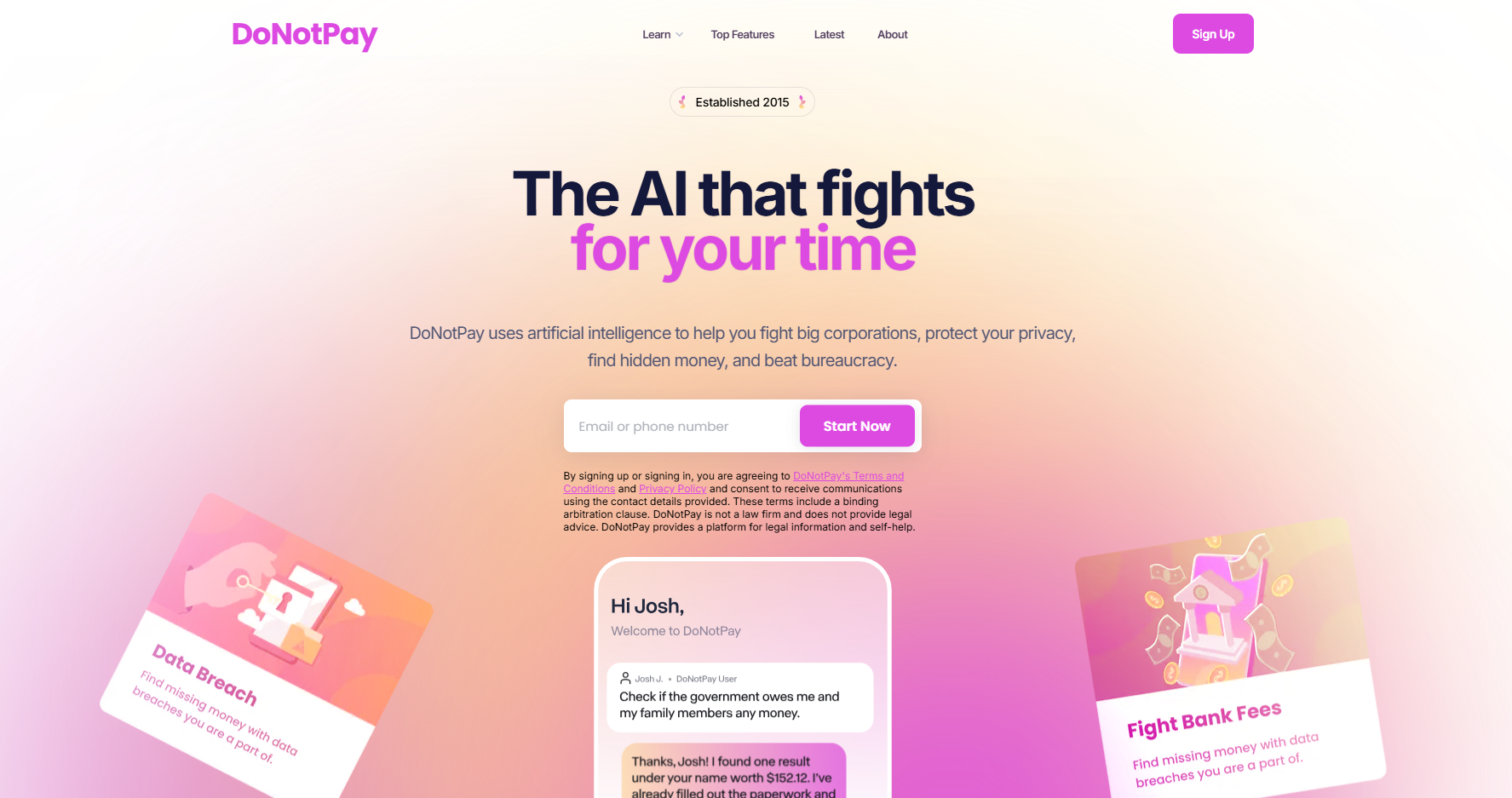
DoNotPay is a US consumer-help app whose Free Trial Card is a narrow but clever tool: a virtual card that signs up for free trials and then declines any real charge. It is not a general US shopping card, but it solves one specific US Unlocked use case cleanly.
How DoNotPay Works
Inside DoNotPay, you generate a virtual card number, expiration date, and security code that a merchant accepts as a valid card. Crucially, it is not linked to any bank account or balance, so when the free trial ends and the merchant tries to charge, the transaction is declined and no money moves. It comes with a US billing address, which lets non-US users start US-restricted free trials.
DoNotPay Costs & Fees
-
The Free Trial Card is part of DoNotPay's subscription app rather than a standalone card
-
No load fees, since the card holds no money
-
It cannot be used for real purchases at all
DoNotPay Spending Limits and Funding
There is nothing to fund: the card carries no balance by design. Its entire purpose is to authenticate a free-trial signup and then block the follow-up charge, protecting your real card details in the process.
DoNotPay Key Advantages
-
Purpose-built to prevent charges after free trials
-
Comes with a US billing address for US-restricted trials
-
Never exposes your real banking information
-
No deposit or load fees
DoNotPay Specific Drawbacks
-
Works for free trials only, not for any real purchase or subscription you want to keep
-
Tied to the broader DoNotPay app rather than a dedicated card service
-
DoNotPay has faced regulatory scrutiny over some of its marketing claims
-
No use for general US shopping, streaming you intend to pay for, or ongoing spend
Who DoNotPay Is Best For
DoNotPay suits people who mainly want to test free trials without risking an unwanted charge, not those who need a working US card for real spending.
Why Someone Would Choose DoNotPay Over US Unlocked
If your only goal is dodging surprise charges after a free trial, DoNotPay does it without any load fees. But it cannot buy anything, so for actual US shopping or subscriptions you intend to keep, US Unlocked, or better, Halocard, is the tool you need.
What Users Think About These US Unlocked Alternatives
Review scores move constantly, and Trustpilot skews negative because happy users rarely post, so weigh each figure against review volume, recency, and what the complaints describe. The scores and quotes below were checked against Trustpilot, the App Store, and independent review sources and paraphrase real reviews with short attributed excerpts.
For scale, the US Federal Trade Commission logged more than 2.3 million fraud reports in a single recent year, with losses near $9 billion, which is exactly the risk a well-run virtual card is built to shrink.
US Unlocked
On Trustpilot, US Unlocked lands at 1.9/5 across 114 reviews, and more than half of them sit at a single star. The most repeated recent complaint is an account placed under review soon after a first deposit, then left restricted while the monthly fee keeps billing; one reviewer said flatly they could not access their card or funds.
Others report repeated failures to generate a card after loading money, or declines at US merchants the site lists as supported, and one long-standing complaint describes funds shown as "pending deposit" for years. Balanced reviews exist: one calls the service functional but the fees "simply abusive," and a Canadian user was pleased to finally stream Hulu after years of billing-address rejections.
A key accuracy note is that US Unlocked has narrowed its funding options for several countries over time, with support confirming, for instance, that it has no load method for Sweden, so international coverage is thinner than it once was.
Halocard
Halocard holds a small but consistently positive Trustpilot presence, 4.2/5 (11 reviews), a sample too small to lean on heavily, which we would rather state plainly. The theme is a specific problem solved: reliable access to US-issued virtual cards for non-US users. Real reviewers describe a smooth setup on the privacy-focused GrapheneOS operating system with no issues and helpful support, and one calls it easy to configure and affordable.
Others cite steady payment approval and per-card controls, with the odd early SMS or Apple Pay activation delay that support cleared. The recurring criticism is the subscription model, though several add that the reliability earns the fee. Independent scanners including Scamadviser and Scam-Detector rate the site legitimate and low-risk, and Halocard now advertises physical cards alongside its virtual ones.
StatesCard
StatesCard carries a Trustpilot score of 2.1/5 from 57 reviews. The dominant theme is access: cards that expired or were revoked with no replacement, leaving balances stranded, and support that stalls. A more balanced three-star review noted the card stopped working in late 2024 but that the balance was eventually refunded.
Positive reviews cluster among long-term streamers, and StatesCard's homepage carries provider-published testimonials from customers in Canada, the UAE, and Iceland. A structural caveat is that StatesCard is a prepaid debit card and publishes its own list of merchants that reject prepaid cards, while barring crypto and money-transfer use.
Privacy.com
Privacy.com holds 4.5/5 from 3,358 reviews, roughly 89% five-star, the strongest record among the dedicated virtual card providers here. It runs on card-issuing infrastructure from its parent, Lithic, and reviewers praise whitelisting a merchant on a locked card, setting caps, and keeping their real numbers off the web; one mentions hearing about it on the Dave Ramsey show and using limits to avoid overspending.
The service is also adding crypto as a payment method. The main negatives are account closures without clear warning and slow refunds, since a refund to a closed single-use card can take up to 14 business days or fail. For US residents it is the benchmark; for non-US users it is simply unavailable.
RedotPay
RedotPay, a Hong Kong-based crypto card licensed there as a money service operator, has climbed to around 3.3/5 on Trustpilot from roughly 1,013 reviews, about 54% five-star against 33% one-star, alongside a much stronger App Store rating from 2,600-plus ratings.
It works well for everyday stablecoin spending, but the serious complaints recur: declined-transaction fees charged even after a card was frozen, with support conceding that freezing "cannot prevent merchants from initiating authorization," and one widely cited case where a roughly €697 balance was held for 87 days until the customer escalated to Hong Kong authorities. The practical consensus is to use small amounts and avoid parking a large balance.
Wise
Wise holds 4.3/5 from 300,000+ reviews. Reviewers value the multi-currency balances, transparent fees, and international transfers, with criticism aimed at occasional compliance checks, account freezes, and slower support on complex cases.
Revolut
Revolut shows 4.7/5 from 470,000+ reviews, though that figure reflects the consumer app broadly. Positive feedback highlights fast setup, transfers, and multi-currency handling, while negatives cluster on account restrictions, freezes, and support quality.
Payoneer
Trustpilot is presently holding back a standard Payoneer rating, pointing to a guidelines breach and a batch of fake reviews it removed. The profile still holds tens of thousands of reviews, but the warning means the displayed distribution should not be read as a reliable rating.
Airwallex
Airwallex sits at 2.8/5 from 2,582 reviews, split between strong praise for account managers and multi-currency accounts and serious complaints about account terminations and balances held for extended periods.
N26
N26 holds 4.2/5 from 43,100 reviews, more polarized than the headline suggests, roughly 63% five-star against 22% one-star. Positive comments focus on the app and digital-banking experience; negatives raise disputes, account freezes, and fraud resolution.
SiraPay
SiraPay's Trustpilot profile had only 3 reviews when we checked in October 2026. The testimonials on its own site come mostly from its Product Hunt launch and are positive about onboarding and pricing, but because they are provider-published and the public footprint is small, they carry far less weight than the large independent samples for Revolut, N26, or Privacy.com.
Payz (ecoPayz)
Payz has a long history and a generally solid reputation, particularly for support, and one recent Trustpilot reviewer reported that the virtual card and crypto deposits worked well while noting transfer fees felt a bit high. As with any e-wallet tied to gambling and trading, complaints tend to involve verification and withdrawal timing rather than the card itself.
Ezzocard
Ezzocard has a thin, mixed public review footprint, which is typical of no-account anonymous card sellers. Users who want a quick, private one-off card sometimes report success, but declines at US checkouts and the absence of support or recourse are the standard criticisms, so it is best treated as a spend-small, expect-nothing tool.
DoNotPay
DoNotPay's virtual card draws praise for exactly one thing: stopping charges after a free trial. Coverage in outlets like the BBC and Wired lends it visibility, though the company has faced regulatory scrutiny over broader "robot lawyer" claims, so judge the Free Trial Card on its narrow merits rather than the wider app's marketing.
How to Get Halocard
If you need a US Unlocked alternative that reliably behaves like a US card at checkout and works for people outside the United States with no credit check, Halocard is the strongest option on this list.
It issues US-based virtual Visa cards with a custom billing address on every card, supports funding through debit/credit card, Apple Pay, Google Pay, bank transfer, stablecoins, or crypto, applies per-transaction, daily, and monthly spending limits with instant freeze, and uses 3D Secure by Visa.
Since your spending comes from money you have already deposited rather than a linked bank account, no credit check applies and no card can be frozen because a cash reserve slipped, while your purchases remain walled off from your primary account details. Halocard will not give you a full multi-currency bank account today, and it does not pay cash back, but for getting a working US card into the hands of someone whose foreign card keeps failing, it is purpose-built.
For related reading, see the best virtual credit card options for small business, the ultimate guide to virtual cards, and our comparisons of US Unlocked vs Halocard and StatesCard vs Halocard. You can also learn more about the cards themselves and how Halocard handles your privacy.
Step-by-Step
-
Open a Halocard account in a browser.
-
Complete identity verification with a passport or national ID; no SSN is required for non-US residents.
-
Deposit funds using debit/credit card, Apple Pay, Google Pay, bank transfer, stablecoins, or crypto.
-
Generate a virtual card, assign it a billing address and spending caps, then drop it into Apple Pay or Google Pay.
-
Begin paying US merchants, freezing or closing any card the moment you are done with it.
Frequently Asked Questions
How Do Virtual Card Services Work for Shopping US Online Stores From Abroad?
Virtual card services generate a card number, expiration date, and security code you enter at checkout in place of a physical card, and the best ones for international users pair that with a US billing address so US online stores approve the transaction. A US-issued virtual Visa card looks domestic to the merchant, which sidesteps the regional blocks and address-verification failures that reject a foreign card. Our guides on how virtual credit cards work and how to use a virtual card walk through the mechanics step by step.
What Is the Best Virtual Card Provider With a US Billing Address?
For a genuine US billing address, Halocard, StatesCard, and US Unlocked are the main options, since each issues US-format card details to non-US users. Halocard is the best virtual card provider of the three for reliability and cost, with a custom billing address on every card, 0% fees on USD online payments, and acceptance at 175 million-plus merchants.
StatesCard and US Unlocked are prepaid alternatives, but their higher load fees and weaker reliability make them fallbacks. Our explainer on virtual cards with a US billing address covers why address verification trips up foreign cards.
Can I Get a Virtual Credit Card Online Without a Credit Check or Bank Account?
Yes. Most virtual card providers here issue a virtual credit card or prepaid card without a credit check, because you fund the card before you spend rather than borrowing.
Halocard, StatesCard, RedotPay, SiraPay, and Ezzocard all skip the credit check and need no US bank account, while Privacy.com and US Unlocked require identity verification and, in Privacy's case, a linked US checking account. Our step-by-step guide on how to get a virtual credit card online covers the process for both US and international users.
How Do Prepaid Cards and One-Time Cards Prevent Unwanted Charges?
A prepaid card can only spend its loaded balance, so a forgotten subscription cannot quietly drain your account, and a one-time card is configured to close automatically after a single transaction, which prevents any further purchases.
Merchant-locked cards go further, limiting charges to one specific vendor, so a leaked number is useless elsewhere. Together they make powerful subscription-control tools: dedicate one card to a service, set a spending limit that matches the price, and freeze it to stop a renewal, an approach detailed in our guide to managing SaaS subscriptions with virtual cards.
Which US Unlocked Alternatives Support Crypto, Apple Pay, and Bank Transfer?
Plenty. You can deposit funds by cryptocurrency with Halocard, RedotPay, SiraPay, and Ezzocard, and US Unlocked itself allows loading via cryptocurrency and stablecoins as well as Apple Pay and Google Pay. Halocard also takes bank transfers in USD, CAD, EUR or GBP.
Crypto funding keeps the deposit off your main bank account, adding a layer of privacy, while mobile-wallet loading through Apple Pay and Google Pay is the fastest route for making purchases quickly once your first card is live. This flexibility enables users to fund a card the way they prefer and avoid the extra charges some services add on card loads, and it means you are never stuck if one other card or method is declined. Our overview of masked card services compares the privacy models.
Do These Virtual Cards Have a Browser Extension for Faster Online Payments?
Some do. Privacy.com is best known for its browser extension, which autofills a fresh card number at checkout so you can generate a new virtual card per merchant in seconds. Most international-focused providers, including Halocard, work from a web dashboard rather than a browser extension, letting you copy a card's details and billing address into any checkout. Either way, using a distinct card number per merchant is the habit that most reduces your exposure in a data breach.
What Are the Hidden Fees and Monthly Fees to Compare Across Providers?
Look past the headline monthly fee to the funding and conversion costs, where the real money hides. US Unlocked charges $4.95/month plus 2% to 5% + $1 to load, StatesCard adds up to 8.5% load fees, and Payz applies around 4% on virtual card transactions, while EcoPayz-style e-wallets also charge a small card-issue fee near €1.80.
Watch for additional fees like unload charges, inactivity fees on dormant accounts, and FX markups. Halocard keeps it simple with a flat monthly fee and 0% on USD purchases, and it charges no per-transaction sales fee, so comparing the total cost of depositing funds and spending, not just the subscription, is the only fair test.
How Do Virtual Cards Protect Your Card Details in a Data Breach?
Virtual cards mask your actual banking details during online payments, so if a merchant is compromised in a data breach, the exposed number is a virtual one, not your real card or bank account. This keeps your sensitive information out of a merchant's database while you are shopping online, since the stored number cannot be traced back to your primary account.
One-time cards prevent unauthorized future charges by closing after a single use, merchant-locked cards limit a stolen number to a vendor that can no longer charge it, and spending limits cap any damage. This matters more each year, since e-commerce fraud is growing at roughly 18% globally, so the extra layer a virtual card puts between your money and the internet is a real safeguard. We go deeper in our guides to whether virtual credit cards are safe and recovering from a hacked debit card.
Can Virtual Cards Handle Recurring Payments and Subscriptions Like HBO Max?
Yes. A reusable virtual card with a US billing address can pay recurring subscriptions such as HBO Max, Hulu, or Prime Video, and dedicating one card per service, with a spending limit set to the price, keeps each subscription contained. If you want to cancel, you freeze or close that one card without touching anything else. For US-billed services, see our walkthroughs on paying for ChatGPT Plus and paying for Claude with a virtual card.
What Is the Best Virtual Visa Card or Virtual Mastercard for International Users?
It depends on where you live and what you are buying. For US acceptance from abroad, Halocard's virtual Visa card is the strongest option, with StatesCard and US Unlocked as prepaid Visa alternatives. RedotPay and Payz issue a virtual Mastercard funded by crypto or an e-wallet balance, and N26 offers a virtual Mastercard debit within Europe. The best virtual Visa card or virtual Mastercard is the one whose issuing country and funding method match the merchants you actually use, so match the card's origin to your checkout. Our comparison of the best virtual card providers surveys the field.
Do Any US Unlocked Alternatives Offer a Real Bank Account or Multiple Currencies?
Yes. If you need a real bank account or the ability to hold multiple currencies rather than a single dedicated card, Wise, Revolut, Airwallex, and N26 are the options. Wise and Airwallex keep balances in dozens of currencies with local account details, Revolut mixes account-style banking with disposable cards, and N26 is an actual licensed bank in Europe.
Halocard focuses on card access rather than full banking, and its built-in bank account is in USD, so heavy multi-currency users may pair it with one of these platforms, as covered in our guide to the benefits of virtual debit cards for businesses.
Is US Unlocked Safe, and Why Do Users Look for Alternatives?
US Unlocked is a legitimate, established service, not a scam, and its cards genuinely work at many US merchants. Users look for alternatives mostly over cost and reliability: 2% to 5% + $1 load fees, a balance cap of $3,000, and a Trustpilot score of 1.9/5 driven by complaints about accounts placed under review while the monthly fee keeps billing. For anyone loading regularly or relying on the card for important payments, a provider with cheaper funding, more cards, and a stronger track record, such as Halocard, is the safer long-term choice.
Sources
-
Trustpilot. Halocard Reviews
-
Traders Union. Halocard Review: Is It Safe and Legit?
-
Scamadviser. Halocard.co Trust Review
-
Scam Detector. Halocard.co Validator
-
US Unlocked. Homepage
-
US Unlocked. Pricing
-
US Unlocked. Supported Countries
-
Trustpilot. US Unlocked Reviews
-
Reddit. NEVER USE US UNLOCKED (r/internationalshopper)
-
TechVise. US Unlocked: Virtual Visa Card for USA Shopping
-
Privacy.com. Virtual Prepaid Card Guide (US Unlocked section)
-
StatesCard. Homepage
-
StatesCard. Pricing
-
StatesCard. Why StatesCard
-
StatesCard. Merchants That Do Not Accept Pre-Paid Cards
-
StatesCard. Terms and Conditions
-
Trustpilot. StatesCard Reviews
-
Privacy.com. Virtual Cards (Homepage)
-
Privacy.com. Pricing
-
Trustpilot. Privacy.com Reviews
-
All Things Secured. Best Alternatives to Privacy.com for Virtual Credit Cards
-
US Federal Trade Commission. Consumer Sentinel Network Fraud Data
-
RedotPay. Homepage
-
Trustpilot. RedotPay Reviews
-
Apple App Store. RedotPay: Crypto Card & Pay Reviews
-
Coin Bureau. RedotPay Review 2026
-
Bleap. RedotPay Review 2026
-
Wise. Virtual and Physical Card
-
Trustpilot. Wise Reviews
-
Revolut. Virtual Cards and Plans
-
Trustpilot. Revolut Reviews
-
Payoneer. Commercial Card and Pricing
-
Trustpilot. Payoneer Reviews
-
Airwallex. Corporate Cards and Pricing
-
Trustpilot. Airwallex Reviews
-
N26. Mastercard and Plans
-
Trustpilot. N26 Reviews
-
SiraPay. Homepage and Pricing
-
Payz. Homepage (formerly ecoPayz)
-
Trustpilot. Payz Reviews
-
Merchant Machine. ecoPayz Payments Review
-
Ezzocard. Homepage
-
DoNotPay. Free Trial Virtual Credit Card
Sourced on September 1, 2026.
*Please see Halocard's Terms of Service or Pricing for the most up to date pricing and fee information. This publication is provided for general information purposes and does not constitute legal, tax or other professional advice from Halocard LLC or its subsidiaries and its affiliates, and it is not intended as a substitute for obtaining advice from a financial advisor or any other professional. We make no representations, warranties or guarantees, whether expressed or implied, that the content in the publication is accurate, complete or up to date.
Halocard Virtual Cards


Instant approval
Create your first card in under 5 minutes.

Private purchases
Purchases never appear on your bank account.

Powered by Visa
Accepted at 175M+ merchants globally.
3 steps to create your virtual credit card

1. Sign up
Create your account from a web browser. No need to download an app.

2. Verify
Verify you're a real person in 3 minutes, from the US or any of 120+ countries.

3. Fund
Add funds by debit/credit card, Apple Pay, Google Pay, bank transfer, stablecoins, or crypto.

Pay with Halocard
Pay online and in-person wherever Visa is accepted. You can also order a physical Halocard if you prefer.