
Payoneer review
For freelancers and businesses paid from abroadPayoneer is a legitimate, Nasdaq-listed payments company, licensed in the US, the EU and the UK, that suits freelancers and businesses who are paid by marketplaces and clients abroad and want to spend those earnings with a Mastercard.
Halocard is the better choice for a card you fund yourself: a US-issued Visa credit card for customers in the US and 120+ countries, with a separate card for each merchant. Payoneer gives you receiving accounts in 13 currencies and a card that spends the balance you have been paid. Payoneer lets you order a card once your account has received at least $100 in payments in the past six months, a threshold it says varies by country. The card costs $29.95 a year, and purchases are free where the merchant is in the card's country of issue, up to 1.8% elsewhere, and up to 3.5% when the purchase needs converting. Trustpilot shows no score for Payoneer: its profile says the rating is unavailable because of a breach of Trustpilot's guidelines, and that a number of fake reviews were removed. Halocard is a US-issued Visa credit card for customers in the US and 120+ countries, funded by debit/credit card, Apple Pay, Google Pay, bank transfer, stablecoins, or crypto.
Pros
- Pros: Receiving accounts in 13 currencies
- Pros: Paid directly by marketplaces and clients
- Pros: Up to 50 virtual cards, free to add
- Pros: Cards in several currencies
- Pros: No monthly fee
- Pros: A listed company, licensed in several countries
- Pros: Cashback, on an invitation-only plan
Cons
- Cons: No card until you have received $100 in payments
- Cons: Funded by payments you receive, not by top-up
- Cons: Up to 1.8% on purchases abroad
- Cons: $29.95 a year, plus an account fee on low volume
- Cons: Trustpilot withholds its score
How much does Payoneer cost?
- Annual card fee
- $29.95
- Annual account fee
- $29.95, under $6,000 received a year
- Card purchases abroad
- Up to 1.8%; 3.5% with conversion
- ATM withdrawal
- $3.15, plus up to 1.8%
- Withdrawal to your bank
- $1.50 locally; 1.2% to 4% otherwise
Is Payoneer legit?
- Company and country
- Payoneer Inc., USA (public, Nasdaq: PAYO)
- Registration or licence
- Fintech, not a bank. Registered MSB with FinCEN; state-licensed
- Card issuer
- First Century Bank, N.A. (US); Payoneer Europe Limited (EU)
- Trustpilot
- No score shown after fake reviews were removed (63,450 reviews)
- Founded
- 2005
What Payoneer reviewers report
63,450 reviews on Trustpilot, which shows no score for this profile. The most common complaints:
Rating withheld by Trustpilot
Trustpilot shows no score for Payoneer, and says it removed fake reviews for the company.
“This company’s rating is unavailable due to a breach of our guidelines.”
“We’ve removed a number of fake reviews for this company.”
Fees swallow small balances
Customers describe an annual fee taking a small balance and transfer costs that add up.
They Block Withdrawals Below $50, Then Take the Balance
“I had about $22 in my Payoneer account, which I couldn’t withdraw because the minimum is $50. … Later, they took the entire $22 as an annual fee, without notifying me by email.”
Payoneer fees are aggressive for transfers.
“The combination of the transfer fees have driven up the cost over 9%. This is a healthy chunk of cash if you're living in a tight economy.”
Hard to reach a person
Users report AI help that doesn't solve the problem and no way to reach a person.
I would neve recommend this and I will stop using immediately
“Customer service is non-existant. The "AI" help is not helpful at all, there is zero way to speak to an actual human to get real help.”
Customer service is terrible
“Customer service is terrible. Difficult to connect to a human. Extremely frustrating.”
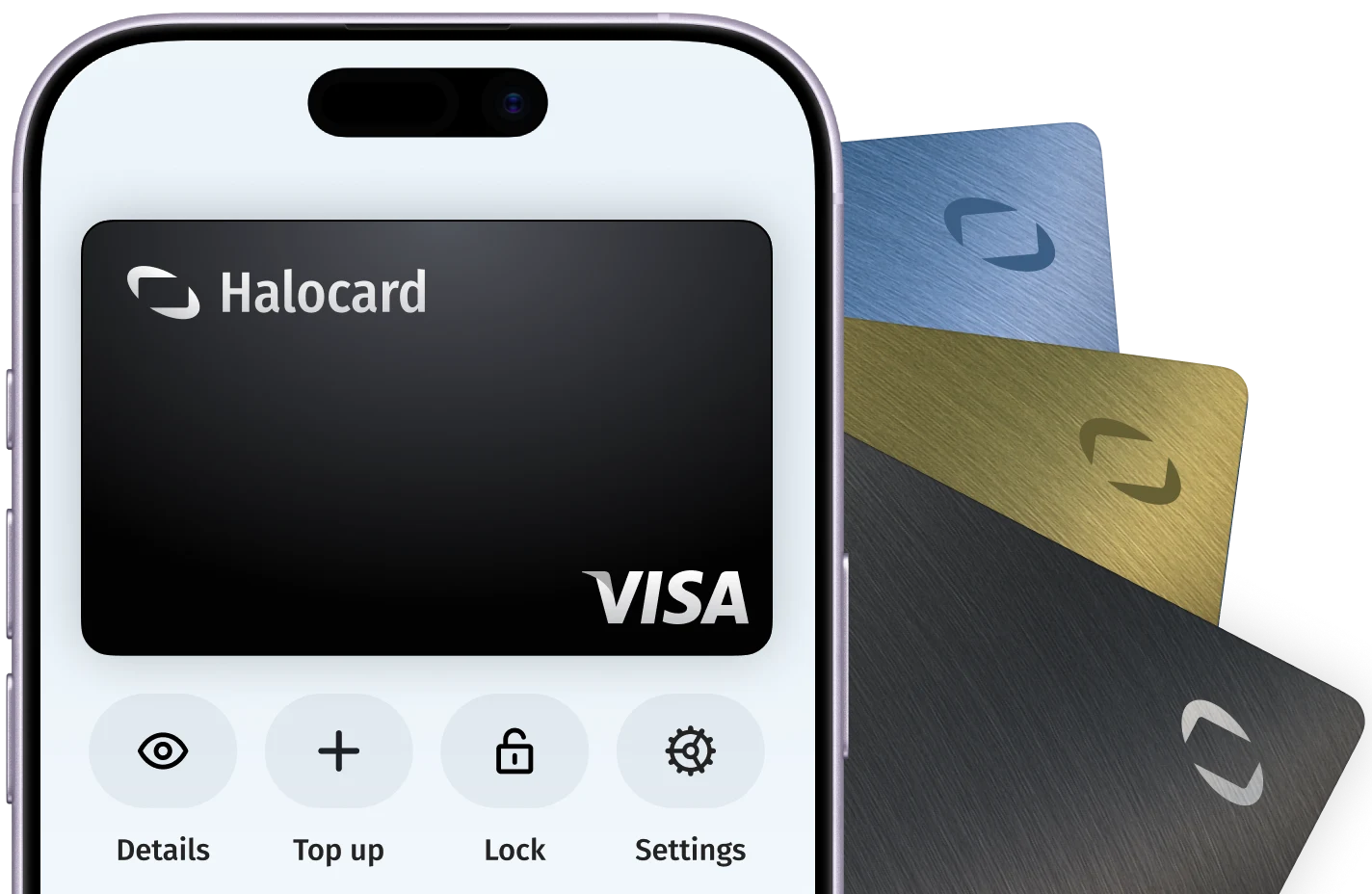
How does Halocard compare to Payoneer?
Halocard is the better choice than Payoneer for a card you fund yourself. It is a US-issued Visa credit card for customers in the US and 120+ countries, with a separate card for each merchant and no payments to receive first.
Better choice | Payoneer | |
|---|---|---|
| Eligibility | Advantage: US residents and residents of 120+ countries | Businesses and freelancers already paid through it |
| Card type | Advantage: US-issued Visa credit card | Mastercard on your Payoneer balance |
| Funding | Advantage: Card, Apple Pay, Google Pay, Bank Transfer, Stablecoins & Crypto | Payments from clients and marketplaces |
| USD bank account | Advantage: Your own US account and routing number | Receiving accounts, for business payments |
| Controls | Advantage: Per-card limits, custom name and billing address | Per-card limits and freeze |
| In-person payments | Advantage: Physical card, plus Apple Pay and Google Pay | Physical card and ATMs; Apple Pay on some cards |
| Rewards | Advantage: No cashback, but a monthly referral commission | Cashback on an invitation-only plan |
| Pricing | Advantage: From $12 a month, or free with 3 referrals | No monthly fee; $29.95 a year for cards |
| Support | Advantage: Chat, email, and phone on every plan | Phone and chat, after you sign in |
| Trust and transparency | Advantage: A regulated US company and card issuer | Advantage: A public US company; Trustpilot score withheld |
Payoneer FAQ
Is Payoneer safe?
Is Payoneer a bank?
What is the Payoneer card?
How do I get a Payoneer card?
Does Payoneer have a virtual card?
How much does the Payoneer card cost?
Does Payoneer charge an annual fee?
Can I add money to my Payoneer card myself?
Does Payoneer work with Apple Pay and Google Pay?
Does the Payoneer card have cashback?
Who issues the Payoneer card?
Why does Payoneer have no Trustpilot score?
How do I contact Payoneer support?
Sources
- Payoneer, pricing: payoneer.com/about/pricing
- Payoneer, commercial card: payoneer.com/commercial-card
- Payoneer, receiving accounts: payoneer.com/receiving-accounts
- Payoneer, multi-jurisdictional licenses: payoneer.com/legal/payoneers-multi-jurisdictional-licenses
- Payoneer, customer disclosures and complaints: payoneer.com/customer-disclosures-and-complaints
- Payoneer, the Payoneer Commercial Mastercard program: payoneer.com/resources/business/the-payoneer-commercial-mastercard-program-is-here
- Payoneer, how to get a Payoneer virtual card: payoneer.com/resources/how-to-get-a-payoneer-virtual-card
- Payoneer Support, card FAQ: payoneer.custhelp.com/app/answers/detail/a_id/18226
- Payoneer Support, mobile wallets: payoneer.custhelp.com/app/answers/detail/a_id/42029
- Payoneer Support, receiving accounts: payoneer.custhelp.com/app/answers/detail/a_id/18786
- Payoneer Support, Global Cashback Reward Card Plan: payoneer.custhelp.com/app/answers/detail/a_id/44889
- Payoneer Investor Relations, second quarter 2026 results announcement: investor.payoneer.com/news-releases/news-release-details/payoneer-report-second-quarter-2026-results-august-6-2026
- Trustpilot, Payoneer reviews: trustpilot.com/review/payoneer.com
Disclaimer
Based on public information as of October 2026 (see Sources above); Payoneer's products, fees and terms may change, so check before you decide. Halocard publishes this page and makes one of the products compared, so verdicts and ticks are our opinion. Payoneer, its product names and its logos are trademarks of their respective owners. Their use here does not imply any affiliation with, sponsorship by or endorsement from Payoneer. Quoted reviews are verbatim Trustpilot excerpts of individual experiences, not verified by us. Not financial, legal or tax advice.