Halocard vs Payoneer

Private virtual cards you can fund with card, bank transfer or cryptoFor freelancers and businesses paid from abroad

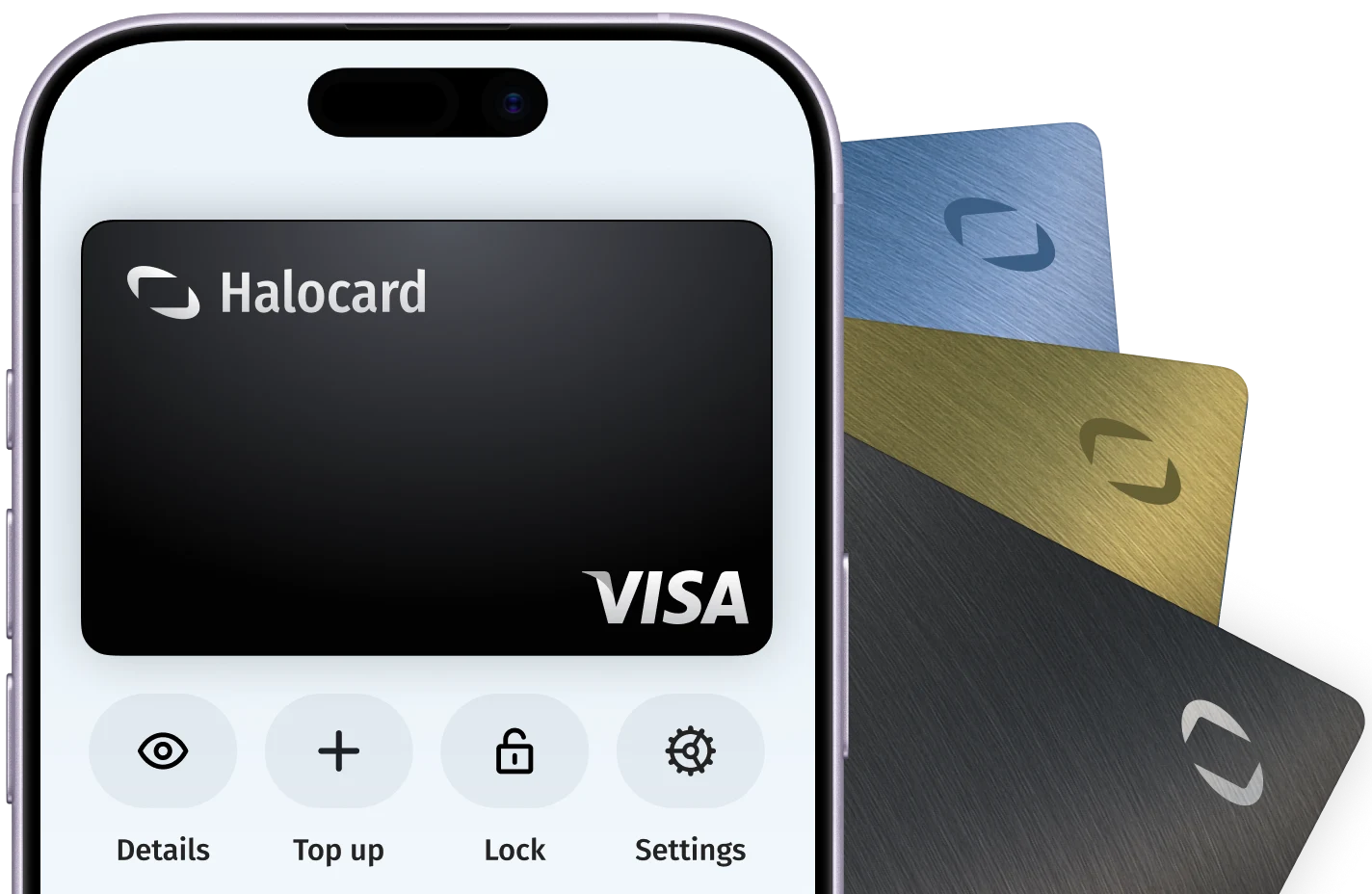
Halocard is the better Payoneer alternative for a card you fund yourself: a US-issued Visa credit card for customers in the US and 120+ countries, with a separate card for each merchant and no payments to receive first. It works like a debit card: you top up one balance by debit/credit card, Apple Pay, Google Pay, bank transfer, stablecoins, or crypto, then make a card for each subscription or store, with a billing address you choose on every card. Halocard has no free plan, but Essential is free with 3 referrals, and every friend you refer earns you $5 or more a month.

Payoneer is a cross-border payments platform for freelancers and businesses: marketplaces and clients pay you into receiving accounts in 13 currencies, and you withdraw to your bank or spend the balance with the Payoneer Commercial Mastercard. The card is an add-on to that account. Payoneer lets you order a card once your account has received at least $100 in payments in the past six months, a threshold it says varies by country; it costs $29.95 a year, and purchases are free where the merchant is in the card's country of issue, up to 1.8% elsewhere, and up to 3.5% when the purchase needs converting.

Halocard pros and cons

  • Pros: A US-issued Visa credit card that works like a debit card
  • Pros: Sign up and fund a card straight away
  • Pros: Fund by debit/credit card, Apple Pay, Google Pay, bank transfer, stablecoins, or crypto
  • Pros: Any billing address you choose, on each card
  • Pros: Apple Pay and Google Pay on every card
  • Pros: US residents and residents of 120+ countries
  • Cons: No free plan, though Essential is free with 3 referrals
  • Cons: No cashback
  • Cons: No receiving accounts in other currencies
  • Cons: A minimum first deposit to activate your account

Payoneer pros and cons

  • Pros: Receiving accounts in 13 currencies
  • Pros: Paid directly by marketplaces such as Upwork, Fiverr and Amazon
  • Pros: Up to 50 virtual cards, at no charge per card
  • Pros: Cards in US dollars, euros, pounds and more
  • Pros: No monthly fee
  • Pros: A public company, regulated since 2005
  • Cons: No card until you have received $100 in payments
  • Cons: Funded by payments you receive, not by top-up
  • Cons: Up to 1.8% on purchases abroad, 3.5% with conversion
  • Cons: $29.95 a year, plus an account fee on low volume
  • Cons: Apple Pay on some cards only
  • Cons: Trustpilot withholds its score

Halocard vs Payoneer compared

Payoneer is a platform for getting paid across borders, with a Mastercard that spends the balance you have earned. Halocard is a dedicated virtual card platform for subscriptions, online spending, advertising and AI tools, with US-issued Visa credit cards, stablecoin funding and custom billing addresses, for customers in the US and 120+ countries.

Eligibility

HalocardAdvantage: US residents and residents of 120+ countriesPayoneerBusinesses and freelancers already paid through it
A card as soon as you sign upHalocardYes, once verifiedPayoneerNot supported
Payments needed before a cardHalocardNonePayoneer$100 received in the past 6 months
Personal useHalocardYesPayoneerFor businesses only, by its card page
Credit checkHalocardNonePayoneerNone
Business accountsHalocardNot supportedPayoneerYes

Halocard is a US-issued Visa credit card for customers in the US and 120+ countries: you sign up in under 5 minutes, verify, add funds and make a card. Outside the US? You don't need an SSN, a US address or a US bank account. Payoneer lets you order a card once your account has received at least $100 in payments in the past six months, a threshold it says varies by country, and it adds that the receipts must not come from an e-wallet. Its card page says Payoneer is for businesses only, which includes freelancers and sole traders paid by clients and marketplaces, and that cards may not be available in some countries because of licensing. Neither runs a credit check. See supported countries

Card type

HalocardAdvantage: US-issued Visa credit cardPayoneerMastercard on your Payoneer balance
Card networkHalocardVisaPayoneerMastercard
What you spendHalocardThe balance you loadPayoneerYour Payoneer balance, moved to the card hourly
Card currencyHalocardUS dollarsPayoneerUSD, EUR, GBP, CAD or JPY, one per card
Virtual cardsHalocard3 to 60 held at once, by planPayoneerUp to 50; 600 with approval
Single-use cardsHalocardAnnual plans, from 2 a monthPayoneerUnknown

Halocard works like a debit card: you spend the balance you load, with no credit line and no credit check, and a merchant sees a Visa credit card. Payoneer offers one of two Mastercards depending on your eligibility: the Corporate Purchasing Mastercard, issued by First Century Bank, N.A. and provided by Payoneer Inc., or the Payoneer Business Premium Debit Mastercard, issued by Payoneer Europe Limited in Ireland. Either spends your Payoneer balance, which is moved onto the card automatically every hour up to your daily limit. Cards come per currency, so a US dollar card, a euro card and so on, and after the first card in a currency every further one is virtual. Payoneer allows up to 50 virtual cards without approval and 600 with it, at no charge per card. Check merchant acceptance

Funding

HalocardAdvantage: Card, Apple Pay, Google Pay, Bank Transfer, Stablecoins & CryptoPayoneerPayments from clients and marketplaces
Bank transferHalocardUSD, CAD, EUR or GBPPayoneerFrom your own bank, if eligible
Debit or credit cardHalocardVisa, MastercardPayoneerUnknown
Digital walletsHalocardApple Pay and Google PayPayoneerUnknown
StablecoinsHalocardUSDC, USDTPayoneerUnknown
CryptoHalocardBTC, ETH, SOLPayoneerUnknown
Payments from clientsHalocardBy ACH or wire, into your US accountPayoneerReceiving accounts in 13 currencies

Halocard keeps one balance you top up by debit/credit card, Apple Pay, Google Pay, bank transfer, stablecoins, or crypto. A Payoneer card spends the balance you have been paid into: earnings from marketplaces and payments from business clients. Receiving in your local currency is free; in another currency it costs 1%, and a client who pays by credit card costs you up to 3.99% + $0.49. Payoneer says you can add funds from a bank account in your own name through a receiving account if you are eligible, and it names no card, phone-wallet or crypto top-up. See how to deposit

USD bank account

HalocardAdvantage: Your own US account and routing numberPayoneerReceiving accounts, for business payments
Your own account and routing numberHalocardYesPayoneerLocal details in 13 currencies
Receive ACH transfersHalocard1 to 3 business daysPayoneerYes, from business payers
Receive same-day ACHHalocardYesPayoneerUnknown
Receive domestic wiresHalocardThe same dayPayoneerYes, by Fedwire
Send ACH and wire transfersHalocardYesPayoneerWithdrawals and payments from your balance

Halocard includes a US bank account with its own account and routing numbers, so you can receive salary, transfers from friends and family, and any other payment you'd send to a US checking account. ACH transfers arrive in 1 to 3 business days and domestic wires the same day, straight into your Halocard balance and ready to spend. Payoneer gives you receiving accounts with local details in 13 currencies, including US dollars by ACH and Fedwire. It says a receiving account is not a bank account: it can only receive, payments must come from business accounts for business transactions, and payments from personal bank accounts are declined. You move money out by withdrawing to your own bank, from $1.50 for a withdrawal in your own country and currency. Send and receive USD payments

Controls

HalocardAdvantage: Per-card limits, custom name and billing addressPayoneerPer-card limits and freeze
Per-card spending limitsHalocardDaily, weekly or monthlyPayoneerDaily, monthly and total
Lock or close a cardHalocardInstantPayoneerFreeze and unfreeze
Custom billing addressHalocardYes, on each cardPayoneerUnknown
Custom cardholder nameHalocardYesPayoneerNot supported

Payoneer lets you set a daily, a monthly and a total spending limit on each card and freeze or unfreeze it at once. Its help centre notes that a limit covers the purchase amount but not the fees on top, so a purchase can go through above it. A company's card is issued in the name of the authorised representative on the account, and changing a name takes an official document; it doesn't confirm whether a card's billing address can be changed. With Halocard you set daily, weekly or monthly limits on each card, lock or cancel any card instantly, and choose the billing address and cardholder name on each card. See card spending limits

In-person payments

HalocardAdvantage: Physical card, plus Apple Pay and Google PayPayoneerPhysical card and ATMs; Apple Pay on some cards
Physical cardHalocardFree with any annual plan or $100 on a monthly planPayoneerFree standard delivery
Apple PayHalocardEvery cardPayoneerCards starting 529366 only
Google PayHalocardEvery cardPayoneerEvery card
Cash from ATMsHalocardAt ATMs that accept phone walletsPayoneer$3.15, plus up to 1.8%

Both work in person. Every Halocard can go in Apple Pay and Google Pay, and you can add a physical card, free with any annual plan or $100 on a monthly plan. Payoneer sends a physical card with free standard delivery, and it works in stores and at ATMs, where a withdrawal costs $3.15 plus up to 1.8%. Its help centre says every Payoneer card works with Google Wallet, but only Payoneer cards whose number starts 529366 can be added to Apple Wallet. Set up Apple Pay and Google Pay

Rewards

HalocardAdvantage: No cashback, but a monthly referral commissionPayoneerCashback on an invitation-only plan
CashbackHalocardNot supportedPayoneerBy offer only, on a plan with a fee
Cashback rateHalocardNot supportedPayoneerNot disclosed
Referral commissionHalocard$5 to $25 a month per friend, for up to 12 monthsPayoneerUnknown

Payoneer's card page lists cashback, but its help centre says it comes only with the Global Cashback Reward Card Plan, which is offered by a Payoneer sales contact or as part of a promotion, carries a periodic fee and may not be available in your country. It gives no rate. Halocard pays no cashback on purchases. What it pays is a referral commission: $5 to $25 a month for every friend you refer, for up to 12 months, and Essential is free with 3 referrals. See how referrals work

Fees

HalocardAdvantage: No fee in USD; 1.5% + $0.30 in other currenciesPayoneerUp to 1.8% abroad; up to 3.5% with conversion
Purchases in USDHalocardNo feePayoneerFree in the card's country; up to 1.8% elsewhere
Purchases in other currenciesHalocard1.5% + $0.30PayoneerUp to 3.5%
Annual card feeHalocardNone beyond your planPayoneer$29.95
Annual account feeHalocardNone beyond your planPayoneer$29.95 if you receive under $6,000 in 12 months

Halocard charges nothing on US-dollar purchases, wherever the merchant is, and 1.5% + $0.30 on others. Payoneer's pricing page lists card purchases as free where the merchant is in the card's country of issue, up to 1.8% elsewhere, and up to 3.5% when the purchase needs converting. On top come $29.95 a year for the card, however many cards you hold, and a $29.95 annual account fee in any 12 months when you receive less than $6,000. Withdrawing your balance to a bank costs $1.50 in your own country and currency and 1.2% to 4% otherwise. Payoneer says its fees vary by territory and account type, and shows yours when you register. See all Halocard fees

Pricing

HalocardAdvantage: From $12 a month, or free with 3 referralsPayoneerNo monthly fee; $29.95 a year for cards
Entry planHalocard$12/mo, 3 cardsPayoneer$29.95 a year, however many cards
Extra virtual cardsHalocardIncluded, up to your plan's countPayoneerFree
How it is pricedHalocardA flat monthly planPayoneerAn annual fee, plus fees per transaction

Payoneer has no monthly plan. Its cards cost a single $29.95 a year however many you hold, and the rest of what you pay depends on use: fees to receive, to convert, to withdraw and on purchases abroad. Halocard plans are $12, $15 and $75 a month and include 3 to 60 cards, with no fee on US-dollar purchases. Essential is free with 3 referrals, and each friend you refer pays you $5 or more a month. Compare Halocard plans

Support

HalocardAdvantage: Chat, email, and phone on every planPayoneerPhone and chat, after you sign in
ChatHalocardYesPayoneerYes, after signing in
EmailHalocardYesPayoneerFor complaints
PhoneHalocardYesPayoneerYes

Halocard answers by chat, email, and phone on every plan. Payoneer lists phone numbers for the US, the UK and other countries, live chat for customers who have signed in, and an AI search assistant on its help pages. Its complaints page gives an email address for complaints. Visit the help centre

Trust and transparency

HalocardAdvantage: A regulated US company and card issuerPayoneerAdvantage: A public US company; Trustpilot score withheld
Company and countryHalocardHalocard LLC, USAPayoneerPayoneer Inc., USA (public, Nasdaq: PAYO)
Registration or licenceHalocardFintech, not a bank. Registered MSB with FinCENPayoneerFintech, not a bank. Registered MSB with FinCEN; state-licensed
Card issuerHalocardThird NationalPayoneerFirst Century Bank, N.A. (US); Payoneer Europe Limited (EU)
Account held atHalocardSSB, Member FDICPayoneerNot disclosed
Founders namedHalocardEdward TaylorPayoneerA public company
FoundedHalocard2024Payoneer2005
TrustpilotHalocard4.2/5 (11 reviews)PayoneerNo score shown after fake reviews were removed (63,450 reviews)

Payoneer is a Nasdaq-listed company with a record since 2005, licensed in the US, the EU, the UK and elsewhere, and it names the banks that issue its cards. Trustpilot shows no score for Payoneer: its profile says the rating is unavailable because of a breach of Trustpilot's guidelines, and that a number of fake reviews were removed. Halocard names its company, card issuer, account bank and founder. About Halocard

Why Halocard is the better Payoneer alternative

A card without getting paid first

Payoneer lets you order a card once your account has received at least $100 in payments in the past six months, a threshold it says varies by country. With Halocard you sign up in under 5 minutes, verify in under 3 minutes, add funds and make a card.

Fund it yourself, the way you already pay

Halocard takes debit/credit card, Apple Pay, Google Pay, bank transfer, stablecoins, or crypto. A Payoneer card spends the balance you have been paid into: earnings from marketplaces and payments from business clients.

No fee for where the merchant is

Halocard charges nothing on US-dollar purchases, wherever the merchant is based, and 1.5% + $0.30 on other currencies. Payoneer's card purchases are free where the merchant is in the card's country of issue, up to 1.8% elsewhere, and up to 3.5% when the purchase needs converting.

Apple Pay on every card

Every Halocard can be added to Apple Pay and Google Pay. Payoneer's help centre says only Payoneer cards whose number starts 529366 can be added to Apple Wallet.

A US bank account for any payment

Halocard includes a US bank account with its own account and routing numbers that takes salary and transfers from friends and family as well as clients. Payoneer's receiving accounts take payments from business accounts only.

Key drawbacks of Payoneer

No card until you have been paid

Payoneer lets you order a card once your account has received at least $100 in payments in the past six months, a threshold it says varies by country, and the receipts must not come from an e-wallet.

Funded by payments, not top-ups

A Payoneer card spends the balance you have been paid into: earnings from marketplaces and payments from business clients. It names no way to top it up by card, phone wallet or crypto.

Fees abroad, and two annual fees

Card purchases are free where the merchant is in the card's country of issue, up to 1.8% elsewhere, and up to 3.5% when the purchase needs converting. On top, Payoneer charges $29.95 a year for the card, however many cards you hold, and a $29.95 annual account fee in any 12 months when you receive less than $6,000.

No Trustpilot score

Trustpilot shows no score for Payoneer: its profile says the rating is unavailable because of a breach of Trustpilot's guidelines, and that a number of fake reviews were removed. The profile holds 63,450 reviews, 2,236 of them from the past 12 months.

Read our Payoneer review

About Halocard

Halocard is a US-issued Visa credit card for customers in the US and 120+ countries, with a separate virtual card for each merchant you pay. Halocard works like a debit card: you spend the balance you load, with no credit line and no credit check.

Create cards in seconds from a web browser, set daily, weekly or monthly limits on each card, lock or cancel any card instantly, and choose the billing address and cardholder name on each card. Fund your balance by debit/credit card, Apple Pay, Google Pay, bank transfer, stablecoins, or crypto. Outside the US? You don't need an SSN, a US address or a US bank account. Halocard cards are issued by Third National, a Non-Bank Principal Member of the Visa Network.

About Payoneer

Payoneer is a payments platform for businesses and freelancers who work across borders, founded in 2005 and listed on Nasdaq. Marketplaces such as Upwork, Fiverr and Amazon pay you into your Payoneer balance, clients pay into receiving accounts with local details in 13 currencies, and you withdraw to your own bank. In June 2026 it agreed to be acquired by Nuvei, a deal it expects to close in mid-2027.

The Payoneer Commercial Mastercard spends that balance. Depending on your eligibility, Payoneer offers the Corporate Purchasing Mastercard, issued by First Century Bank, N.A. and provided by Payoneer Inc., or the Payoneer Business Premium Debit Mastercard, issued by Payoneer Europe Limited in Ireland. Cards come per currency, physical or virtual, with up to 50 virtual cards before you need approval for more.

Payoneer lets you order a card once your account has received at least $100 in payments in the past six months, a threshold it says varies by country. The card costs $29.95 a year, and its card page says Payoneer is for businesses only.

Halocard vs Payoneer FAQ

What is the best Payoneer alternative for virtual cards?

Halocard. Halocard is a US-issued Visa credit card for customers in the US and 120+ countries, with a separate card for each merchant, Apple Pay and Google Pay on every card, a US bank account with its own account and routing numbers, and funding by debit/credit card, Apple Pay, Google Pay, bank transfer, stablecoins, or crypto. You don't need to receive payments first.

Is Halocard better than Payoneer?

For a card you fund yourself, yes. Halocard lets you sign up, top up and make a card for each merchant, with a billing address you choose. Payoneer is the better choice for being paid by marketplaces and clients abroad, in 13 currencies, and withdrawing to your bank.

Is there a Payoneer card alternative without the $100 requirement?

Yes, Halocard. Payoneer lets you order a card once your account has received at least $100 in payments in the past six months, a threshold it says varies by country. Halocard has no earnings requirement: you verify in under 3 minutes, add funds and make a card.

Can I top up Halocard myself, unlike a Payoneer card?

Yes. You top up Halocard by debit/credit card, Apple Pay, Google Pay, bank transfer, stablecoins, or crypto. A Payoneer card spends the balance you have been paid into: earnings from marketplaces and payments from business clients.

Which has lower fees, Payoneer or Halocard?

It depends on what you do. Payoneer has no monthly fee, charges $29.95 a year for its cards and up to 1.8% on purchases outside the card's country, or 3.5% with conversion. Halocard plans start at $12 a month, with no fee on US-dollar purchases wherever the merchant is and 1.5% + $0.30 on other currencies, and Essential is free with 3 referrals.

Is Halocard a Mastercard like the Payoneer card?

No. Halocard is a US-issued Visa credit card that works like a debit card: you spend the balance you load, with no credit line and no credit check. Payoneer's cards are Mastercards that spend your Payoneer balance.

Does Halocard or Payoneer work with Apple Pay and Google Pay?

Every Halocard can be added to Apple Pay and Google Pay, and either wallet can top up your balance. Payoneer's help centre says every Payoneer card works with Google Wallet, but only Payoneer cards whose number starts 529366 can be added to Apple Wallet.

Does Halocard or Payoneer give you a US bank account?

Halocard includes a US bank account with its own account and routing numbers, with ACH in 1 to 3 business days, domestic wires the same day. Payoneer gives you a US dollar receiving account, which it says is not a bank account: it only receives, and only from business accounts.

Can I use Halocard alongside Payoneer?

Yes. You can keep Payoneer for being paid, withdraw your earnings to your own bank, and top up Halocard from there by bank transfer or debit card. Then each merchant you pay gets its own Halocard.

Which is better for ad spend and subscriptions, Payoneer or Halocard?

Both let you keep a card per vendor. Payoneer allows up to 50 virtual cards on a balance you have earned. Halocard gives each card a daily, weekly or monthly limit and its own billing address and cardholder name, on a US-issued Visa credit card.

How do I switch from the Payoneer card to Halocard?

Sign up for Halocard in under 5 minutes, verify in under 3 minutes and add funds. Make one card for each subscription or store, set its limit and billing address, and update the payment method at each merchant. You can keep your Payoneer account for receiving payments.

Sources

  • Payoneer, pricing: payoneer.com/about/pricing
  • Payoneer, commercial card: payoneer.com/commercial-card
  • Payoneer, receiving accounts: payoneer.com/receiving-accounts
  • Payoneer, multi-jurisdictional licenses: payoneer.com/legal/payoneers-multi-jurisdictional-licenses
  • Payoneer, customer disclosures and complaints: payoneer.com/customer-disclosures-and-complaints
  • Payoneer, the Payoneer Commercial Mastercard program: payoneer.com/resources/business/the-payoneer-commercial-mastercard-program-is-here
  • Payoneer, how to get a Payoneer virtual card: payoneer.com/resources/how-to-get-a-payoneer-virtual-card
  • Payoneer Support, card FAQ: payoneer.custhelp.com/app/answers/detail/a_id/18226
  • Payoneer Support, mobile wallets: payoneer.custhelp.com/app/answers/detail/a_id/42029
  • Payoneer Support, receiving accounts: payoneer.custhelp.com/app/answers/detail/a_id/18786
  • Payoneer Support, Global Cashback Reward Card Plan: payoneer.custhelp.com/app/answers/detail/a_id/44889
  • Payoneer Investor Relations, second quarter 2026 results announcement: investor.payoneer.com/news-releases/news-release-details/payoneer-report-second-quarter-2026-results-august-6-2026
  • Trustpilot, Payoneer reviews: trustpilot.com/review/payoneer.com

Disclaimer

Based on public information as of October 2026 (see Sources above); Payoneer's products, fees and terms may change, so check before you decide. Halocard publishes this page and makes one of the products compared, so verdicts and ticks are our opinion. Payoneer, its product names and its logos are trademarks of their respective owners. Their use here does not imply any affiliation with, sponsorship by or endorsement from Payoneer. Not financial, legal or tax advice.

Get a Halocard in less than 5 minutes