

Quick Answer: If virtual cards are the reason you are looking, Halocard is the strongest Revolut alternative: US-issued virtual Visa cards for customers in the US and 120+ countries with a custom billing address and per-card spending limits, against Revolut's single active virtual card on its free plan. Wise wins on international transfers and multiple currencies, Privacy.com on US merchant-locked cards, and Airwallex on business accounts.
Revolut is a genuinely good product across personal and business accounts, and this guide will not pretend otherwise. It is now a licensed UK bank as of March 2026, with eligible deposits FSCS-protected up to £120,000 once an account has been migrated, and it holds a Trustpilot score of 4.7/5 across 470,000+ reviews. For multi currency accounts, currency conversions and everyday digital banking, it is among the best in the category.
The gap opens when you look at the virtual cards specifically. Standard and Plus users get one active multi-use virtual card. Five active cards require Premium at £7.99 a month or Metal at £14.99, and unlimited disposable cards are a paid-plan feature too. Revolut also has no US-issued card option and no custom billing address, so US checkouts that run strict address verification still decline it. And it is unavailable in a long list of markets including Nigeria, Ghana, much of sub-Saharan Africa, India, Pakistan and Vietnam.
This guide compares 11 alternatives, every one of which issues virtual cards, weighted toward the card side rather than the banking side.
Key Takeaways
-
Halocard is the best alternative to Revolut for virtual cards. 3 to 60 US-issued virtual Visa cards for customers in the US and 120+ countries, each with its own spending limits and a custom billing address Revolut does not offer.
-
Match the alternative to the job. Wise leads on international money transfers and holds 40+ currencies, Airwallex on business banking with 160+ payment methods, Privacy.com on merchant-locked US cards, and Chime or PayPal on US and global consumer payments.
-
Revolut's free plan is thinner on cards than people expect. One active virtual card on Standard and Plus; five and unlimited disposables only from Premium upward.
-
Watch the allowance cliffs, not the monthly fees. Revolut charges fees after exceeding monthly transaction limits, with a 1% markup once you pass the Standard weekday FX allowance and another 1% at weekends.
-
Fraud is why one card per merchant matters. Global card fraud losses hit $33.41 billion in 2024, and card-not-present fraud is the dominant channel, so a card that spends nowhere else is the strongest control an individual has.
Quick Comparison Table
| Provider | Type | Availability | Virtual Cards | Key Pricing | Best For |
|---|---|---|---|---|---|
| Halocard | Virtual card platform | 120+ countries, minimal KYC | 3 to 60, per-card limits, custom billing address | $12–$75/mo; 1.5% + $0.30 | Virtual cards built for privacy and US acceptance |
| Wise | Multi-currency account + card | Broad international | Up to 3 active digital cards | No monthly fee; card ~$9 | International transfers and multiple currencies |
| Monzo | Licensed UK bank | UK residents | Paid tiers only (Plus/Max) | Free base; paid tiers above | UK digital banking, savings pots, budgeting |
| N26 | Licensed German bank | EEA residents | Up to 6 active | €0–€16.90/mo | European banking with no FX fee on upper plans |
| bunq | Licensed Dutch bank | ~30 EU/EEA + UK | Up to 25 on higher plans | €0–€18.99/mo | Most cards from a licensed EU bank |
| Privacy.com | US virtual payment cards | US residents with a US bank | 12–60 new cards/month | $0–$25/mo | Merchant-locked and single-use US cards |
| Airwallex | Business multi-currency platform | Businesses in 69 countries | Unlimited corporate cards | Explore $0; user fees above | Business accounts and cross border payments |
| Vivid | Business account + investing | Europe | Cards with cashback | From €0/mo | Cashback and expense tracking in one app |
| Chime | US neobank | US residents | Virtual card in app | No monthly fees | Fee-free US banking and 47,000+ ATMs |
| PayPal | Global payments platform | 200+ countries | Debit card + single-use Pay Later number | No monthly fee | Global reach and high-yield savings |
| Skrill | Digital wallet + prepaid card | Wallet in many countries; card in the US, UK and EEA | Virtual prepaid Mastercard | No monthly fee; transaction-based | Wallet-based global spending |
Best Revolut Alternatives for Virtual Cards and Digital Banking
Below are the 11 best alternatives, starting with the dedicated card platform, then multi-currency accounts, European banks, business platforms and consumer wallets.
1. Halocard
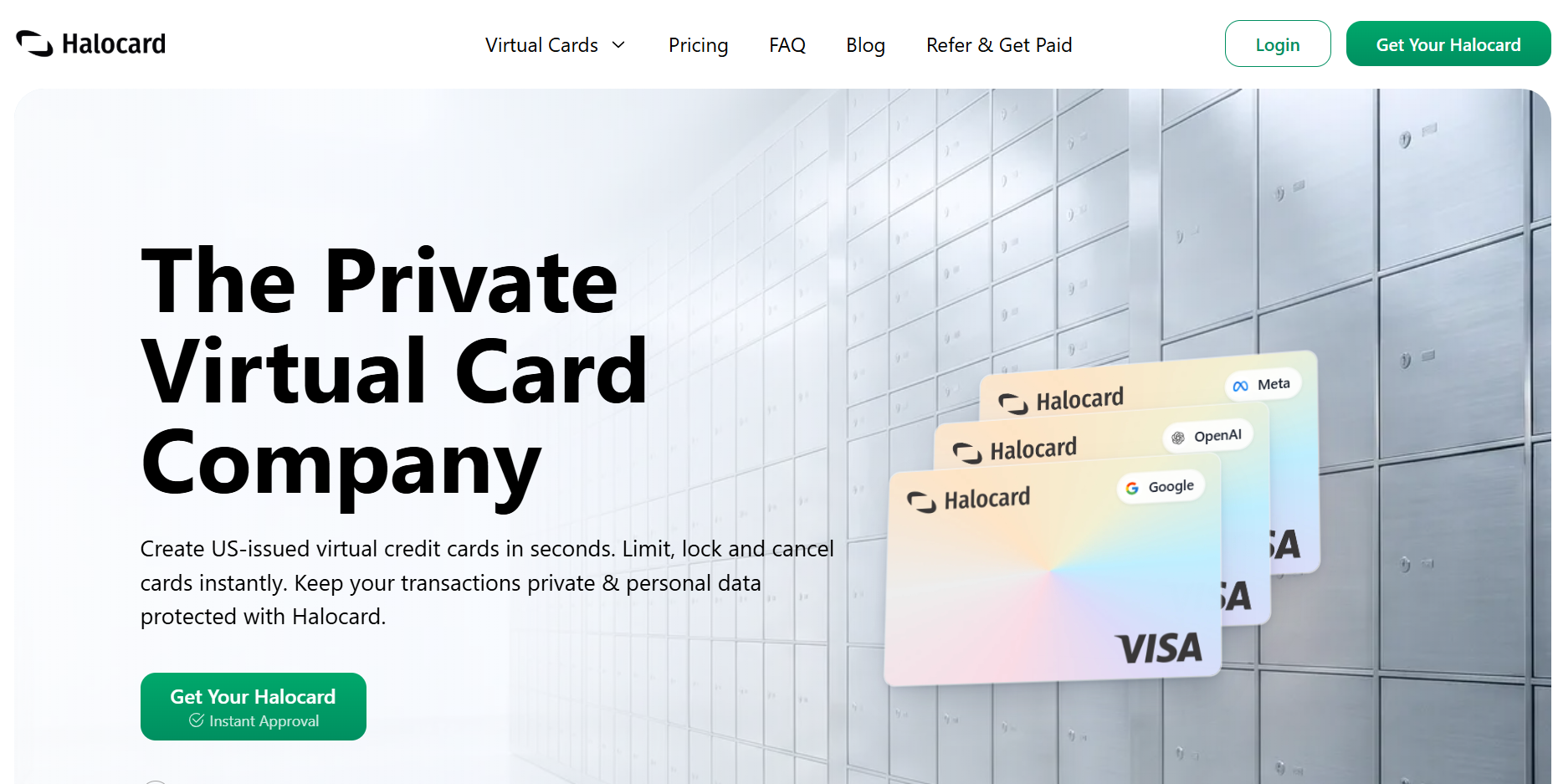
Halocard is a US-based fintech platform offering virtual and physical payment cards. It is not a comprehensive financial platform the way Revolut is, and it does not try to be. Its entire product is the card, which is why it beats Revolut on the one dimension this article is about.
How Halocard Works
You register in a browser with no app download, verify with a passport or national ID in under three minutes with no SSN required for non-US residents. Cards are issued under the Visa network through Halocard's financial partners and carry 3D Secure by Visa. Each card gets its own name, spending limits and billing address, and works at more than 175 million merchants, online and offline through Apple Pay and Google Pay.
The difference from Revolut is structural. Revolut issues cards against your multi-currency balance and treats them as one feature of a broader account. Halocard treats the card as the product, so you get many of them, each configured separately, rather than one shared card and a plan upgrade to get four more.
Halocard Costs & Fees
-
Essential: 3 virtual cards, $12/month or $144/year
-
Pro: 12 cards, $15/month or $180/year
-
Elite: 60 cards, $75/month or $900/year
-
Business plans from $29/month to $299/month
-
0% on USD purchases
-
Non-USD purchases: 1.5% + $0.30
-
Funding: debit/credit card, Apple Pay, Google Pay, bank transfer, stablecoins, or crypto
There are no allowance cliffs. Where Revolut charges once you exceed a monthly FX allowance, Halocard's USD spend is simply free, and the non-USD rate does not change with volume.
Halocard Spending Limits and Funding
Halocard runs on money you deposit rather than a credit line or an overdraft, so there is no credit check. You can set spending limits per transaction, per day and per month on each individual card, then freeze or cancel any one without touching the others. This is where the privacy argument becomes concrete rather than theoretical.
Card fraud losses reached $33.41 billion worldwide in 2024 and are heading for $41.06 billion by 2030 according to the Nilson Report, and FICO projects card-not-present losses near $49 billion globally by 2030. More pointedly, Security.org's 2026 research found 61.3 million Americans hit by fraudulent charges in a single year, with only 5% involving a physically stolen card, and 51% of cardholders using one card for both autopay and everyday spending.
Their own recommendation is to separate the two. One card per merchant does exactly that, and a single Revolut virtual card cannot.
Halocard Key Advantages
-
3 to 60 concurrent cards against Revolut's one on Standard and Plus
-
A custom billing address on every card, which clears US address verification that rejects European-issued cards
-
Available for customers in the US and 120+ countries with minimal KYC, including markets Revolut does not serve
-
0% on USD purchases with no allowance cliff
-
Per-card spending limits, instant freeze and disposable cards
-
Stablecoin funding, which Revolut does not offer
Halocard Specific Drawbacks
-
Not a bank: no savings account, overdraft, or deposit protection
-
A single-purpose tool rather than a whole financial ecosystem
-
No multi currency accounts, budgeting tools or investment features
-
No cashback, rewards or interest
-
A monthly subscription rather than a free tier
-
Non-USD spending carries a foreign exchange fee, where Revolut Premium is 0% within its allowance
Who Halocard Is Best For
International shoppers whose cards keep failing US checkouts, media buyers running many ad accounts, AI and cloud platform subscribers, and anyone who wanted Revolut for the cards rather than the banking. Our guide to virtual cards with a US billing address explains the AVS problem in detail.
Why Someone Would Choose Halocard Over Revolut
Three things Revolut cannot do at any price: issue a US-format card, give you a custom billing address per card, or serve you if you live in a market Revolut has not entered. Add the card count, and for anyone running separate cards per subscription or campaign, Halocard is the better tool. Most people keep Revolut for travel and currency and add Halocard for the cards, which is covered further down. See Halocard vs Revolut side by side.
2. Wise
Wise is the specialist for international transfers and the most direct challenger to Revolut on currency, holding 40+ currencies and sending money to 140+ countries.
How Wise Works
A Wise account gives you local bank details in several regions, balances in 40+ currencies, and virtual and physical debit cards, with up to 3 active digital cards at once. Account opening is quick for personal accounts, while Wise Business adds tools to receive payments from clients and handle global transfers at scale. Conversions happen at the mid market exchange rate with a visible fee rather than an exchange rate markup buried in the rate itself.
Wise Costs & Fees
-
No monthly account fees
-
One-time card issuance, roughly $9 in the US; business accounts carry a one-time opening fee of around €50
-
Transfer fees typically 0.33% to 1%
-
Two free ATM withdrawals per month up to £200, then a small fee plus percentage
Wise Spending Limits and Funding
Funded from your own currency balances, with automatic conversion at spend time if the needed currency is empty. You can change overall limits but, unlike Halocard, not per individual card.
Wise Key Advantages
-
Genuinely transparent fees with no hidden costs, the clearest pricing in this comparison
-
40+ currencies held, payments to 140+ countries
-
No monthly fee at all, versus Revolut's paid tiers
-
Local accounts in several regions for receiving as well as sending
Wise Specific Drawbacks
-
Only 3 active digital cards, and no per-card spending limits
-
Not a US-issued card, so US billing-address checks still fail
-
No credit, overdraft, or rewards
-
Fewer advanced financial tools than Revolut's app
Who Wise Is Best For
Freelancers with international clients, and anyone whose main frustration with Revolut is the FX allowance cliff or transfer fees.
Why Someone Would Choose Wise Over Revolut
No monthly fee, no allowance to exceed, and better currency coverage. Where Revolut gives you the mid-market rate only within a plan allowance, Wise gives it consistently with a visible fee attached. It trades away Revolut's budgeting, savings and broader ecosystem. Our Revolut vs Wise vs Halocard comparison puts all three side by side.
3. Monzo

Monzo is the UK's other flagship digital bank and the closest domestic substitute for British Revolut users, best known for savings pots and budgeting.
How Monzo Works
You open a UK current account, use Pots to separate savings and bills, and get real-time transaction notifications with automatic expense tracking by category. Virtual cards are a paid-tier feature on Plus and Max rather than a free inclusion, and cards can be linked to specific Pots, which acts as a natural spending limit.
Monzo Costs & Fees
-
Free basic plan current account with no monthly fees
-
Plus and Max paid tiers unlock virtual cards, interest and extra features
-
Fee-free spending abroad on the Mastercard wholesale rate
-
Free UK ATM withdrawals; overseas withdrawals capped monthly on the free plan
Monzo Spending Limits and Funding
Cards draw from your current account or a linked Pot. If the Pot runs dry, the card stops working, which is a crude but effective per-card cap.
Monzo Key Advantages
-
A fully licensed UK bank with FSCS protection
-
Savings pots and budgeting tools widely rated the best in UK banking
-
Custom spending limits per card on paid tiers
-
No markup on foreign spending
Monzo Specific Drawbacks
-
No virtual cards on the free plan, since they require Plus or Max
-
UK residents only
-
Not built for multi currency holding the way Wise or Revolut are
-
No US billing address
Who Monzo Is Best For
UK residents who want everyday banking, budgeting and savings done well, with virtual cards as a secondary feature.
Why Someone Would Choose Monzo Over Revolut
Better budgeting, better savings pots, and a UK banking licence that predates Revolut's. On cards specifically it is a step backwards, since Revolut at least includes one virtual card free.
4. N26
N26 is a licensed German bank serving the European Economic Area, and the most direct continental equivalent to Revolut.
How N26 Works
You open a full bank account with a German IBAN, manage it in one app, and use Spaces sub-accounts for budgeting. The first virtual Mastercard is free on Standard once you hold a one-time €10 activation balance, extras cost €2.59, and you can hold up to six active virtual cards on any plan, six times Revolut's Standard allowance.
N26 Costs & Fees
-
Standard €0, Smart €4.90, Go €9.90, Metal €16.90 per month
-
Extra virtual cards €2.59 on Standard, free on paid plans
-
No fees on foreign currency spending for European users on the upper plans; 1.7% on Standard and Smart
-
€100,000 German Deposit Guarantee
N26 Spending Limits and Funding
Cards spend from your N26 balance or a linked Space, with in-app limits and instant freeze.
N26 Key Advantages
-
Six virtual cards on every plan, including the free one
-
A licensed bank with full deposit protection
-
Fee-free foreign currency spending on Go and Metal
-
Strong app with real-time notifications
N26 Specific Drawbacks
-
EEA residents only; withdrew from the UK and US
-
Cashback is just 0.1% on Standard
-
Free business account limited to sole traders and freelancers
-
Account freezes during compliance checks are the most repeated complaint
Who N26 Is Best For
European residents who want a genuine bank account with more virtual cards than Revolut's free plan allows.
Why Someone Would Choose N26 Over Revolut
Six virtual cards free versus one, plus full German deposit protection. You lose Revolut's currency range and its broader feature set. See our best virtual credit cards in Germany guide.
5. bunq
bunq is a licensed Dutch bank operating across roughly 30 EU and EEA countries plus the UK, and it offers more virtual cards than any other bank here.
How bunq Works
You open an account and create digital Mastercards, up to 25 on Pro and Elite plans, with an extra pack of 25 available and 100 total. Each card carries a rotating CVC that can refresh every five minutes, a genuine security feature no other provider in this list matches. Cards link to specific sub-accounts, each with its own IBAN.
bunq Costs & Fees
-
Free plan €0; Core €3.99; Pro €9.99; Elite €18.99 per month
-
Extra pack of 25 cards for €19.99 per month
-
Deposit protection up to €100,000
bunq Spending Limits and Funding
Cards spend from linked sub-accounts, capping exposure to that pot, and can be created or cancelled instantly.
bunq Key Advantages
-
Up to 25 digital cards, far past Revolut's five on Premium
-
A rotating CVC that limits the value of stolen card details
-
Sub-accounts with individual IBANs for expense tracking
-
A licensed bank with deposit protection
bunq Specific Drawbacks
-
The card count sits behind the pricier plans
-
Europe and UK only
-
No US billing address
-
Support speed is the recurring criticism in reviews
Who bunq Is Best For
Europeans who run many spending pots in parallel and want maximum cards from a regulated bank.
Why Someone Would Choose bunq Over Revolut
Five times the cards at the top tier and a security feature Revolut does not offer, while keeping bank-grade deposit protection.
6. Privacy.com
Privacy.com is the US benchmark for merchant-locked virtual cards, and the closest thing here to a dedicated privacy product.
How Privacy.com Works
US residents 18 and over link a US checking account, then create cards that lock to a single merchant, close after one use, or carry custom limits. A browser extension autofills a fresh card at checkout, which makes a new card per site nearly frictionless.
Privacy.com Costs & Fees
-
Personal free with 12 new cards a month; Plus $5, Pro $10, Premium $25
-
3% foreign transaction fee on the lower tiers, 0% on Pro and Premium
-
1% cashback on Pro and Premium up to $4,500 a month
Privacy.com Spending Limits and Funding
Cards draw from the linked checking account, with per-card caps rather than one shared limit, and single-use cards close automatically.
Privacy.com Key Advantages
-
A free tier that gives 12 new cards a month against Revolut's one
-
Merchant locking, which Revolut does not offer at any tier
-
Granular per-card spending limits
Privacy.com Specific Drawbacks
US residents with a US bank account only
-
No multi currency accounts or international transfers
-
No banking services beyond the cards
-
3% FX on the free and Plus plans
Who Privacy.com Is Best For
US residents who want card privacy and already have a bank they are happy with.
Why Someone Would Choose Privacy.com Over Revolut
Free merchant-locked cards and far more of them. It replaces none of Revolut's banking, so it is a supplement rather than a switch. See our best Privacy.com alternatives roundup.
7. Airwallex
Airwallex is the strongest business option here, combining multi currency accounts, corporate cards and expense management tools in one comprehensive financial platform.
How Airwallex Works
Businesses open Global Accounts with local details in 20+ currencies, then issue unlimited virtual or physical Visa corporate cards with approval workflows and per-card controls. It enables businesses running international operations to manage expenses and financial operations in one place, with accounting tools built in. It supports over 160 payment methods for collecting from international customers, and integrates with accounting software including Xero, QuickBooks and NetSuite.
Airwallex Costs & Fees
-
Explore plan free in the US; conditional on balances or deposits elsewhere
-
Grow around $12 per active spend user per month plus a platform fee
-
FX 0.5% above interbank on major currencies, 1.0% on others
-
Free local transfers to 120+ countries; SWIFT payments $15–$25
Airwallex Spending Limits and Funding
Card limits are set per card and per currency wallet, funded from business balances rather than a credit line.
Airwallex Key Advantages
-
Unlimited corporate cards, unmatched by Revolut Business at the entry tier
-
160+ payment methods for receiving from international clients
-
Genuine expense management with approvals and accounting software integrations
-
Competitive FX rates for high payment volumes
Airwallex Specific Drawbacks
-
Built for businesses, not personal accounts
-
Free access outside the US is conditional
-
Reports of account reviews and held funds
-
A Trustpilot rating around 3.0 from roughly 2,530 reviews
Who Airwallex Is Best For
Companies with cross border payments, international clients and real transaction volumes.
Why Someone Would Choose Airwallex Over Revolut
More cards, more payment methods, and deeper accounting integration for business finances. Revolut Business remains simpler for a small team; Airwallex scales further.
8. Vivid
Vivid is a European e-money institution offering a business account that bundles cashback, investing and sub-accounts, aimed squarely at the Revolut Business customer.
How Vivid Works
You open a business bank account with a German IBAN, spend on cards that earn cashback, and invest directly from the account into stocks and funds. Sub-accounts each get their own IBAN, and a DATEV interface plus invoicing keeps expense tracking and accounting together.
Vivid Costs & Fees
-
Plans from €0 per month
-
Up to 1% cashback on all purchases with no monthly limit, and up to 10% in selected categories
-
Investing products provided through Vivid Money B.V.
Vivid Spending Limits and Funding
Funded from your business balance, with cards and sub-accounts managed together. As with any investment, capital is at risk and past performance is not a guide to future results.
Vivid Key Advantages
-
Cashback that beats Revolut's standard plan, which includes none
-
Open to a GmbH and UG, not just sole traders
-
Direct DATEV connection for accounting
Vivid Specific Drawbacks
-
An e-money institution, so balances are safeguarded rather than covered by a deposit guarantee
-
Europe-focused with no US card option
-
Fewer per-card controls than a dedicated card provider
-
Investment products carry risk including total loss
Who Vivid Is Best For
European small businesses that want cashback, investing and expense management in one app.
Why Someone Would Choose Vivid Over Revolut
Materially better cashback and native accounting integration, with a free entry tier for businesses.
9. Chime
Chime is a US neobank built on fee-free consumer banking, and one of the natural Revolut substitutes for Americans.
How Chime Works
You open an account in the app, receive a debit card plus a virtual card for immediate use, and get early direct deposit up to two days ahead of payday. Chime provides access to 47,000+ fee-free ATMs across the US.
Chime Costs & Fees
-
No monthly fees and no minimum balance
-
No foreign transaction fees on international spending
-
Free withdrawals across the partner ATM network
-
Optional fee-free overdraft cover on qualifying accounts
Chime Spending Limits and Funding
Funded by direct deposit or transfer, with instant notifications and in-app card freeze.
Chime Key Advantages
-
No monthly fees for domestic banking services
-
47,000+ fee-free ATMs across the US
-
Early direct deposit
-
No foreign transaction fees
Chime Specific Drawbacks
-
US residents only
-
Not a bank itself; it partners with chartered banks
-
Limited virtual card controls versus a dedicated provider
-
No multi currency accounts or international transfers
Who Chime Is Best For
US customers who want simple fee-free banking without Revolut's plan tiers.
Why Someone Would Choose Chime Over Revolut
No monthly fees at all, a far bigger ATM network, and early wage access. It gives up currency features entirely.
10. PayPal
PayPal has been operating for over 20 years in digital payments and reaches more than 200 countries, making it the broadest consumer platform here even though its card offering is narrow.
How PayPal Works
A PayPal account holds a balance you spend through the PayPal Debit Mastercard, with an optional savings account attached, which has a digital version viewable instantly on approval. A single-use virtual card number is issued for approved Pay Later and Pay Monthly purchases. The old standalone virtual card generator, PayPal Key, was discontinued, so there is no way to create multiple virtual cards.
PayPal Costs & Fees
-
No monthly account fees on the personal account
-
High-yield savings at around 3.80% APY on the PayPal Savings product
-
Up to 4.99% on international payments; 3.49% plus a fixed fee on domestic payments
-
2.5% international transaction fee plus a currency conversion markup on card spending
PayPal Spending Limits and Funding
Funded by bank transfers, linked cards, direct deposit, or cash reload at retail locations. One debit card per account, drawing on one shared balance.
PayPal Key Advantages
-
Available in 200+ countries, the widest reach in this comparison
-
Buyer Protection that resolves many disputes
-
High-yield savings at a competitive APY
-
Twenty years of operating history and near-universal merchant recognition
PayPal Specific Drawbacks
-
One debit card per account and no reusable virtual card generator
-
Expensive on international payments at up to 4.99%
-
A Trustpilot rating of 1.4/5 from 41,826 reviews
-
Frozen accounts and disputes settled against the buyer are recurring complaints
Who PayPal Is Best For
People who want maximum global acceptance and buyer protection rather than card privacy.
Why Someone Would Choose PayPal Over Revolut
Reach and recognition. On virtual cards specifically it is a downgrade from Revolut, not an upgrade.
11. Skrill

Skrill is a long-running digital wallet with a prepaid card attached, with a wallet open in many countries and a card for residents of the US, the UK and the EEA.
How Skrill Works
You fund a Skrill wallet from bank transfers, cards or other methods, then spend through a virtual prepaid Mastercard, with a physical card available in some regions. It is widely used for international money transfers and online services where a wallet is preferred to a bank transfer.
Skrill Costs & Fees
-
No monthly account fee, though inactivity fees apply after dormancy
-
2.99% for card-funded international transfers
-
Currency conversion fees applied on the wallet balance
-
Withdrawal fees vary by method
Skrill Spending Limits and Funding
Limits scale with verification level. Funded from the wallet balance rather than a bank current account, and you withdraw funds back out by bank transfer or card, generally at higher fees than Wise charges.
Skrill Key Advantages
-
Skrill's wallet reaches markets Revolut does not
-
A virtual prepaid card requiring no bank account
-
Established wallet accepted across many online services
-
Useful where local bank transfers are difficult
Skrill Specific Drawbacks
-
2.99% on card-funded transfers is high against Wise's 0.33% to 1%
-
Currency conversion fees on top
-
Inactivity fees on dormant accounts
-
Fewer per-card controls than a dedicated virtual card service
Who Skrill Is Best For
Users in markets where Revolut is unavailable who need a wallet with a card attached.
Why Someone Would Choose Skrill Over Revolut
Availability. Skrill reaches markets Revolut does not, which matters more than fees if Revolut simply will not open an account for you.
What Users Think About These Revolut Alternatives
Review scores shift constantly, so weigh volume and recency alongside the number. Every link below goes to the source.
Revolut
Revolut's Trustpilot profile is one of the largest in fintech, rated 4.7/5 across 470,000+ reviews. Praise is consistent: a clean app, fast transfers, strong currency handling and instant card controls. The criticism is equally consistent and concentrated in one place.
Independent reviewers describe frozen-account complaints that dog its support, with larger or unusual transfers tripping a compliance review and help becoming slow at exactly the moment it matters. Support is AI-first, with a chatbot handling simple queries and human agents prioritised for Premium and Metal holders. Two genuine improvements are worth noting for fairness: Revolut became a licensed UK bank in March 2026, and it filed for a US banking charter the same month.
Halocard
Halocard's Trustpilot presence is small but positive, rated 4.2/5 (11 reviews), a sample too thin to weigh heavily and we would rather say so plainly. Reviewers describe a clean setup on the privacy-focused GrapheneOS system, responsive support, and payments clearing on US platforms that had declined their local cards. The standing criticism is the subscription fee.
Wise
Wise holds 4.3/5 from 300,000+ reviews. Customers repeatedly cite transparent fees and low transfer costs. Criticism centres on compliance checks and occasional account freezes, the same pattern that affects Revolut.
Monzo
Monzo consistently ranks at or near the top of UK banking satisfaction surveys, with Pots, budgeting and customer service drawing the most praise. The recurring complaints are account closures following compliance reviews and the fact that virtual cards sit behind a paid tier.
N26 and bunq
N26 sits at 4.2/5 from 43,100 Trustpilot reviews, but with 22 to 23% one-star ratings and account freezes the dominant theme. bunq holds 3.7/5 from 19,517 reviews, praised for sub-accounts and feature velocity, criticised on support speed and app complexity.
Privacy.com
Privacy.com holds 4.5/5 from 3,358 reviews, the strongest among dedicated card providers here. Merchant locking and spending caps are the standout features; unexplained account closures and slow refunds to closed cards are the main negatives.
Airwallex and Vivid
Airwallex sits at 2.8/5 from 2,582 reviews, split between strong praise for account managers and serious complaints about terminations and held funds. Vivid rates about 4.7 from roughly 29,000 reviews, with cashback and the combined account-plus-investing setup drawing praise.
Chime, PayPal and Skrill
Chime scores well in US app stores for fee-free banking, though account closures and dispute handling draw complaints. PayPal's Trustpilot score sits at 1.4/5 from 41,826 reviews, dominated by frozen accounts and disputes resolved against the customer, which is worth weighing against its unmatched reach. Skrill draws a mixed record typical of wallets, with verification and withdrawal timing the usual friction points.
How to Run Halocard Alongside Revolut Instead of Replacing It
Most comparison articles assume you are switching. In practice, very few people fully leave Revolut, because its currency and travel features are genuinely good and there is no reason to give them up. The more useful question is how to split the work so you are not paying twice for the same thing.
-
Keep Revolut for what it is actually best at. Multi currency holding, travel spending, currency conversions inside your allowance, and receiving money from other Revolut users. None of that is what a virtual card platform does, and replacing it would cost you more, not less.
-
Move merchant-specific spending to separate cards. This is where a single shared card becomes a liability. Subscriptions, free trials, ad platforms, and any site you are unsure about each deserve their own card number with its own cap. If one merchant is breached or starts billing incorrectly, you cancel one card rather than reissuing the card your whole financial life runs through.
-
Use the US-format card only where it is needed. There is no benefit to routing European purchases through a US card and paying the non-USD FX fee. Reserve it for the US platforms that decline your Revolut card at address verification, which is the specific problem it solves.
A Simple Split That Works
| Spending type | Use | Why |
|---|---|---|
| Travel, foreign currency, ATM | Revolut | Mid-market rate within allowance, wide ATM access |
| Receiving from friends or clients | Revolut or Wise | Local account details, instant peer transfers |
| Recurring subscriptions | One Halocard card per service, capped | Cancel one card, not your main account |
| Free trials | A disposable Halocard card | Closes after use, so no surprise renewal |
| US platforms that decline foreign cards | Halocard with a US billing address | Clears AVS where a European BIN fails |
| Ad accounts and campaigns | One Halocard card per platform | Isolates spend and limits exposure |
How to Get Halocard
If the reason you are comparing Revolut alternatives is the single virtual card on the free plan, or a US checkout that keeps declining you, Halocard addresses both directly.
It issues 3 to 60 US-issued virtual Visa cards through financial partners under Visa, each with per-transaction, daily and monthly spending limits, instant freeze, a billing address you nominate, and 3D Secure by Visa. Funding is by debit/credit card, Apple Pay, Google Pay, bank transfer, stablecoins, or crypto, and USD purchases carry no fee at all. Because it runs on deposited money, there is no credit check and no lending relationship.
Further reading: the ultimate guide to virtual cards, whether virtual credit cards are safe, masked card services, and the cards themselves.
Step-by-Step
-
Sign up in your browser.
-
Clear the ID check with a passport or national ID, with no SSN needed outside the US.
-
Fund with debit/credit card, Apple Pay, Google Pay, bank transfer, stablecoins, or crypto.
-
Generate a card, choose its billing address and caps, and load it into Apple Pay or Google Pay.
-
Spend online or in store, and freeze or replace any card the moment you need to.
Frequently Asked Questions
What Are the Best Revolut Alternatives for Virtual Cards?
Halocard leads for cards specifically, offering 3 to 60 US-issued virtual Visa cards with per-card spending limits and a custom billing address, against Revolut's one active virtual card on Standard and Plus. Privacy.com is the best free option for US residents thanks to merchant locking, bunq allows up to 25 cards from a licensed EU bank, and N26 includes six on every plan. Our roundup of the best virtual card providers surveys the wider market.
Which Alternative Is Best for Business Accounts and Business Banking?
Airwallex is the strongest for business banking at scale, with unlimited corporate cards, 160+ payment methods, per-card controls and accounting software integrations. Vivid suits European small businesses wanting cashback and investing alongside the account, and accepts company structures that some free tiers exclude. For a business bank account with genuine expense management, both go further than Revolut Business at the entry tier.
How Do These Compare With Traditional Banks on Fees?
Digital providers are almost always cheaper. Traditional banks often have high, hidden fees for international transfers, typically an exchange rate markup buried in the rate plus intermediary and third party fees on SWIFT payments that only surface when the recipient gets less than expected. Wise, by contrast, shows a visible transfer fee of 0.33% to 1% at the mid market exchange rate. What traditional banks still offer is branch access, cash deposits, lending and in-person advice.
Which Alternative Is Best for International Transfers and How Do I Send Money Abroad?
Wise is the specialist: 40+ currencies held, money sent to 140+ countries, and transparent fees with no hidden costs. Revolut is competitive within its plan allowance but charges once you exceed it. For large one-off amounts, OFX specialises in large-scale international money transfers and is worth a quote comparison, though it does not issue virtual cards. Airwallex handles the business side with free local transfers to 120+ countries.
What Are the Real Hidden Fees to Watch For?
The monthly fee is rarely where the money goes. Watch for allowance cliffs, since Revolut charges fees after exceeding monthly transaction limits and adds a weekend markup. Watch currency conversion fees and exchange rate markups, which is where traditional banks and PayPal make most of their margin, with PayPal charging up to 4.99% on international payments. Watch inactivity fees on dormant wallet accounts, ATM fees beyond the free allowance, and third party fees on SWIFT payments. Add a full year of realistic usage across each schedule before deciding.
Can I Get Virtual Debit Cards Without a Bank Account?
Yes. Halocard issues virtual cards funded by stablecoins, crypto, card or bank transfer with no bank relationship and no credit check. Skrill provides a virtual prepaid Mastercard from a wallet balance. Privacy.com, by contrast, requires a linked US checking account, and Monzo, N26 and bunq all require opening an account with them since they are banks. Our guide on how to get a virtual credit card online covers both routes.
Which Providers Handle Cross Border Payments for International Clients Best?
Airwallex leads for businesses collecting from international customers, supporting 160+ payment methods and local accounts in 20+ currencies. Wise is the strongest for straightforward cross border payments in and out, with local account details in several regions. Both reduce currency risks by letting you hold the currency you were paid in rather than converting on arrival, which matters when payment volumes are large enough that timing affects the amount received.
How Does Expense Tracking Compare Across These Apps?
Revolut, Monzo and N26 all categorise spending automatically with real-time notifications, and Monzo's Pots are widely considered the best budgeting implementation in UK banking. For businesses, Airwallex and Vivid offer proper expense management tools with approvals and accounting software integrations, which consumer apps do not. Dedicated card platforms take a different approach: rather than categorising one stream of transactions, Halocard separates spending at the source by giving each merchant its own card, so the card itself is the category.
Are Virtual Cards Safer for International Transactions Than One Debit Card?
Measurably, for online spending. A virtual card gives the merchant a substitute number, so a breach exposes a card that spends nowhere else, and per-card spending limits cap the damage even in the worst case. This matters because card-not-present fraud drives most global card losses, and research shows the majority of cardholders still use a single card for both autopay and everyday purchases, creating one point of failure. Digital wallets add a second layer of security measures by passing a token rather than your real number at the till, keeping sensitive financial data away from the merchant. For most people the most cost effective solution is a free everyday account paired with a card platform matched to their financial needs.
Is There an Alternative to Revolut With No Monthly Fees?
Several. Wise charges no monthly account fees, Chime has no monthly fees or minimum balance, Privacy.com's Personal tier is free, Skrill has no monthly account fee, and N26, bunq and Vivid all offer free entry tiers. Bear in mind that a free plan usually caps something else, whether card count, FX allowance, or free ATM withdrawals, so the honest comparison is total annual cost at your real usage rather than the headline price.
Why Do Revolut Customers Look for Alternatives?
Three reasons dominate. The card allowance, since Standard and Plus include only one active virtual card and disposables require a paid plan. Availability, because Revolut does not serve Nigeria, Ghana, much of sub-Saharan Africa, India, Pakistan or Vietnam. And account freezes during compliance reviews, which is the single most repeated complaint across its reviews and the point where support quality is tested hardest. Revolut remains a strong, now bank-licensed product, so for most people this is a question of fit rather than safety.
Sources
-
Trustpilot. Halocard Reviews
-
Nilson Report. Global Card Fraud Losses at $33 Billion
-
FICO. Card-Not-Present Fraud Remains a Leading Concern
-
Security.org. 2026 Credit Card Fraud Report
-
FBI Internet Crime Complaint Center. 2025 Internet Crime Report
-
Revolut. Plans and Pricing
-
Trustpilot. Revolut Reviews
-
Grey. Revolut Virtual Card: Fees, Limits and Alternatives
-
Financer. Revolut Review 2026
-
Currency Expert. Revolut Review 2026: Exchange Rates and Fees
-
Wise. Multi-Currency Account and Card
-
Wise. Revolut Business Debit Card Overview
-
Trustpilot. Wise Reviews
-
Monzo. Homepage
-
N26. Plans and Mastercard
-
Trustpilot. N26 Reviews
-
bunq. Personal Plans
-
Trustpilot. bunq Reviews
-
Privacy.com. Virtual Cards
-
Trustpilot. Privacy.com Reviews
-
Airwallex. Corporate Cards and Pricing
-
Trustpilot. Airwallex Reviews
-
Vivid. Homepage
-
Trustpilot. Vivid Money Reviews
-
Chime. Homepage
-
PayPal. Debit Card
-
Trustpilot. PayPal Reviews
-
Skrill. Homepage
-
OFX. Homepage
Sourced September 11, 2026
*Please see Halocard's Terms of Service or Pricing for the most up to date pricing and fee information. This publication is provided for general information purposes and does not constitute legal, tax or other professional advice from Halocard LLC or its subsidiaries and its affiliates, and it is not intended as a substitute for obtaining advice from a financial advisor or any other professional. We make no representations, warranties or guarantees, whether expressed or implied, that the content in the publication is accurate, complete or up to date.
Halocard Virtual Cards


Instant approval
Create your first card in under 5 minutes.

Private purchases
Purchases never appear on your bank account.

Powered by Visa
Accepted at 175M+ merchants globally.
3 steps to create your virtual credit card

1. Sign up
Create your account from a web browser. No need to download an app.

2. Verify
Verify you're a real person in 3 minutes, from the US or any of 120+ countries.

3. Fund
Add funds by debit/credit card, Apple Pay, Google Pay, bank transfer, stablecoins, or crypto.

Pay with Halocard
Pay online and in-person wherever Visa is accepted. You can also order a physical Halocard if you prefer.