HalocardvsRevolut

A US-issued Visa credit card for customers in the US and 120+ countries

A banking app with virtual debit cards issued where you live

Halocard is the better choice for paying US merchants, subscriptions, AI tools and ad platforms, wherever you live. Halocard is a US-issued Visa credit card for customers in the US and 120+ countries, so the card a checkout sees is US-issued even if you live in London or Lisbon. A Revolut card is issued by the Revolut company in the country you live in, so a customer in the UK or Europe gets a UK or European card, and only US residents get a US-issued one. Halocard adds a billing address you choose on each card and up to 60 cards at once. Revolut is the better fit if you want a full multi-currency banking app: its free Standard plan includes virtual cards, and it converts currencies at the interbank rate up to a monthly allowance. Halocard has no free plan, but Essential is free with 3 referrals, and every friend you refer earns you $5 or more a month.

Halocard pros and cons

  • Pros: A US-issued Visa credit card wherever you live
  • Pros: Any billing address you choose, on each card
  • Pros: Up to 60 cards at once, with limits you control
  • Pros: Fund by debit/credit card, Apple Pay, Google Pay, bank transfer, stablecoins, or crypto
  • Pros: Apple Pay and Google Pay, plus a physical card
  • Pros: For residents of the US and 120+ countries
  • Cons: No free plan, though Essential is free with 3 referrals
  • Cons: 1.5% + $0.30 on purchases in other currencies

Revolut pros and cons

  • Pros: Free Standard plan with virtual cards
  • Pros: Interbank exchange rate up to a monthly allowance
  • Pros: Hold 30+ currencies
  • Pros: Rated 4.7/5 on Trustpilot
  • Cons: Card issued in your country of residence
  • Cons: One disposable card at a time
  • Cons: No per-card billing address
  • Cons: Fees above the exchange allowance and at weekends on Standard

Revolut vs Halocard: full comparison of two virtual card platforms

The key differences between Revolut and Halocard start with what each is. Revolut is a banking app, and the Revolut virtual card is a debit card layered in. Halocard is built for virtual card use: subscriptions, online spending, advertising and AI tools, with US-issued Visa credit cards, stablecoin funding and custom billing addresses, for customers in the US and 120+ countries. The biggest practical difference is where each card is issued.

Issuing country

HalocardAdvantage: The US, wherever you liveRevolutYour country of residence
US-issued card for customers outside the USHalocardYesRevolutNot supported
US-issued card for US residentsHalocardYesRevolutYes, prepaid debit from Lead Bank
Card networkHalocardVisaRevolutVisa or Mastercard, by region

A Revolut card is issued by the Revolut company in the country you live in, so a customer in the UK or Europe gets a UK or European card, and only US residents get a US-issued one. That matters at US checkouts that check where a card was issued, or treat foreign and prepaid cards differently: Microsoft Azure, for one, has rejected Revolut cards as prepaid. Halocard is a US-issued Visa credit card for customers in the US and 120+ countries, so every card is US-issued, whichever of its 120+ countries you live in. See the Halocard card BIN

Card type

HalocardAdvantage: US-issued Visa credit cardRevolutDebit card; credit in some markets
What you spendHalocardThe balance you loadRevolutYour Revolut balance
Credit checkHalocardNoneRevolutFor its credit cards only
Credit cardsHalocardEvery card is a Visa credit cardRevolutBrazil, Ireland, Lithuania, Poland, Spain and the US

Halocard works like a debit card: you spend the balance you load, with no credit line and no credit check, but merchants see a Visa credit card, which many advertising platforms, subscription services and AI tools treat differently from debit cards during payment checks. Revolut's virtual cards are debit cards tied to your account balance; its credit cards are sold in Brazil, Ireland, Lithuania, Poland, Spain and the US, with a credit check. Check merchant acceptance

Virtual cards

HalocardAdvantage: 3 to 60 cards, by planRevolutUp to 20 multi-use cards plus one disposable
Cards held at onceHalocard3 to 60RevolutUp to 20
Single-use cardsHalocardAnnual plans, from 2 a monthRevolutOne at a time, on every plan
New cardsHalocardAny time, up to your plan's totalRevolutA few every 30 days
Disposable cards for subscriptionsHalocardUse a regular cardRevolutNot supported

Halocard plans hold 3 to 60 cards at once, so each subscription, vendor or ad account can have its own. Revolut caps you at 20 multi-use cards, added a few at a time, plus one disposable card whose number changes after each payment; disposable cards can't be used for subscriptions or added to a phone wallet. See how card limits work

Controls

HalocardAdvantage: Per-card limits, custom name and billing addressRevolutFreeze and per-card spending limits
Per-card spending limitsHalocardDaily, weekly or monthlyRevolutYes
Freeze or cancel a cardHalocardInstantRevolutInstant
Custom billing addressHalocardYes, on each cardRevolutNot supported
Custom cardholder nameHalocardYesRevolutNot supported
3D Secure codesHalocardYesRevolutYes

Both let you freeze a card and limit what it spends. Halocard also lets you choose the billing address and cardholder name on each card, which is what ad accounts, subscriptions and US-only checkouts verify. Revolut cards carry the details on your Revolut account. Set a card's name and address

Funding

HalocardAdvantage: Card, Apple Pay, Google Pay, Bank Transfer, Stablecoins & CryptoRevolutBank transfer, card, Apple Pay, Google Pay
Bank transferHalocardUSD, CAD, EUR or GBPRevolutYes
Debit or credit cardHalocardVisa, MastercardRevolutYes
Apple Pay and Google PayHalocardYesRevolutYes
StablecoinsHalocardUSDC, USDTRevolutSome regions; not the US
CryptoHalocardBTC, ETH, SOLRevolutSome regions

Halocard takes debit/credit card, Apple Pay, Google Pay, bank transfer, stablecoins, or crypto wherever you live. Revolut tops up by bank transfer, card and phone wallet, and lets UK customers spend crypto and stablecoins from their card, but its crypto features vary by region: there are no stablecoin services for US customers before a planned 2027 launch. See how to deposit

USD bank account

HalocardAdvantage: Your own US account and routing numberRevolutAccount and routing numbers from Lead Bank
Your own account and routing numberHalocardYesRevolutYes, from Lead Bank
Receive ACH transfersHalocard1 to 3 business daysRevolutYes, up to 5 business days
Receive same-day ACHHalocardYesRevolutUnknown
Receive domestic wiresHalocardThe same dayRevolutYes
Send ACH and wire transfersHalocardYesRevolutYes; ACH free, wires $10

Halocard includes a US bank account with its own account and routing numbers, so you can receive salary, transfers from friends and family, and any other payment you'd send to a US checking account. ACH transfers arrive in 1 to 3 business days and domestic wires the same day, straight into your Halocard balance and ready to spend. Revolut gives US customers an account and routing number from Lead Bank for direct deposit, ACH and wires, and sends US-dollar transfers free, except wires at $10. Revolut says it is not a bank. Send and receive USD payments

Pricing

HalocardAdvantage: From $12 a month, or free with 3 referralsRevolutFree Standard plan; paid plans for more
Entry planHalocard$12/mo, 3 cardsRevolutStandard, free
Paid plans, UKHalocard$12, $15 and $75 a monthRevolut£3.99 to £55 a month
Paid plans, USHalocard$12, $15 and $75 a monthRevolut$9.99 or $16.99 a month
Referrals pay for your planHalocard3 referrals cover EssentialRevolutNot supported

Revolut's Standard plan is free and includes virtual cards, which makes it the cheaper way in for personal finance and travel. Halocard plans are $12, $15 and $75 a month, and Essential is free with 3 referrals. Compare Halocard plans

Currency conversion

HalocardAdvantage: No fee in USD; 1.5% + $0.30 in other currenciesRevolutInterbank rate up to a monthly allowance
Purchases in USDHalocardNo feeRevolutConverted from your balance's currency
Within the plan's allowanceHalocard1.5% + $0.30RevolutInterbank rate
Above the allowance, StandardHalocard1.5% + $0.30RevolutUp to 1%
Weekends, StandardHalocard1.5% + $0.30RevolutUp to 1%
Currencies you can holdHalocardUSDRevolut30+

Revolut is cheaper for genuine multi-currency spending: it converts at the interbank rate up to your plan's monthly allowance ($1,000 a month on the US Standard plan), then adds a fair usage fee of up to 1%, and up to 1% at weekends on Standard. Halocard keeps one US-dollar balance: no fee on US-dollar purchases and 1.5% + $0.30 on others. See all Halocard fees

In-person payments

HalocardAdvantage: Physical card, plus Apple Pay and Google PayRevolutPhysical card, plus Apple Pay and Google Pay
Physical cardHalocardFree with any annual plan or $100 on a monthly planRevolutYes
Apple Pay and Google PayHalocardEvery cardRevolutMulti-use cards

Both work in person. Every Halocard can go in Apple Pay and Google Pay, and you can add a physical card, free with any annual plan or $100 on a monthly plan. Revolut's multi-use virtual cards work with phone wallets too, and every plan can order a physical card. Set up Apple Pay and Google Pay

Eligibility

HalocardAdvantage: For residents of the US and 120+ countriesRevolutResidents of Revolut's markets
CountriesHalocardThe US and 120+ countriesRevolutUK, EEA, Switzerland, US, Australia, Brazil, Japan, Mexico, New Zealand, Singapore
ID for US residentsHalocardMay ask for an SSN or ITINRevolutSSN, ITIN or a US visa
Credit checkHalocardNoneRevolutNone for debit cards

Halocard is a US-issued Visa credit card for customers in the US and 120+ countries. Outside the US? You don't need an SSN, a US address or a US bank account. Revolut opens accounts only for residents of the markets where it operates, through the Revolut company in that country. See supported countries

Support

HalocardAdvantage: Chat, email, and phone on every planRevolutIn-app chat, 24/7
ChatHalocardYesRevolut24/7, in the app
EmailHalocardYesRevolutOnly if locked out
PhoneHalocardYesRevolutCard-blocking line only

Halocard answers by chat, email, and phone on every plan. Revolut keeps support inside its app, has no phone line to a person, and takes email only from customers locked out of the app. Visit the help centre

Trust and transparency

HalocardAdvantage: A regulated US company and card issuerRevolutA large fintech, banking through Lead Bank
Company and countryHalocardHalocard LLC, USARevolutRevolut Technologies Inc., US (UK parent)
Registration or licenceHalocardFinCEN, BSA ID 31000317046430RevolutProgram manager; bank charter pending
Card issuerHalocardThird NationalRevolutLead Bank
Account held atHalocardSSB, Member FDICRevolutLead Bank; savings at Cross River
Founders namedHalocardEdward TaylorRevolutNik Storonsky and Vlad Yatsenko
FoundedHalocard2024Revolut2015
TrustpilotHalocard4.2/5 (11 reviews)Revolut4.7/5 (470,000+ reviews)

Revolut is a large, well-funded fintech, rated 4.7/5 from 470,000+ reviews; complaints centre on account freezes and slow document checks. Halocard names its company, card issuer, account bank and founder. About Halocard

What Revolut reviewers report

Rated 4.7/5 on Trustpilot from 470,000+ reviews. The most common complaints:

Hard to reach a person

Users describe AI chat that never reaches a person who can help.

One of the worst support experience

“They have 0 live people onlin e , bots answer all the time and if you get a live person they would drop from the conversation in 15 minutes and all starts anew. … In one hour I had 6 or 7 persons picking up and dropping the chat.”

Trustpilot review, 9 October 2026

Good until you have a problem

“My support experience as an Ultra member was terrible 2 out of 3 times. … Their 1st level support is lots of AI comfort speech but no solution and it takes so much time to resolve issues.”

Trustpilot review, 28 September 2026

Disputes and fraud claims stall

Reports of card disputes and fraud claims left unresolved.

Terrible customer service

“Have been trying to raise a dispute on a transaction for over a month. … Submitted evidence which was constantly being rejected. … Was told there was a fault with the app in the upload journey.”

Trustpilot review, 7 October 2026

Lost trust

“In 6 months I have had 3 fraudulent charges that were not refunded by Revolut.”

Trustpilot review, 9 October 2026

Where Halocard fits better than Revolut

A US-issued card wherever you live

A Revolut card is issued by the Revolut company in the country you live in, so a customer in the UK or Europe gets a UK or European card, and only US residents get a US-issued one. Halocard gives customers in Europe, Asia and Latin America a US-issued Visa credit card, which is what many US platforms expect.

Built for online spending

Revolut is a banking platform with virtual debit cards on the side. Halocard is built around virtual cards, and the difference shows once you are paying AI tools, ad platforms, vendors and subscriptions from one place.

Better for ad platforms and recurring billing

Ad platforms are strict about payment verification, recurring billing and fraud screening. Halocard's US-issued Visa credit cards are accepted at Google Ads, Meta Ads, TikTok Ads, and X Ads, and each ad account can have its own card.

More flexible funding

Fund with debit/credit card, Apple Pay, Google Pay, bank transfer, stablecoins, or crypto, wherever you live. Stablecoin funding lets you use US payment infrastructure without relying entirely on traditional banking.

More practical for subscriptions

Hold up to 60 cards, give each vendor its own, set daily, weekly or monthly limits on each card, lock or cancel any card instantly, and choose the billing address and cardholder name on each card.

Key drawbacks of Revolut

No US card outside the US

A Revolut card is issued where you live, so customers outside the US can't get a US-issued card, and US checkouts that check a card's country may treat it as foreign.

One disposable card, no subscriptions

Revolut allows one disposable card at a time. Its number changes after each payment, and it can't be used for subscriptions, pre-authorisations or phone wallets.

Exchange fees outside the allowance

On the Standard plan, Revolut charges a fair usage fee of up to 1% above the monthly exchange allowance, and up to 1% at weekends.

Account freezes

Revolut's Trustpilot rating is strong, but its negative reviews centre on accounts frozen for checks and slow document approvals, which can leave cards unusable until they are resolved.

About Halocard

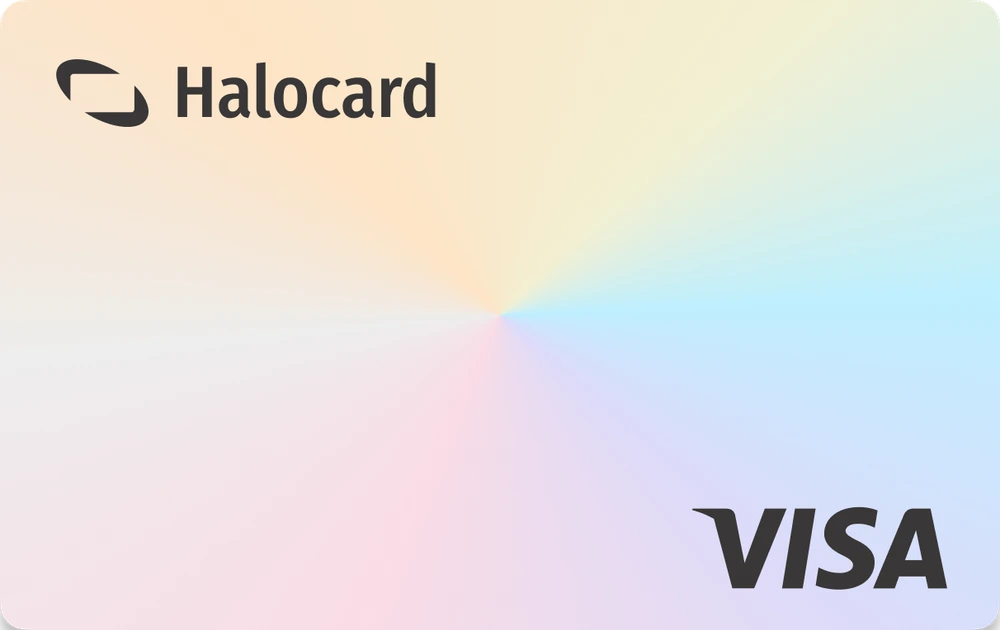
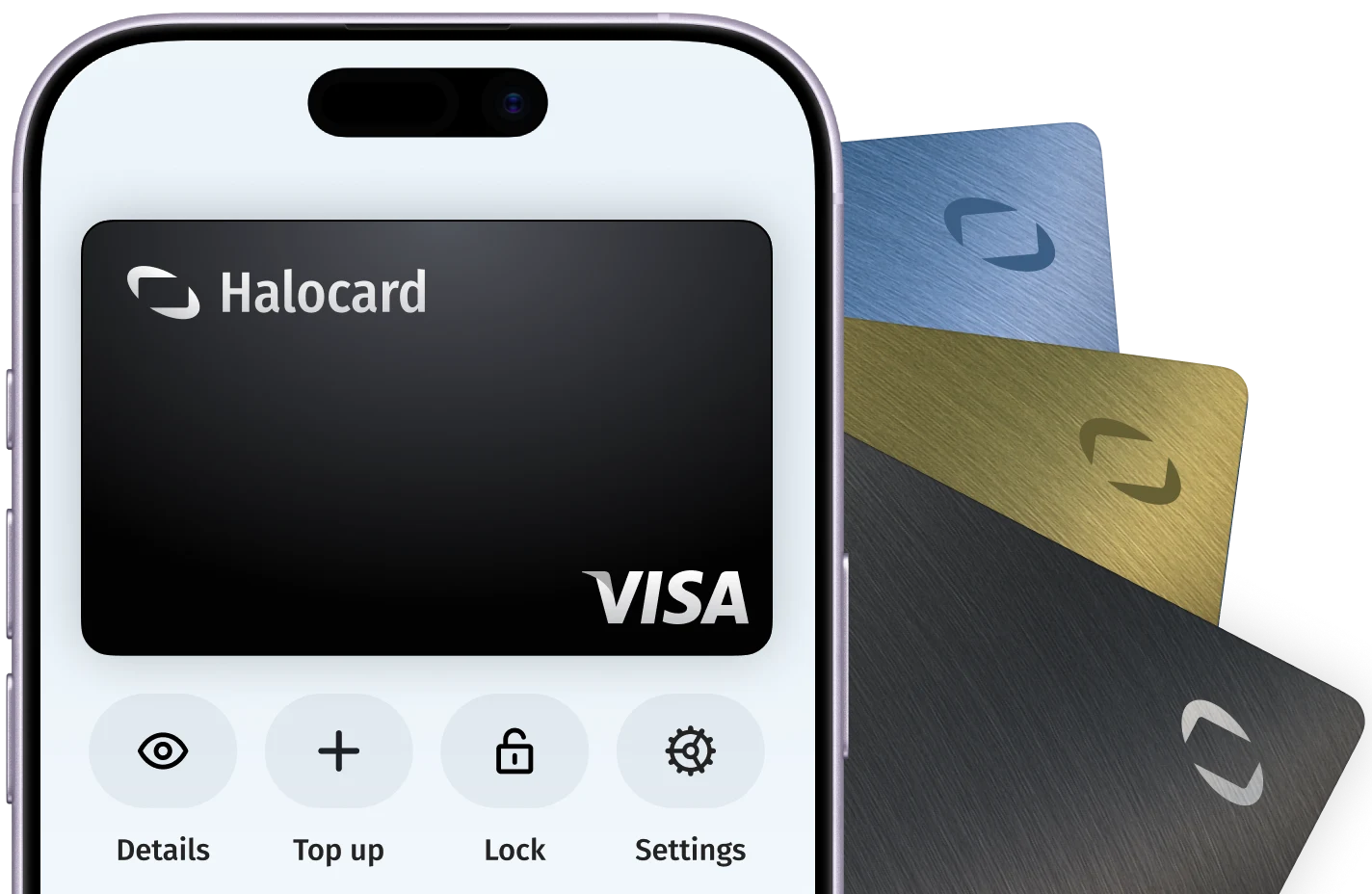
Halocard is a US-issued Visa credit card for customers in the US and 120+ countries, with a separate virtual card for each merchant you pay. Halocard works like a debit card: you spend the balance you load, with no credit line and no credit check. It is built for online spending: subscriptions, AI tools, cloud services, Google Ads, Meta Ads, TikTok Ads, and X Ads, and international payments.

Create cards in seconds from a web browser, set daily, weekly or monthly limits on each card, lock or cancel any card instantly, and choose the billing address and cardholder name on each card. Fund your balance by debit/credit card, Apple Pay, Google Pay, bank transfer, stablecoins, or crypto. Outside the US? You don't need an SSN, a US address or a US bank account.
About Revolut

Revolut is a fintech app that combines currency exchange, banking, budgeting, investing, crypto and cards. It is designed around consumer banking and international spending, and it holds a banking licence in several of its markets.

Revolut offers multi-use and disposable virtual debit cards on every plan, including the free Standard plan, and multi-use cards work with Apple Pay and Google Pay. Its cards draw on your Revolut balance and are issued by the Revolut company in the country you live in: in the US, they are prepaid debit cards issued by Lead Bank. Revolut sells credit cards only in Brazil, Ireland, Lithuania, Poland, Spain and the US, subject to a credit check.

Revolut vs Halocard FAQ

Which is better for paying US platforms?
Halocard, for most people outside the US. Halocard is a US-issued Visa credit card for customers in the US and 120+ countries, with a billing address you choose on each card. A Revolut card is issued in your country of residence, so outside the US it reaches a US checkout as a foreign card.
What BIN does a Revolut virtual card use?
Revolut issues cards through the Revolut company in your country of residence, as Visa or Mastercard depending on your region, so the card's issuing country follows where you live. US residents get prepaid debit cards from Lead Bank.
Can non-US residents get a US-issued card from Revolut?
No. Revolut's US account requires you to live in the US. Halocard gives customers for customers in the US and 120+ countries a US-issued Visa credit card. Outside the US? You don't need an SSN, a US address or a US bank account.

Can Revolut be used for US subscriptions?
Often, yes, but it depends on the merchant. Some US services check where a card was issued or refuse prepaid cards; Microsoft Azure, for example, has rejected Revolut cards as prepaid. Revolut's disposable cards can't be used for subscriptions at all.
Which Revolut plan includes the disposable virtual card?
Any plan, including the free Standard plan. Revolut allows one disposable card at a time, and its number changes after each payment.
Does Revolut offer virtual credit cards?
Only in some markets. Revolut sells credit cards in Brazil, Ireland, Lithuania, Poland, Spain and the US, subject to a credit check, and offers a virtual credit card in Ireland. Its standard virtual cards are debit cards. Every Halocard is a Visa credit card, with no credit check.
Does Halocard require an SSN?
Not outside the US. Outside the US? You don't need an SSN, a US address or a US bank account. US residents may be asked for an SSN or ITIN, as US card providers must check. Halocard runs no credit check. Halocard never reports to credit bureaus.
Is Halocard better than Revolut for advertising payments?
Yes, for most advertisers. Halocard is accepted at Google Ads, Meta Ads, TikTok Ads, and X Ads, every card is a US-issued Visa credit card, and each ad account can have its own card and billing address.
Does Revolut support custom billing addresses?
No. Revolut cards carry the details on your Revolut account. Halocard lets you choose the billing address and cardholder name on each card.
Does Halocard support stablecoin funding?
Yes. Halocard accepts stablecoins (USDC, USDT) and crypto (BTC, ETH, SOL), alongside card, phone wallet and bank transfer.
Where does Revolut fit better than Halocard?
Revolut is the stronger option for everyday banking, currency exchange, holding several currencies and travel spending: its Standard plan is free, it converts at the interbank rate up to a monthly allowance, every plan can order a physical card, and it adds investing and crypto in many markets.
What do users say about Revolut and Halocard?
Revolut is rated 4.7/5 on Trustpilot from 470,000+ reviews: praise centres on the app and exchange rates, and complaints on account freezes and slow document checks. Halocard is rated 4.2/5 (11 reviews), with reviewers outside the US describing US platforms that accepted Halocard after refusing their local cards, and some noting they'd prefer no monthly fee.

Sources

  • Revolut, virtual cards (UK): revolut.com/cards/virtual-card
  • Revolut, virtual cards (US): revolut.com/en-US/cards/virtual-card
  • Revolut, plans (UK): revolut.com/our-pricing-plans
  • Revolut, plans (US): revolut.com/en-US/our-pricing-plans
  • Revolut, US standard fees: revolut.com/en-US/legal/standard-fees
  • Revolut Help, supported countries: help.revolut.com/en-US/help/profile-and-plan/opening-an-account/what-countries-are-supported
  • Revolut Help, credit card countries: help.revolut.com/de-AT/help/more/question-credit-eligible-countries
  • Revolut, virtual credit card (Ireland): revolut.com/en-IE/credit-cards/virtual-credit-card
  • Revolut, stablecoin conversion: revolut.com/crypto/stablecoin-conversion
  • Microsoft Q&A, Azure rejecting Revolut cards as prepaid: learn.microsoft.com/en-us/answers/questions/1063589
  • Trustpilot, Revolut reviews: trustpilot.com/review/www.revolut.com
  • Forbes Advisor UK, Revolut review: forbes.com/advisor/uk/banking/revolut-review
  • NerdWallet, Revolut review: nerdwallet.com/banking/reviews/revolut
  • Reddit, r/Revolut on using Revolut just for virtual cards: reddit.com/r/Revolut/comments/1cr68wy/is_revolut_worth_just_for_virtual_card

Disclaimer

Based on public information as of October 2026 (see Sources above); Revolut's products, fees and terms may change, so check before you decide. Halocard publishes this page and makes one of the products compared, so verdicts and ticks are our opinion. Revolut and its product names are trademarks of their owner, used only to identify its products; Halocard is not affiliated with or endorsed by Revolut. Quoted reviews are verbatim Trustpilot excerpts of individual experiences, not verified by us. Not financial, legal or tax advice.

Get a Halocard in less than 5 minutes