HalocardvsMySudo

A US-issued Visa credit card for customers in the US and 120+ countries

Virtual Mastercards inside a privacy app, for US-based users, capped at $250 a purchase

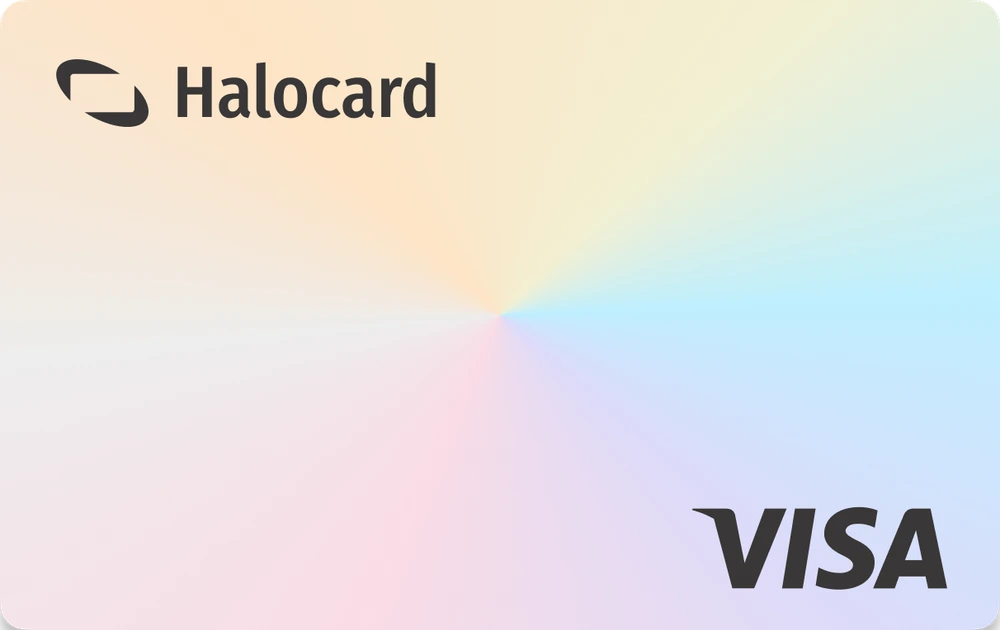
Halocard is the better fit than MySudo for subscriptions, ad budgets, and anything billed outside the United States. Halocard is a US-issued Visa credit card for customers in the US and 120+ countries: you can spend your balance up to $1M a day, at any Visa merchant, online or in person. MySudo tucks virtual Mastercards inside a wider privacy app, but those cards are capped at $250 per purchase and $350 a day, and only work with US merchants for US-based users. MySudo suits US users who mainly want private phone numbers and inboxes and would treat a low-value card as a bonus.

Halocard pros and cons

  • Pros: A US-issued Visa credit card that works like a debit card
  • Pros: Spend up to $1M a day, with no starter caps
  • Pros: Works at any Visa merchant, online, in store and abroad
  • Pros: Apple Pay and Google Pay on every plan
  • Pros: Any billing address and cardholder name on every card
  • Pros: For residents of the US and 120+ countries
  • Cons: No free plan, though Essential is free with 3 referrals
  • Cons: No private phone numbers or email aliases
  • Cons: A minimum first deposit to activate your account

MySudo pros and cons

  • Pros: Cards bundled with private phone numbers, email and browsing
  • Pros: One card per Sudo keeps identities separate
  • Pros: Paid plans from $1.99 a month
  • Pros: Free to create a card
  • Cons: $250 per purchase and $350 a day, across every card
  • Cons: US merchants and US dollars only, online or by phone
  • Cons: 2.99% + $0.31 added to every purchase
  • Cons: US-based users with a US funding card only

Halocard vs MySudo compared

Halocard is a US-issued Visa credit card for customers in the US and 120+ countries. MySudo is a privacy suite from Anonyome Labs that includes virtual Mastercards as one component of a subscription. Here they are side by side on eligibility, merchant coverage, spending headroom, controls, and true cost.

Eligibility

HalocardAdvantage: For residents of the US and 120+ countriesMySudoUS-based users only
Customers outside the USHalocard120+ countriesMySudoNot supported
Card from a US bankHalocardNot neededMySudoRequired to fund your cards
Residents of Canada, the UK and AustraliaHalocardYesMySudoApp only, no card
Identity checkHalocardYes, in under 3 minutesMySudoYes

MySudo sells its app internationally, with pricing for the US, Canada, Australia and the UK, but the card does not follow: every regional pricing table says virtual cards are available in the United States only. A Canadian or British subscriber gets the numbers, inboxes and browsers, but no card. Halocard is a US-issued Visa credit card for customers in the US and 120+ countries. Outside the US? You don't need an SSN, a US address or a US bank account. See supported countries

Cards

HalocardAdvantage: US-issued Visa credit cardMySudoMastercard that charges your linked card
Card networkHalocardVisaMySudoMastercard
Issued byHalocardThird NationalMySudoSutton Bank, Member FDIC
What you spendHalocardThe balance you loadMySudoYour linked US credit or debit card
Reusable cardsHalocardYesMySudoYes

Halocard registers as a credit card, clearing both the issuing-country test and the card-class test that many billing systems run. Halocard works like a debit card: you spend the balance you load, with no credit line and no credit check. MySudo cards run on Mastercard, are issued by Sutton Bank, Member FDIC and powered by Marqeta. Every charge routes through to the single credit or debit card you have linked, with a generic MySudo descriptor on your statement. See Halocard's card details

Funding

HalocardAdvantage: Card, Apple Pay, Google Pay, Bank Transfer, Stablecoins & CryptoMySudoOne linked US credit or debit card
Debit or credit cardHalocardVisa, MastercardMySudoOne US card with a US billing address
Bank transferHalocardUSD, CAD, EUR or GBPMySudoNot supported
Digital walletsHalocardApple Pay and Google PayMySudoNot supported
StablecoinsHalocardUSDC, USDTMySudoNot supported
CryptoHalocardBTC, ETH, SOLMySudoNot supported

MySudo permits exactly one active funding source across the whole account, and every card draws from it: a major US credit or debit card with an American billing address. Prepaid cards, PayPal-issued cards and peer-to-peer services such as PayPal, Venmo and Western Union are rejected, and a temporary validation charge of about $0.50 to $1.00 appears when you first attach a card. Anyone without an American bank relationship stops here. Halocard keeps one balance you top up by debit/credit card, Apple Pay, Google Pay, bank transfer, stablecoins, or crypto. See how to deposit

Spending limits

HalocardAdvantage: Your balance, up to $1M a dayMySudo$250 a purchase, $350 a day
Per purchaseHalocardUp to your balance and daily limitMySudo$250
Per dayHalocardUp to $1MMySudo$350, across every card
Your own limit on each cardHalocardDaily, weekly or monthlyMySudoNot supported

MySudo enforces a $250 maximum per purchase and a $350 daily total across every card on the account, measured before fees. Exceed either and the purchase is declined, or the merchant quietly bills a different card it has stored. Annual software renewals, flights, hardware, and cloud invoices routinely clear $250, and any ad budget passes $350 in a day. Halocard lets you spend your balance up to $1M a day, with your own limit on each card. See card spending limits

USD bank account

HalocardAdvantage: Your own US account and routing numberMySudoNone
Your own account and routing numberHalocardYesMySudoNot supported
Receive ACH transfersHalocard1 to 3 business daysMySudoNot supported
Receive same-day ACHHalocardYesMySudoNot supported
Receive domestic wiresHalocardThe same dayMySudoNot supported
Send ACH and wire transfersHalocardYesMySudoNot supported

Halocard includes a US bank account with its own account and routing numbers, so you can receive salary, transfers from friends and family, and any other payment you'd send to a US checking account. ACH transfers arrive in 1 to 3 business days and domestic wires the same day, straight into your Halocard balance and ready to spend. MySudo offers no bank account or routing numbers: every card draws on one debit or credit card you hold elsewhere. Send and receive USD payments

Where it works

HalocardAdvantage: Anywhere Visa is accepted, online and in personMySudoUS merchants in US dollars, online or by phone
Merchants outside the USHalocardYesMySudoNot supported
Purchases in other currenciesHalocard1.5% + $0.30MySudoNot supported
In-store paymentsHalocardApple Pay and Google Pay or a physical cardMySudoNot supported
Online and phone ordersHalocardYesMySudoUS merchants only

MySudo's documentation is specific about the boundaries: merchants must be US-based and accept Mastercard, charges must be billed in US dollars, and purchases are limited to online and telephone orders, with in-store and international payments not supported. Halocard has none of those restrictions. Cards work wherever Visa is accepted, at more than 175M merchants, including in person, which matters for anyone splitting spending between web checkouts and physical purchases. Check merchant acceptance

Controls

HalocardAdvantage: Per-card limits, any billing address, instant lockMySudoOne card per Sudo, close any time
Limits on each cardHalocardDaily, weekly or monthlyMySudoNot supported
Lock or close a cardHalocardInstantMySudoClose at any time
Billing addressHalocardAny address, in the US or elsewhereMySudoA US address only
Custom cardholder nameHalocardYesMySudoUnknown
Single-use cardsHalocardAnnual plans, from 2 a monthMySudoNot supported
3D Secure codesHalocardYesMySudoUnknown

MySudo leans on compartmentalisation: one card per Sudo keeps identities and their spending walled off, transaction history stays in the app, closing a card leaves your other Sudos untouched, and statements show a neutral descriptor. Halocard leans on configurable limits and address control: daily, weekly or monthly limits on each card, instant lock or cancellation, and a billing address of your choosing on every card. MySudo also asks for a billing address, but it must be a deliverable US address, so a platform that checks the address against the card's origin can still refuse it. Set a card's name and address

Cards per plan

HalocardAdvantage: 3 to 60 cards, by planMySudo3 to 9 active cards, one per Sudo
Entry planHalocard3 cards, $12/moMySudo3 cards on SudoGo, $1.99/mo
Mid planHalocard12 cards, $15/moMySudo3 cards on SudoPro, $4.99/mo
Top planHalocard60 cards, $75/moMySudo9 cards on SudoMax, $14.99/mo

SudoGo and SudoPro both cap out at three active cards, so upgrading between them buys more phone numbers, minutes, messages and storage rather than extra cards. Only SudoMax lifts the count, to nine, and MySudo lets you create up to five new cards in any 24-hour window. Halocard's ceiling sits far higher, at 60 cards on Elite, which matters once you assign a separate card to each vendor. Compare Halocard plans

Pricing

HalocardAdvantage: From $12 a month, or free with 3 referralsMySudoFrom $1.99 a month; the free plan has no cards
Free planHalocardNo, but Essential is free with 3 referralsMySudoSudoFree, with no cards
Lowest plan with cardsHalocard$12/moMySudo$1.99/mo
Largest personal planHalocard$75/moMySudo$14.99/mo
Annual billingHalocardAdds disposable and physical cardsMySudo$19.99 to $149.99 a year
Also includedHalocardA US bank accountMySudoPhone numbers, email and a private browser

On plan price alone MySudo is cheaper: a paid tier is mandatory for cards, but it starts at $1.99 a month and also covers phone numbers, inboxes and browsing. Halocard plans start at $12 a month and buy the card itself, and referrals can cover the cost: Essential is free with 3 referrals. What you pay per purchase is a different story, below. Compare Halocard plans

Fees

HalocardAdvantage: No fee on US-dollar purchasesMySudo2.99% + $0.31 on every purchase
A $5 purchaseHalocardNo feeMySudo$0.50 (10.0%)
A $10 purchaseHalocardNo feeMySudo$0.61 (6.1%)
A $50 purchaseHalocardNo feeMySudo$1.81 (3.6%)
A $200 purchaseHalocardNo feeMySudo$6.29 (3.1%)
Minimum feeHalocardNoneMySudo$0.50
Purchases in other currenciesHalocard1.5% + $0.30MySudoNot supported
Fee returned on a refundHalocardNo fee to returnMySudoNot supported

MySudo charges twice: first the plan, then 2.99% + $0.31 from the payment processor on each approved purchase, rounded up to $0.50 when lower. Card creation itself costs nothing. The rounding rule makes small purchases proportionally expensive: a $9.99 monthly streaming subscription pays about 6.1% on every renewal, indefinitely, and the fee isn't returned when a merchant refunds you. Halocard charges nothing on US-dollar purchases once the flat monthly fee is paid, so heavier use lowers your effective rate instead of raising it. See all Halocard fees

Support

HalocardAdvantage: Chat, email, and phone on every planMySudoA ticket form and email
ChatHalocardYesMySudoUnknown
EmailHalocardYesMySudoYes
PhoneHalocardYesMySudoUnknown

Halocard answers by chat, email, and phone on every plan. MySudo takes requests by form and email, backed by a detailed help centre and a community forum. Visit the help centre

Trust and transparency

HalocardAdvantage: A regulated US company and card issuerMySudoA named US company and bank
Company and countryHalocardHalocard LLC, USAMySudoAnonyome Labs, Inc., US
Registration or licenceHalocardFinCEN, BSA ID 31000317046430MySudoNone of its own; partner-bank cards
Card issuerHalocardThird NationalMySudoSutton Bank, Member FDIC
Account held atHalocardSSB, Member FDICMySudoNo balance: charges your linked card
Founders namedHalocardEdward TaylorMySudoSteve Shillingford
FoundedHalocard2024MySudo2014
TrustpilotHalocard4.2/5 (11 reviews)MySudo3.1/5 (7 reviews)

MySudo is made by Anonyome Labs, Inc., with cards from Sutton Bank, Member FDIC. Its 3.1/5 rests on only 7 reviews, though its app rates 4.7/5. Halocard names its company, card issuer, account bank and founder. About Halocard

Why people choose Halocard over MySudo

Headroom for real-world spending

MySudo declines anything over $250, and stops at $350 a day across every card. Annual software renewals, flights, hardware, cloud invoices and ad budgets clear those numbers easily. Halocard lets you spend your balance up to $1M a day, with your own limit on each card.

Cards that work where you shop

Any merchant on the Visa network, in other currencies for 1.5% + $0.30 instead of an outright block, and in person through Apple Pay and Google Pay on every plan, including Essential.

No fee on every purchase

MySudo adds 2.99% + $0.31 to every approved purchase, forever. Halocard charges a flat monthly fee and nothing on US-dollar purchases.

A billing address of your choosing

Set any billing address and cardholder name on each card, in the US or anywhere else. Reviewers outside the US single this out as the reason their payments finally went through.

A card for every vendor

Hold up to 60 cards on Elite and give each subscription or vendor its own, against MySudo's nine on its top plan.

Key drawbacks of MySudo

Capped at $250 a purchase

Every MySudo card shares a $350 daily allowance and a $250 single-purchase maximum, so larger renewals, travel and ad spend are declined.

US merchants, US dollars, online only

MySudo cards work only at US-based merchants billing in dollars, online or by phone. In-store and international payments are not supported.

A fee on every purchase

The processor adds 2.99% + $0.31 to each purchase, with a $0.50 minimum, and keeps it even when the merchant refunds you.

Needs a US funding card

Cards are offered only to US-based users, and every card draws from one US credit or debit card. Prepaid cards and PayPal-issued cards are rejected.

About Halocard

Halocard exists to do one thing. Halocard is a US-issued Visa credit card for customers in the US and 120+ countries, with a separate virtual card for each merchant you pay. It registers as a credit card inside merchant systems, which helps with authorisation rates and predictable recurring charges. Halocard works like a debit card: you spend the balance you load, with no credit line and no credit check.

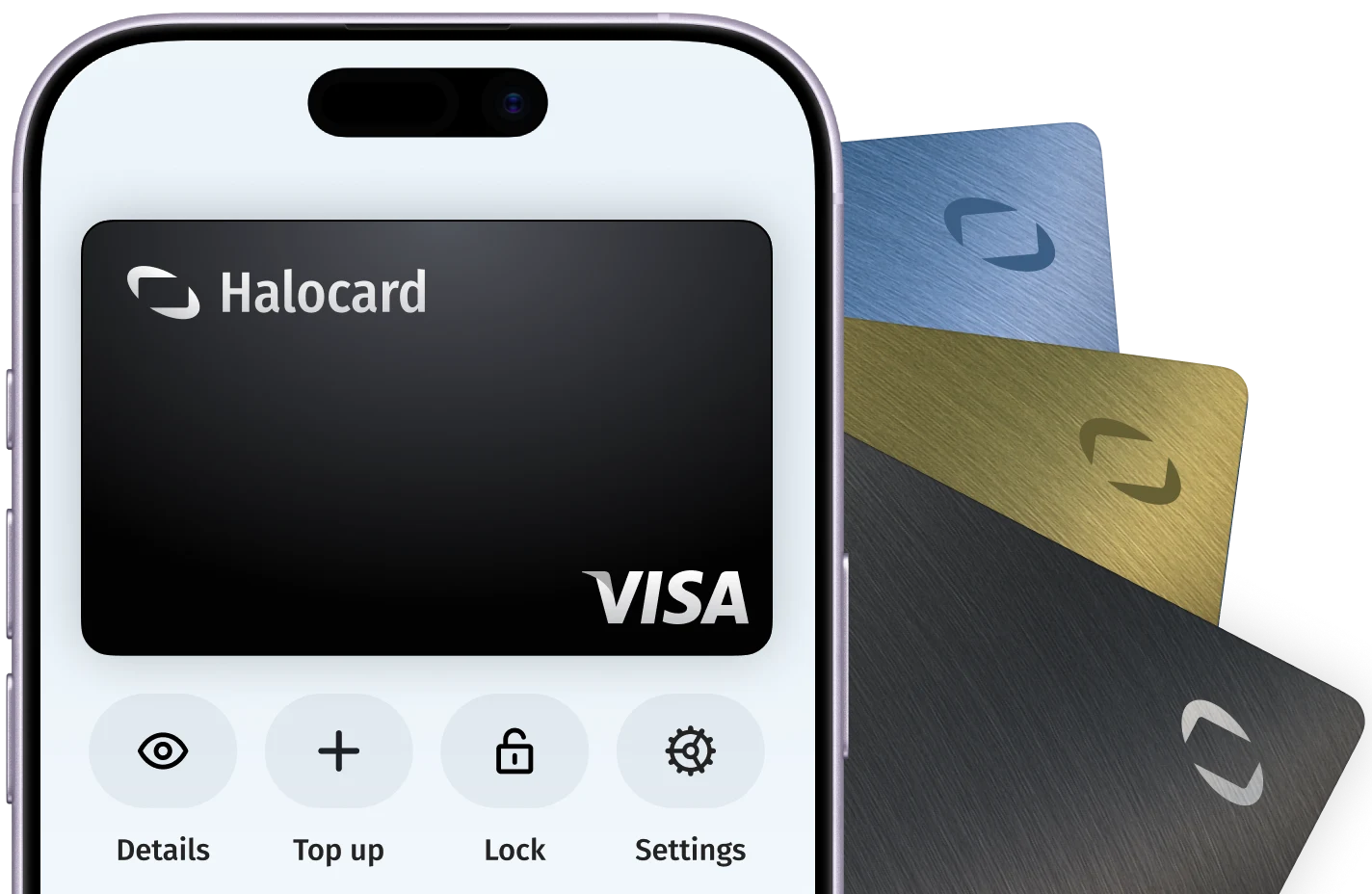
Create cards in seconds from a web browser, set daily, weekly or monthly limits, lock or cancel any card instantly, and choose the billing address and cardholder name on each one. Fund your balance by debit/credit card, Apple Pay, Google Pay, bank transfer, stablecoins, or crypto. Outside the US? You don't need an SSN, a US address or a US bank account.

About MySudo

MySudo comes from a different starting point. Anonyome Labs built it as a compartmentalisation tool, where each identity you create, called a Sudo, receives its own phone number, email address, messaging handle, private browser, and one virtual card. The card is a feature of the identity, not the centre of the product.

MySudo cards run on Mastercard, are issued by Sutton Bank, Member FDIC, and are powered by Marqeta. Every charge passes through to the single US credit or debit card you link, with a generic MySudo descriptor on your statement. Virtual cards are offered only to US-based users on a paid plan, and only work at US merchants billing in dollars, online or by phone.
Halocard vs MySudo FAQ

What is the difference between MySudo and Halocard?
MySudo is a privacy suite bundling virtual Mastercards with phone numbers, inboxes, handles, and browsers, restricted to US users and US merchants with a $250 purchase cap. Halocard is a US-issued Visa credit card for customers in the US and 120+ countries, with spending up to $1M a day and a billing address of your choosing on every card.
How much does a virtual card cost?
It depends entirely on the pricing model. MySudo charges nothing to create a card but adds 2.99% + $0.31 to each approved purchase, with a $0.50 minimum, on top of the plan fee. Halocard charges a flat subscription from $12 a month and nothing on US-dollar purchases. Frequent or larger spenders generally pay less overall on a flat model.
Can I get a virtual credit card instantly and use it right away?
Yes with both, subject to setup. MySudo issues a card once you hold a paid plan, pass its identity check and link an eligible US funding card, and you may create up to five new cards in a 24-hour period. Halocard produces your first card in under 5 minutes from a web browser with no app download, and identity verification takes under 3 minutes.
Can I use MySudo cards outside the US or in a shop?
No. MySudo cards only work at US merchants billing in US dollars, online or by phone. Halocard works wherever Visa is accepted, in other currencies for 1.5% + $0.30, and in person with Apple Pay and Google Pay or a physical card.
Which is better for subscriptions and ad spend?
Halocard. A $9.99 subscription pays about 6.1% in MySudo fees on every renewal, and any ad budget passes MySudo's $350 daily cap. Halocard charges nothing on US-dollar purchases and lets you give each subscription or ad account its own card and limit.
What are the disadvantages of a virtual card?
The drawbacks are mostly practical. Refunds get complicated if the card has already been closed, certain bookings require the physical card at check-in, recurring charges fail if a card expires or a funding source lapses, provider-imposed caps can decline larger purchases without warning, and losing account access affects every card at once.
What should I check when comparing virtual card providers?
Confirm you can register at all, and whether the card reaches your country even when the app does. Then check merchant coverage (international, in store, other currencies), the transaction and daily caps against your largest purchase, the issuing country and card type, how you fund it, the effective cost per purchase including minimum fees, how many cards you can hold, whether you can set a billing address, how identity data is kept, and how the company answers its reviews.
Which virtual card is the best?
No single card wins for everyone, so match the product to the constraint that binds you. Choose on eligibility first, then merchant coverage, then spending headroom, then cost. For most people that points to Halocard.Read the best Privacy.com alternatives
Does Halocard require an SSN?
Outside the US? You don't need an SSN, a US address or a US bank account. Halocard performs no credit check: Halocard never reports to credit bureaus. Verification takes under 3 minutes, and Halocard doesn't store your ID documents, which are held by its verification provider as banking laws require.
Is Halocard available in my country?
Halocard is a US-issued Visa credit card for customers in the US and 120+ countries. Check the current list before you sign up.See supported countries

Sources

  • MySudo Support, Overview of MySudo Virtual Cards: support.mysudo.com/hc/en-us/articles/17403738961307-Overview-of-MySudo-Virtual-Cards
  • MySudo Support, Virtual Cards Pricing and Plan Requirements: support.mysudo.com/hc/en-us/articles/17404132709275-MySudo-Virtual-Cards-Pricing-and-Plan-Requirements
  • MySudo Support, Setting Up a MySudo Virtual Card: support.mysudo.com/hc/en-us/articles/17403956853531-Setting-Up-a-MySudo-Virtual-Card
  • MySudo Support, Funding Sources for MySudo Virtual Cards: support.mysudo.com/hc/en-us/articles/360044684434-Funding-Sources-for-MySudo-Virtual-Cards
  • MySudo Support, Where You Can Use MySudo Virtual Cards: support.mysudo.com/hc/en-us/articles/360041302294-Where-You-Can-Use-MySudo-Virtual-Cards
  • MySudo Support, Virtual Card Limits and Usage: support.mysudo.com/hc/en-us/articles/360041323534-MySudo-Virtual-Card-Limits-and-Usage
  • MySudo Support, Refunds and Exchanges with MySudo Virtual Cards: support.mysudo.com/hc/en-us/articles/360041777153-Refunds-and-Exchanges-with-MySudo-Virtual-Cards
  • MySudo Support, Disputes, Chargebacks, and Declined Purchases: support.mysudo.com/hc/en-us/articles/360041302454-Disputes-Chargebacks-and-Declined-Purchases-with-MySudo-Virtual-Cards
  • MySudo, Plans and Pricing: mysudo.com/mysudo-plans
  • MySudo, MySudo Suite (issuer disclosure): mysudo.com
  • Anonyome Labs, Government Requests: anonyome.com/government-requests
  • Trustpilot, MySudo reviews: trustpilot.com/review/mysudo.com
  • Apple App Store, MySudo: apps.apple.com/us/app/mysudo-identity-protection/id1237892621

Disclaimer

Based on public information as of October 2026 (see Sources above); MySudo's products, fees and terms may change, so check before you decide. Halocard publishes this page and makes one of the products compared, so verdicts and ticks are our opinion. MySudo and its product names are trademarks of their owner, used only to identify its products; Halocard is not affiliated with or endorsed by MySudo. Not financial, legal or tax advice.

Get a Halocard in less than 5 minutes