

Halocard is the best MySudo alternative for the virtual card, for most people. It's a US-issued Visa credit card, for customers in the US and 120+ countries, with no per-purchase cap where MySudo's card stops at $250, and you fund it by debit/credit card, Apple Pay, Google Pay, bank transfer, stablecoins, or crypto. For a dedicated second phone number, Burner and Hushed are the better pick, Privacy.com suits US residents who only want card privacy, and SimpleLogin is the pick for email aliases.
Quick Answer: The best MySudo alternative depends on which piece of the bundle you actually use. Halocard is the strongest pick for the virtual card side, issuing a reloadable US Visa in the US and 120+ countries with no $250 purchase cap. Burner and Hushed are better dedicated phone number apps if calls and texts are your priority, Privacy.com wins for US-only card privacy, and SimpleLogin is building toward MySudo-style features from the email side.
MySudo lets you create separate digital identities, called Sudos, with their own phone number, encrypted email, messaging handle, private browser, and virtual card. Instead of giving websites your real details, you can use a Sudo and delete that identity if it gets spammed or compromised.
It is a smart privacy tool, but it has limits. Phone numbers are currently available only in the United States, Canada, and the United Kingdom. The free tier is extremely limited, MySudo does not integrate with your phone’s native dialer or messaging app, and its virtual card is restricted to US merchants, with a $250 purchase limit, $350 daily cap, and a 2.99% + $0.31 transaction fee.
This guide compares 11 MySudo alternatives for private phone numbers, email privacy, and virtual cards, including tools that may do one of those jobs better than MySudo does everything at once.
Key Takeaways
-
Halocard is the best MySudo alternative for the virtual card. A reloadable US-issued Visa in the US and 120+ countries, no $250 purchase cap, 0% fees on USD purchases, and a custom billing address on every card.
-
Match the alternative to the feature you actually use. Burner and Hushed are stronger dedicated phone number apps, Privacy.com covers card privacy for US residents, SimpleLogin handles email aliases, and Wise or Revolut suit multi-currency spending.
-
MySudo's free tier is a taste, not a tool. A single Sudo and a small allowance of calls and texts push most people to a paid plan fast, and pricing climbs to $14.99 a month for unlimited use.
-
A personal phone number given out by default increases your exposure. Every sign-up that collects your own phone number adds to your data trail, which is why a dedicated second number, not just a bundled feature, is worth getting right.
Quick Comparison Table
| Provider | Service Type | Availability | Phone Numbers | Virtual Card | Key Pricing | Best For |
|---|---|---|---|---|---|---|
| Halocard | Virtual card platform | US and 120+ countries; minimal KYC | No | Reloadable, no per-purchase cap | $12–$75/mo; 1.5% + $0.30 | A capable virtual card without the bundle |
| Burner | Dedicated phone number app | US and Canada | Yes, disposable and long-term | No | From about $4.99/mo per line | A dedicated second phone number |
| Hushed | Dedicated phone number app | US, Canada, UK, 40+ countries for calling | Yes, multiple lines | No | From $4.99/mo per line | Disposable numbers you can delete |
| Google Voice | Free VoIP phone number | US primarily | Yes, one free number | No | Free | A no-cost personal number for US users |
| Privacy.com | US virtual payment cards | US residents, 18+, US bank | No | Merchant-locked, one-time cards | $0–$25/mo; 3% FX on lower tiers | Free card privacy for US residents |
| SimpleLogin | Email alias service | Global | No | No | Free tier; paid from about $2.50/mo | Email aliases, with more features planned |
| RedotPay | Crypto-funded virtual/physical card | 100+ countries | No | Reloadable, mobile wallets | $10 virtual; $100 physical; Pro $12.90/mo | Crypto and stablecoin spenders |
| Wise | Multi-currency account + debit card | Broad international | No | Reloadable, 40+ currencies | No monthly fee; card ~$9 | Cheap cross-border card spend |
| Revolut | Multi-currency account + virtual/disposable debit | UK, EEA, US, more | No | Disposable and reloadable | $0–$16.99/mo | Multi-currency and disposable cards |
| N26 | European bank + Mastercard debit | European markets | No | Reloadable virtual cards | Free to €16.90/mo | European digital banking |
| StatesCard | US virtual prepaid Visa debit | International; Delaware address | No | Store-locked, one-time cards | $16.99 sign-up, $3.95/month; loads 5% to 8.5% | Simple US streaming access |
Best MySudo Alternatives for Phone Numbers, Email, and Virtual Cards
Below are the 11 best alternatives to MySudo, starting with the strongest virtual card, then working through dedicated phone number apps, email privacy, and multi-currency spending.
1. Halocard
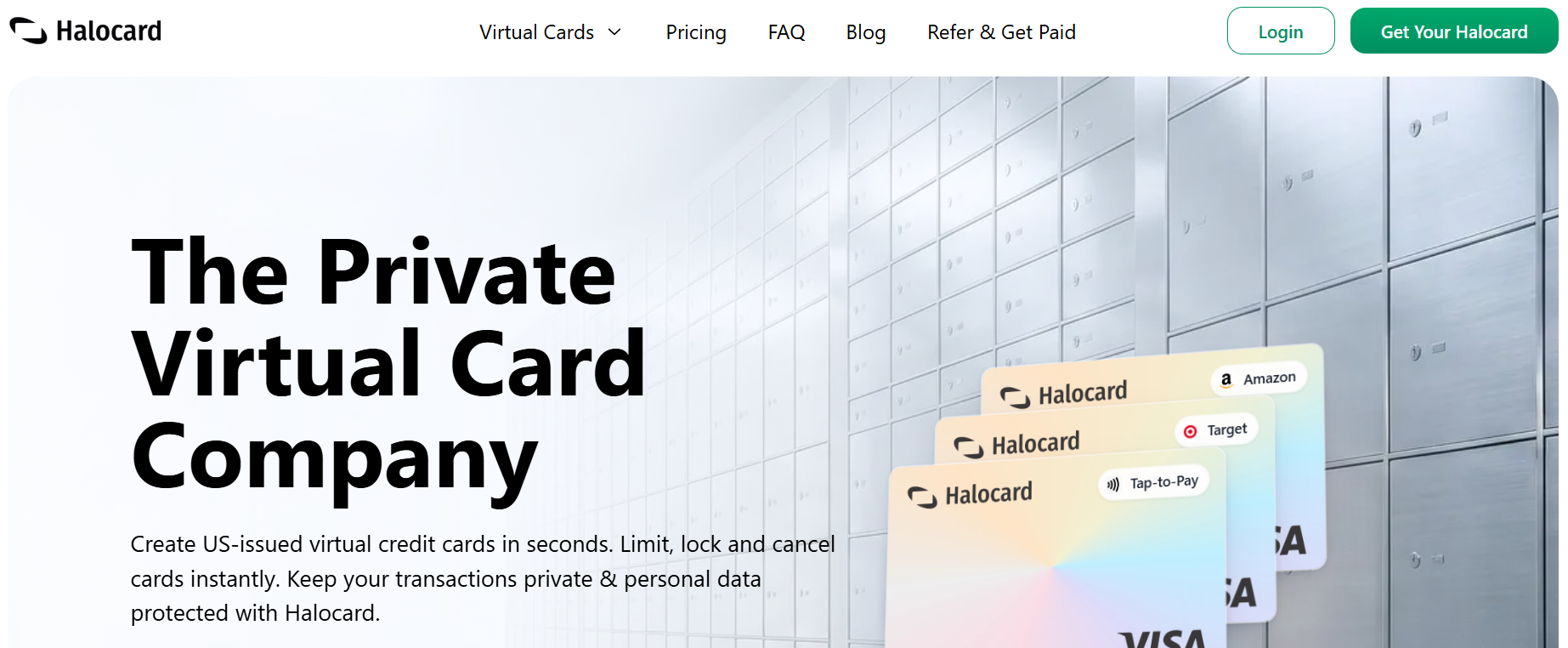
Halocard is a US-based fintech offering virtual and physical payment cards, built around a reloadable US-issued Visa that clears US checkouts without the $250 purchase ceiling that limits MySudo's card.
How It Works. You sign up in a browser, verify with a passport or national ID in under three minutes with no SSN for non-US residents, then generate cards with their own spending limits and a custom billing address. Halocard cards are issued through financial partners under Visa and run at 175 million-plus merchants via Apple Pay and Google Pay, including in-person purchases MySudo's online-only card cannot make.
Costs & Fees.
-
Plans: Essential $12/mo (3 cards), Pro $15/mo (12), Elite $75/mo (60); business from $29/mo
-
0% on USD online purchases; 1.5% + $0.30
-
Funding: debit/credit card, Apple Pay, Google Pay, bank transfer, stablecoins, or crypto
Spending Limits and Funding. Halocard runs on deposited funds rather than a credit line, so there is no credit check. You can load funds by debit/credit card, Apple Pay, Google Pay, bank transfer, stablecoins, or crypto, loading funds via cryptocurrency being an increasingly popular option for online payment services, and set per-transaction, daily, and monthly limits on each card individually rather than one account-wide cap.
Key Advantages.
-
A reloadable card with no $250-per-purchase ceiling
-
The US and 120+ countries with minimal KYC, no SSN for non-US residents
-
0% USD fees, versus MySudo's 2.99% + $0.31 processor fee
-
Merchant-specific virtual cards that prevent unnecessary data sharing with businesses you only pay once
-
Works in person via Apple Pay and Google Pay, not just online
Specific Drawbacks.
-
No phone numbers, email, or messaging, only the card
-
A subscription rather than a bundled feature, though Essential is free with 3 referrals
-
FX fee on non-USD purchases: 1.5% + $0.30
Who It's Best For. Anyone who used MySudo mainly for its virtual card and wants higher limits, wider merchant acceptance, and international availability, as covered in our guide to virtual cards with a US billing address.
Why Someone Would Choose Halocard Over MySudo. MySudo's card caps a single purchase at $250 and a day at $350, works at US merchants only, and adds a processor fee to every transaction. Halocard removes the cap, works internationally, and charges 0% on dollar spend, making it the stronger choice for anyone whose spending outgrew MySudo's card. Our full comparison in Privacy.com vs MySudo vs Halocard breaks this down further. See Halocard vs MySudo side by side.
2. Burner

Burner is a dedicated second phone number app, one of the oldest in the category, built for people who want a disposable line without the rest of MySudo's bundle.
How It Works. You create a Burner number in the app for calls, texts, and voicemail, with options to set auto-replies, forward calls, and block spam through Nomorobo integration. Numbers can be renamed, muted, or deleted the moment you are done with them.
Costs & Fees.
-
Plans typically start around $4.99/month per line, with multi-line and annual options
-
Credits available for lighter, pay-as-you-go use
Spending Limits and Funding. Not applicable; Burner is a communications app rather than a payment service, with no virtual card of its own.
Key Advantages.
-
Strong call quality and spam-blocking add on integrations
-
Integrations with Dropbox, Slack, and other apps for saving voicemails and photos
-
Nine years of operating history, longer than most rivals
Specific Drawbacks.
-
US and Canada only
-
No email, browser, or card features for browsing the internet privately
-
Priced per line, so multiple numbers add up
Who It's Best For. People communicating with strangers or unfamiliar parties online who mainly used MySudo to avoid handing out their own phone number and want a more mature, dedicated app for that single job, without needing to set up a Sudo quickly for every new contact.
Why Someone Would Choose Burner Over MySudo. If a personal phone number is your main concern, Burner focuses on doing that well, with better native call handling than MySudo's in-app-only system, though you lose MySudo's email and card features.
3. Hushed
Hushed is another long-running dedicated second-number app, offering disposable and long-term phone numbers across more countries than Burner.
How It Works. You choose a number from the US, Canada, or UK, with call and messaging support for GIFs, photos, and voice, and international calling to a wide range of countries beyond your home line. Numbers can be deleted the moment you no longer need them.
Costs & Fees.
-
Unlimited calling and texting starting around $4.99/month per line
-
1-line and 3-line plans, with roughly 20% off on annual billing
-
International calling billed separately
Spending Limits and Funding. Not applicable; Hushed has no payment or card feature.
Key Advantages.
-
Numbers from the US, Canada, and UK, with calling to 40-plus countries
-
Genuinely disposable, unlike a real SIM card tied to a contract
-
Multiple lines for different purposes at once
Specific Drawbacks.
-
Not suited for emergency calls, so it cannot replace your main line
-
No email or virtual card
-
Some users report needing an existing phone number to fully activate the app
Who It's Best For. Travelers and online sellers who want a temporary number for a specific purpose and plan to delete it afterward.
Why Someone Would Choose Hushed Over MySudo. Hushed's broader international coverage and genuinely temporary numbers suit short-term needs better than MySudo's longer-term Sudo model, though you again lose the bundled email and card.
4. Google Voice
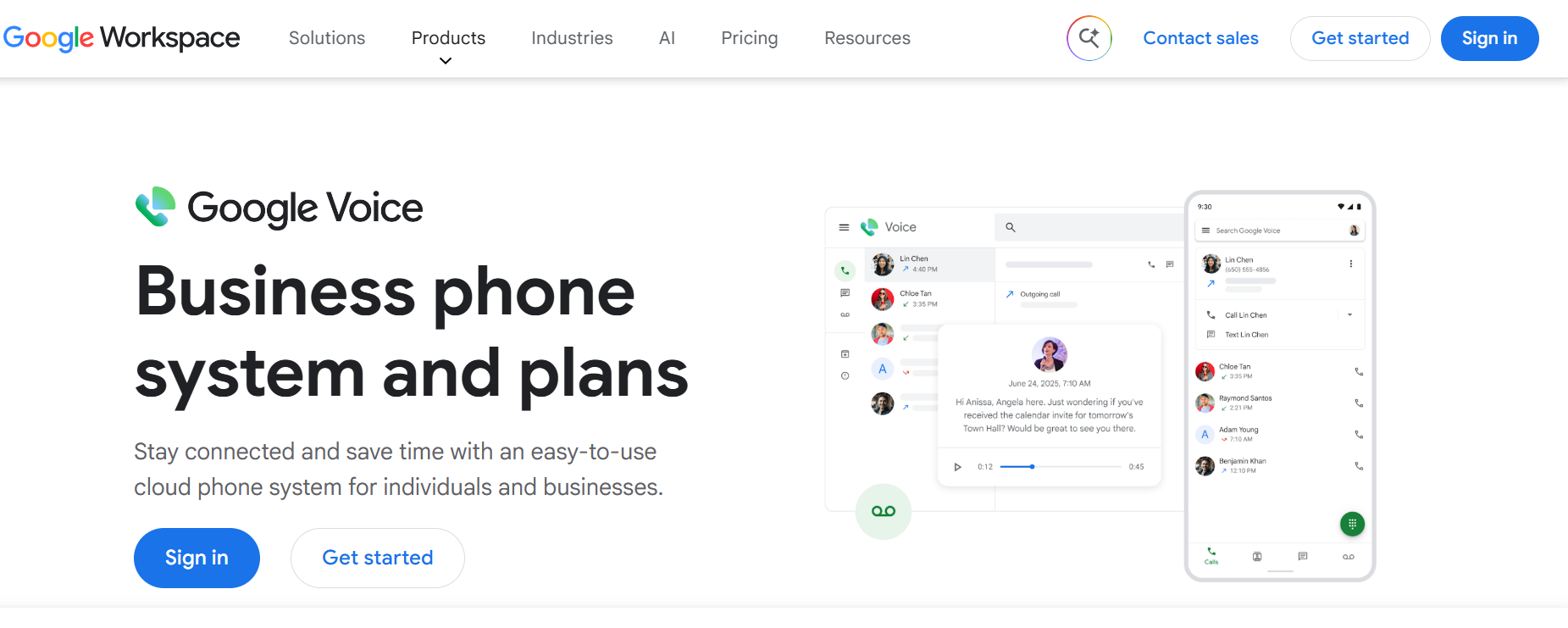
Google Voice is Google's free VoIP phone number service, the default free option most people land on first when they want a number separate from their SIM card.
How It Works. You claim a free US number tied to your Google account, which handles calls, texts, and voicemail transcription and integrates with Gmail and Calendar. It requires an existing US phone number to sign up.
Costs & Fees.
- Free for personal use in the US
Spending Limits and Funding. Not applicable; no payment feature exists.
Key Advantages.
-
Completely free
-
Deep integration with other Google services
-
Reliable for US calls and texts
Specific Drawbacks.
-
Effectively US-only, with international coverage limited to a short list of countries
-
Requires a US phone number to activate, locking out many international users
-
Numbers can be reclaimed if the account goes inactive
-
No email, browser, or card features
Who It's Best For. US-based users who want a free personal number and do not need MySudo's other privacy layers.
Why Someone Would Choose Google Voice Over MySudo. It costs nothing and integrates natively with your phone, unlike MySudo's app-locked system, though it offers none of MySudo's international reach, encryption, or card privacy.
5. Privacy.com
Privacy.com is the leading US virtual card service, built to isolate each online purchase from your bank, and it is the strongest stand-in for MySudo's card if you are a US resident.
How It Works. Open to US residents 18-plus with a US checking account, it lets you create virtual cards that lock to a single merchant, close after one use, or carry custom spending limits, with a browser extension that autofills details at checkout.
Costs & Fees.
-
Personal free (12 cards/month); Plus $5, Pro $10, Premium $25
-
3% FX on the free and Plus tiers; 0% and 1% cash back on Pro and Premium
Spending Limits and Funding. Cards draw from your linked US checking account, with no per-transaction processor fee, unlike MySudo's 2.99% + $0.31.
Key Advantages.
-
Free for US residents, with no processor fee per purchase
-
Merchant-locked and one-time cards
-
No $250 purchase cap
Specific Drawbacks.
-
US-only, requiring a US bank, unlike MySudo's broader signup availability
-
No phone numbers or email
-
3% FX on lower tiers
Who It's Best For. US residents who wanted MySudo's card without the bundle and without the per-transaction fee.
Why Someone Would Choose Privacy.com Over MySudo. For a US resident, it offers the same merchant-locked model free, with no processor fee and no purchase cap, though you lose MySudo's phone and email layers entirely. See our best Privacy.com alternatives roundup.
6. SimpleLogin
SimpleLogin is a dedicated email alias service, useful if the part of MySudo you actually relied on was hiding your real email address from sign-ups.
How It Works. You generate unique email aliases that forward to your real inbox, so each service gets a different address; if one starts leaking to spammers, you disable just that alias. SimpleLogin has said it plans to add features similar to MySudo over time, moving beyond pure email aliasing.
Costs & Fees.
-
A free tier with a limited number of aliases
-
Paid plans from roughly $2.50/month for unlimited aliases and extra features
Spending Limits and Funding. Not applicable; it is an email tool, not a payment service.
Key Advantages.
-
Focused, effective email alias creation
-
A genuine free tier
-
Open-source roots and a strong privacy reputation
Specific Drawbacks.
-
No phone numbers, browser, or virtual card today
-
Fewer bundled features than MySudo currently offers
-
Best suited to email-only use cases for now
Who It's Best For. Anyone who wanted MySudo mainly to stop sharing their real email address at sign-ups.
Why Someone Would Choose SimpleLogin Over MySudo. If email is genuinely your only concern, it does that one job cleanly and cheaply, and its roadmap toward MySudo-like features is worth watching, though it cannot yet replace MySudo's phone or card layers.
7. RedotPay
RedotPay is a Hong Kong-based crypto and stablecoin card platform reporting more than 8 million users and acceptance at over 130 million merchants.
How It Works. You verify, fund a balance with crypto or stablecoins, and issue a reloadable virtual or physical card that links to Apple Pay, Google Pay, or PayPal, all managed from an app rather than being tied to one Sudo identity.
Costs & Fees.
-
$10 virtual card; $100 physical; optional Pro $12.90/month
-
Cash back on qualifying mobile-wallet spend; some merchants add a 1.5% fee
Spending Limits and Funding. Crypto and stablecoin funding, with limits by tier and verification level, and no US-only restriction the way MySudo's card has.
Key Advantages.
-
Reloadable, with no $250-per-purchase cap
-
Works internationally, not just at US merchants
-
Mobile wallet support for in-person spending
Specific Drawbacks.
-
Identity verification required, and it is not a bank account
-
Declined-transaction fees and account-freeze complaints in reviews
-
A Trustpilot high-risk-investment flag
Who It's Best For. Crypto holders who want a card without MySudo's US-only merchant restriction.
Why Someone Would Choose RedotPay Over MySudo. It funds from crypto, works internationally, and has no per-purchase cap, though it offers none of MySudo's phone or email privacy. See our RedotPay vs Halocard comparison.
8. Wise
Wise is a multi-currency account with reloadable virtual and physical debit cards, useful if MySudo's card felt too limited for travel or international spending.
How It Works. You hold 40+ currencies with local bank details and issue virtual and physical cards that spend in 160-plus countries, with instant freeze and multiple cards per account.
Costs & Fees.
-
No monthly fee; one-time card fee around $9 in the US
-
Transfer fees roughly 0.33% to 1.0%
Spending Limits and Funding. A balance model funded from your currencies, with no $250 cap and no per-transaction processor fee.
Key Advantages.
-
No monthly fee and transparent pricing
-
40+ currencies, useful for travel a Sudo cannot cover
-
Multiple reloadable virtual cards
Specific Drawbacks.
-
Not a US-issued card, so weaker on US-address checks
-
No phone numbers, email, or privacy suite
-
Some ATM and conversion fees
Who It's Best For. International travelers who want multi-currency card spend rather than MySudo's identity bundle.
Why Someone Would Choose Wise Over MySudo. It reloads freely, spends in far more currencies, and has no purchase cap, though it does not replace MySudo's phone numbers or email aliases at all.
9. Revolut
Revolut blends banking, currency exchange, budgeting, and both regular and disposable virtual cards in one app.
How It Works. You create up to 20 reloadable virtual cards, plus a single-use disposable card whose details refresh after each purchase, managed in-app with Apple Pay and Google Pay support.
Costs & Fees.
-
Standard $0/month; Premium $9.99; Metal $16.99
-
Card funding up to 1% to 3%; FX free to a monthly allowance, then a small fee
Spending Limits and Funding. Spends from your available balance across currencies, with disposable cards suited to higher-risk one-off purchases.
Key Advantages.
-
A free tier with up to 20 virtual cards and a disposable option
-
Multi-currency accounts and budgeting tools
-
No $250-per-purchase cap
Specific Drawbacks.
-
Not built to give non-US users a US card
-
Disposable cards cannot run subscriptions
-
No phone numbers or email aliases
Who It's Best For. People who want disposable cards and banking together rather than MySudo's identity bundle.
Why Someone Would Choose Revolut Over MySudo. Its disposable and reloadable cards are free and available now with no cap, though it does not replace MySudo's phone or email privacy layers.
10. N26
N26 is a licensed European digital bank offering virtual and physical Mastercard debit cards.
How It Works. N26 Standard includes one free virtual Mastercard after a one-time €10 activation, with up to six active virtual cards across plans and Spaces sub-accounts for budgeting.
Costs & Fees.
-
Standard free; Smart €4.90; Go €9.90; Metal €16.90
-
Non-euro ATM fees on lower tiers
Spending Limits and Funding. Cards spend from your N26 balance, with deposit protection as a licensed bank, and no processor fee per purchase.
Key Advantages.
-
A full European bank account with deposit protection
-
A free virtual card and broad mobile-wallet support
-
Reloadable with 3D Secure by Visa's competitor Mastercard standard, aimed at the same fraud reduction goal
Specific Drawbacks.
-
European markets only, no US billing address
-
No phone numbers, email, or browser
-
Account-freeze complaints in reviews
Who It's Best For. European residents wanting real banking with virtual cards rather than a US-focused identity bundle.
Why Someone Would Choose N26 Over MySudo. For Europeans it is a full bank with reloadable virtual cards and no purchase cap, though it does nothing for MySudo's phone number or email features.
11. StatesCard
StatesCard is a virtual prepaid Visa debit card that gives international users US card details and a Delaware billing address for streaming and US shopping.
How It Works. You sign up, load funds, and generate an open-to-buy, store-locked, or one-time card, each with a US billing address to clear checkout checks, available to non-US users MySudo's card excludes entirely.
Costs & Fees.
-
$16.99 one-time issuing fee; $3.95/month
-
Load fees: card 7.5% + $0.30, PayPal 8.5% + $0.30, bank transfer 5% + $0.30
Spending Limits and Funding. Prepaid, funded by card, PayPal, or bank transfer; crypto is not accepted.
Key Advantages.
-
A clean US billing address, available to non-US residents
-
Store-locked and one-time card options
-
No credit check or bank account required
Specific Drawbacks.
-
The steepest load fees on this list
-
No phone numbers, email, or crypto funding
-
A low Trustpilot score with stuck-balance complaints
Who It's Best For. Non-US users who mainly want simple US streaming access, which MySudo's US-only card cannot provide them.
Why Someone Would Choose StatesCard Over MySudo. It serves non-US users MySudo's card cannot reach at all, with an instant US billing address, though at high load fees and without any of MySudo's other features.
What Users Think About These MySudo Alternatives
Review scores shift over time, so weigh each figure against volume and how recent it is. The scores that follow were checked against Trustpilot, the App Store, and independent sources, and paraphrase genuine user reviews.
MySudo
MySudo's Trustpilot page carries only a handful of reviews, but several are strongly positive: one reviewer calls it a "genius" solution for curbing spam texts from scammers and finally getting off Gmail, praising the end-to-end encrypted messaging and chat between other MySudo users and the workarounds for privacy-focused operating systems like GrapheneOS.
Another user's public post is far blunter about the free tier, describing hitting the limits within a day and calling the paywall a "bait-and-switch," and notes MySudo does not integrate with the phone's native dialer, causing missed calls. Another user complained that using a VPN alongside MySudo triggered device registration errors, a friction point worth knowing before you commit.
Halocard
Halocard's Trustpilot presence is small but positive, 4.2/5 (11 reviews), too thin a sample to weigh heavily. Reviewers mention an easy setup on GrapheneOS with responsive support and dependable approvals with per-card controls; the usual complaint is the subscription, which several feel the reliability earns.
Burner
Burner draws praise for call quality and its long operating history, with one comparison noting it beats Hushed on advanced features like robocall blocking and app integrations, though it is priced per line and limited to the US and Canada.
Hushed
Hushed earns solid marks for its disposable-number model and broader country coverage than Burner, though its Google Play reviews include at least one complaint that the app required an existing US number to fully function for a user based abroad.
Google Voice
Google Voice remains the default free recommendation, with strong integration into Gmail and Calendar, but reviewers note its international reach is limited to a short list of countries and that inactive numbers can be reclaimed.
Privacy.com
Privacy.com holds about 4.5/5 from 3,358 reviews, praised for merchant-locked cards and spending caps, with account closures without warning and slow refunds the main negatives.
SimpleLogin
SimpleLogin's reputation centers on its open-source roots and reliability as a focused alias tool, with users generally satisfied for its narrower scope, though naturally it draws no complaints or praise about phone or card features it does not yet offer.
RedotPay
RedotPay's score has risen to around 3.3/5 across roughly 1,013 reviews, alongside a stronger rating on the App Store, though declined-transaction fees after a card freeze and lengthy refund disputes remain recurring complaints.
Wise
Wise holds roughly 4.3/5 from 300,000+ reviews, valued for transparent fees, with occasional compliance checks and freezes the main negatives.
Revolut
Revolut shows about 4.7/5 from several hundred thousand reviews, app-wide, praising fast transfers and multi-currency handling while flagging account restrictions and support quality.
N26
N26 sits around 4.2/5 across 43,100 reviews, with the app itself earning praise while account freezes and how disputes are handled draw the sharpest criticism.
StatesCard
StatesCard rates near 2.1/5 across roughly 57 reviews, and the recurring theme is cards being revoked with balances left stranded.
How to Get Halocard
If MySudo's virtual card felt too restrictive, a $250 purchase cap, US merchants only, and a processor fee on every transaction, Halocard is the strongest option here for the payment side specifically.
It issues reloadable US-based virtual Visa cards with a custom billing address on every card, supports funding by debit/credit card, Apple Pay, Google Pay, bank transfer, stablecoins, or crypto, applies per-transaction, daily, and monthly spending limits with instant freeze on each card individually, and uses 3D Secure by Visa to reduce fraud on every transaction.
Because it runs on a loaded balance rather than a linked bank account, there is no credit check, and your purchases stay separated from your primary account details. Halocard does not offer phone numbers, email aliases, or a private browser, so pair it with a dedicated app like Burner or SimpleLogin if you want MySudo's full bundle rebuilt from best-in-class pieces.
For related reading, see the best virtual card providers, the ultimate guide to virtual cards, and our comparison of Privacy.com vs MySudo vs Halocard. There is more detail on the cards themselves and on Halocard's privacy approach if you want to dig further.
Step-by-Step
-
Create a Halocard account in your browser.
-
Clear the identity check using a passport or national ID, with no SSN needed for non-US residents.
-
Deposit money using debit/credit card, Apple Pay, Google Pay, bank transfer, stablecoins, or crypto.
-
Generate a virtual card, set its billing address and spending limits, and add it to Apple Pay or Google Pay.
-
Pay online or in person, and freeze or delete any card the moment you no longer need it.
Frequently Asked Questions
What Are the Best MySudo Alternatives for a Dedicated Phone Number?
Burner and Hushed are the strongest dedicated apps if a personal phone number is your main concern, since both integrate more smoothly with everyday calling and texting than MySudo's app-locked system, and Google Voice is the free option for US users. MySudo bundles a phone number with email and a card, but if you only need to protect your own phone number from spam and sign ups, a purpose-built app often handles calls, texts, and voicemail better than a bundled feature does.
Which MySudo Alternative Is Best for the Virtual Card Specifically?
Halocard is the strongest replacement for MySudo's virtual card, since it removes the $250-per-purchase cap and $350 daily limit, works internationally rather than at US merchants only, and charges 0% on USD purchases instead of a 2.99% + $0.31 processor fee. Privacy.com is the best free alternative if you are a US resident. Our guide to how to get a virtual credit card online covers the setup process.
Can I Create Multiple Sudos or Identities With These Alternatives?
Not in one place the way MySudo lets you create multiple Sudos under one subscription. Instead, most alternatives specialize: Burner and Hushed let you run multiple phone numbers, SimpleLogin lets you generate unlimited email addresses, and Halocard lets you create several virtual cards, each locked to a different merchant. Rebuilding MySudo's all-in-one identity system means picking a best-in-class tool per category rather than one bundle.
Does Halocard Offer Its Own Phone Number Like MySudo?
No. Halocard focuses entirely on virtual and physical payment cards and does not provide a personal phone number, email inbox, or private browser for blocking tracking on the internet the way MySudo does. If you want a Sudo-style personal number, Burner, Hushed, or Google Voice are the dedicated options to pair alongside Halocard's card as the security foundation for your spending, and you can share that combination across every new sign-up going forward.
How Do Merchant-Specific Virtual Cards Compare to MySudo's Card?
Merchant-specific virtual cards, offered by Halocard and Privacy.com, help prevent data sharing with businesses beyond the one you intend to pay, since each card can be tied to a single retailer and closed without affecting any other card. MySudo's card works similarly in spirit, one card per Sudo, but its $250 purchase cap and US-only acceptance limit it compared with a dedicated virtual card provider built around a separate card for each merchant.
Is MySudo's Free Plan Actually Usable?
Not for regular use. The free tier gives you one Sudo and a small allowance of calls and texts, enough to test the app but not to replace your everyday phone number, and multiple reviewers describe hitting the limit within a day or two. To get an unlimited personal phone number, email, and virtual card, you need a paid plan, which runs from roughly $1.99 up to $14.99 a month depending on the tier and number of Sudos.
Which Alternatives Support Loading Funds With Cryptocurrency?
Halocard and RedotPay both accept cryptocurrency as a funding method, an increasingly popular option for online payment services because it keeps the deposit off your main bank account and adds a layer of transaction anonymity. Halocard also supports card and bank transfer funding, while RedotPay is built around crypto and stablecoin balances from the start. MySudo's card, by contrast, only funds from a single linked US credit or debit card.
Do These Services Protect Your Personal Phone Number From Spam Calls and Text Messages?
Yes, in different ways. MySudo, Burner, and Hushed all let you hand out a Sudo or burner number instead of your own, so spam calls and text messages land on a number you can mute or delete rather than your personal line. Burner adds robocall blocking through a Nomorobo integration, while MySudo lets you silence notifications for one Sudo without affecting your main identity. None of the payment-focused alternatives like Halocard or Privacy.com touch phone-based spam, since they only handle the card side.
What Is the Best Email Alternative to MySudo's Inbox Feature?
SimpleLogin is the closest dedicated match if MySudo's encrypted email inbox was the feature you relied on, generating unlimited aliases that forward to your real address so each sign-up gets a unique one. It has said it plans to add more MySudo-like features in the future, though today it remains focused on email rather than phone numbers or cards.
Are Digital Wallets Like Apple Pay a Good Alternative to a Bundled Virtual Card?
Digital wallets are commonly used for secure online and in-person transactions, and pairing one with a dedicated virtual card, rather than a bundled feature like MySudo's, often gives broader acceptance. Halocard, RedotPay, Wise, Revolut, and N26 all support Apple Pay and Google Pay, letting you tap to pay with a card that also clears US or international merchant checks that MySudo's card sometimes cannot.
Why Do MySudo Users Look for Alternatives in the First Place?
Most people start looking once they hit MySudo's practical limits: a free tier too thin to use daily, a virtual card capped at $250 per purchase and restricted to US merchants, a processor fee on every transaction, and an app that does not integrate with the phone's native dialer or messaging. The bundle is appealing in theory, but for anyone whose needs outgrow one piece of it, a dedicated alternative for that specific feature, a phone number app, an email alias tool, or a broader virtual card provider like Halocard, usually serves better.
Sources
-
Trustpilot. Halocard Reviews
-
MySudo. Overview and Features
-
Anonyome Labs. MySudo Plans and Pricing
-
MySudo Support. Supported Countries for MySudo Phone Numbers
-
MySudo Support. SudoGo Plan Features
-
MySudo Support. SudoPro Plan Features
-
MySudo Support. SudoMax Plan Features
-
MySudo Support. Phone Number Entitlements and Limits
-
Trustpilot. MySudo Reviews
-
JustUseApp. MySudo Reviews
-
AppViewable. MySudo Review 2026: Honest Look Before You Download
-
Burner. Homepage
-
This vs That. Burner vs MySudo
-
MobileSMS.io. MySudo vs Traditional Burner Numbers
-
Hushed. Pricing
-
TechJury. Hushed App Review
-
Google Play. Hushed: US Second Phone Number
-
Tech Nerdiness. Best Second Phone Number Apps in 2026
-
Privacy.com. Virtual Cards (Homepage)
-
Trustpilot. Privacy.com Reviews
-
SimpleLogin. Homepage
-
RedotPay. Homepage
-
Trustpilot. RedotPay Reviews
-
Wise. Virtual and Physical Card
-
Trustpilot. Wise Reviews
-
Revolut. Virtual Cards and Plans
-
Trustpilot. Revolut Reviews
-
N26. Mastercard and Plans
-
Trustpilot. N26 Reviews
-
StatesCard. Homepage and Pricing
-
Trustpilot. StatesCard Reviews
Sourced on September 3,2026
*Please see Halocard's Terms of Service or Pricing for the most up to date pricing and fee information. This publication is provided for general information purposes and does not constitute legal, tax or other professional advice from Halocard LLC or its subsidiaries and its affiliates, and it is not intended as a substitute for obtaining advice from a financial advisor or any other professional. We make no representations, warranties or guarantees, whether expressed or implied, that the content in the publication is accurate, complete or up to date.
Halocard Virtual Cards


Instant approval
Create your first card in under 5 minutes.

Private purchases
Purchases never appear on your bank account.

Powered by Visa
Accepted at 175M+ merchants globally.
3 steps to create your virtual credit card

1. Sign up
Create your account from a web browser. No need to download an app.

2. Verify
Verify you're a real person in 3 minutes, from the US or any of 120+ countries.

3. Fund
Add funds by debit/credit card, Apple Pay, Google Pay, bank transfer, stablecoins, or crypto.

Pay with Halocard
Pay online and in-person wherever Visa is accepted. You can also order a physical Halocard if you prefer.