
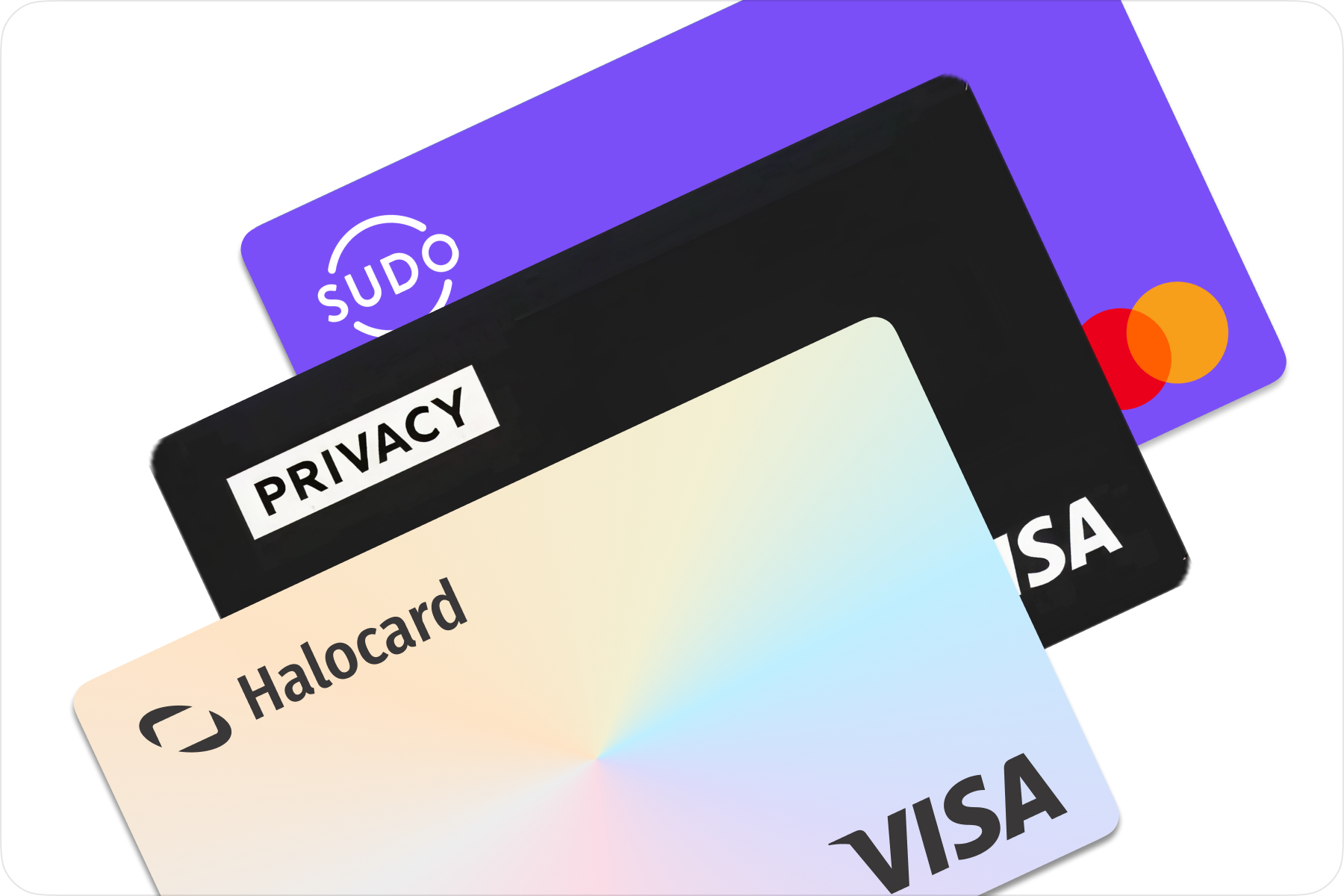
MySudo is an identity privacy app that lets you create digital identities called Sudos, each with its own phone number, encrypted email, private browsing, and a virtual card on paid plans, but for virtual cards, Halocard is the better choice for most people. Halocard is a US-issued Visa credit card, for customers in the US and 120+ countries, built specifically for virtual cards rather than adding them to a wider privacy toolkit. You fund it by debit/credit card, Apple Pay, Google Pay, bank transfer, stablecoins, or crypto with no bank account to link, and plans start at $12/month. Halocard works like a debit card: you spend the balance you load, with no credit line and no credit check. MySudo is better for users who want identity compartmentalization, combining communication tools and card payments inside one app. Privacy.com is better for US-based users who want strong subscription control with single-use or merchant-locked cards.
This comparison is for anyone who wants to reduce their exposure when shopping online, have tighter spending controls, and shop internationally without restrictions.
Privacy.com and MySudo are often grouped in the same category as they both offer virtual cards, but they serve very different purposes. Privacy.com is focused mainly on subscription control and spending limits which are tied to a US bank account, whereas MySudo focuses mainly on identity protection, with virtual cards being a part of the offering.
Privacy.com vs MySudo vs Halocard Virtual Credit Cards Comparison
| Category | Privacy.com | MySudo | Halocard |
|---|---|---|---|
| Features | Built specifically for managing online payments. Users can create instant virtual cards, apply spending caps, generate single-use cards, and lock cards to individual merchants. The platform is streamlined around subscription and recurring payment control. | Privacy and identity platform that includes virtual cards within a broader system. Users create digital identities called Sudos, each containing phone numbers, encrypted email, private browsing, and optional virtual cards on premium plans. Card access depends on plan tier. | Structured around scalable virtual card management. Designed to issue and manage multiple virtual cards with individual controls and clear transaction visibility. Optimized for cross-border usability and structured card oversight. |
| Privacy | Uses masked card numbers so merchants never receive your real credit card or bank account details, helping reduce exposure to fraud or identity theft. Requires US banking verification (Plaid). | Focuses on identity separation first. Each Sudo isolates personal data including phone, email, browsing, and optional card activity. Virtual cards require identity verification and are issued through a US partner bank. | Uses a balance-funded model to separate card activity from your primary bank relationship. Emphasizes payment security and card-level isolation without tying directly to a US-only bank structure. |
| Acceptance | Generally widely accepted across US merchants for online purchases. Acceptance depends on card classification and merchant processing rules. | Virtual cards available only in the US. Acceptance varies by merchant and payment routing. The product is not primarily engineered for high-volume merchant payment optimization. | Designed for consistent acceptance across US and international merchants, including environments where prepaid or virtual debit cards are sometimes declined. Supports more reliable international payments. |
| Availability | Available only to US residents with a US bank account. No access in most countries outside the US. | App is available globally, but virtual cards are US-only. Phone numbers limited to US, Canada, and UK. | Available to customers in the US and 120+ countries, without requiring US residency. |
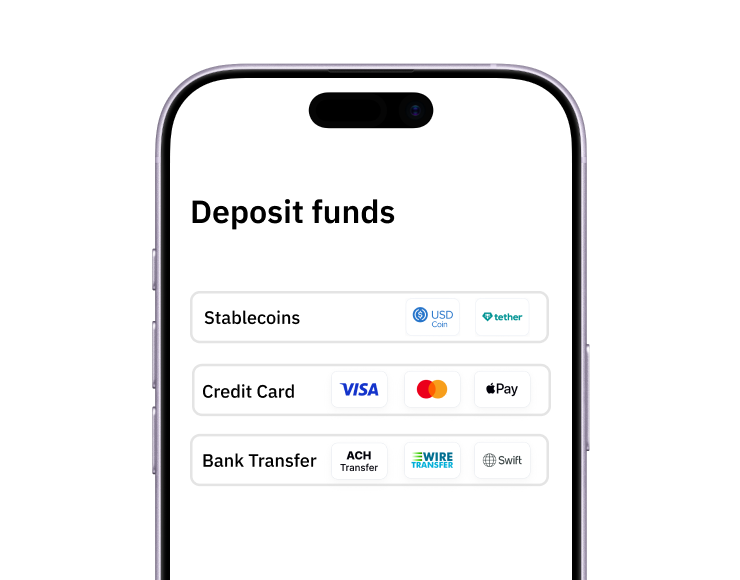
| Funding | Requires connection to a US bank account. Funds pull directly from that bank relationship. Not structured as a digital bank or wallet. | Card activity processed through in-app payment processor. Each transaction incurs service-based transaction fees. Not directly connected to your current bank in the same model as Privacy.com. | Card, Apple Pay, Google Pay, Bank Transfer, Stablecoins & Crypto |
| Fees | Free plan available. Paid plans range from $5 to $25 per month. Foreign transaction fees apply on lower tiers; premium plans remove them. No interest charges, as this is not a revolving credit card product. | SudoFree includes no cards. Paid plans: $1.99, $4.99, or $14.99 monthly. Virtual card transactions incur 2.99% + $0.31 per charge (minimum $0.50). Phone number resets $0.99. Cards US-only. | Plans start at $12 per month. No USD purchase fees. 1.5% + $0.30 foreign transaction fee on non-USD payments. Spends from the balance you load, with no interest charges. |
| Limitations | US-only structure tied to a partner bank. No support for identity tools like private browsing or phone numbers. Not available in most countries. | Virtual cards limited in quantity per plan. Transaction fees apply to each purchase. Phone numbers limited to select regions. Identity-focused rather than payment-optimized. | Subscription required. Balance-based model means pre-funding required. Not intended to replace a full-service bank account. |
| Best For | US-based users who want strong subscription control and safer credit card payments using single-use or merchant-locked cards. | Users who want identity compartmentalization for personal or business use, combining communication tools and card payments inside one app. | US and global users who need dependable virtual cards, broader merchant acceptance, and flexible access across regions. |
Key Differences Explained
First, Privacy.com is a platform focused on payments, one that offers virtual credit cards tied directly to a US bank account. It allows users to create virtual cards, including both disposable virtual cards and single-use cards, along with built-in spend limits for tighter control over online payments, recurring payments, and subscriptions.
When you shop online, merchants don't see your real debit card or credit card details, thus protecting you against data breaches, fraud, and identity theft. Privacy.com features a free plan as well as tiered paid plans with better security features and higher limits. However, this is not a digital bank and it does require linking to your existing bank account. Halocard has no free plan, but Essential is free with 3 referrals: you earn $5 to $25 a month for every friend you refer, for up to 12 months.
On the other hand, MySudo is mainly an identity privacy platform. It includes virtual cards, but is based in a broader privacy system. The MySudo App allows users to create digital identities called Sudos, each with virtual phone numbers, secure email inboxes, private browsing, and a virtual card on paid plans or premium plans.
The goal of MySudo is full separation of your personal information across various services, companies, and merchants. Users can create different Sudos for personal use, business, travel, or subscriptions, with everything being compartmentalized for maximum security. Again, however, the platform is not designed to replace your bank, and it does not function as a full digital bank.
In essence, Privacy.com is about payment control, virtual cards safe for subscriptions, and tight credit card level protection linked to a US bank account. MySudo is more focused on broader identity protection across email, phone, browsing tools, and virtual cards.
Thoughts From Existing Users
According to users of Privacy.com, people are happy with the ability to create single-use cards and masked cards for recurring payments, as it allows for greater control. Several also describe being able to separate streaming services, trial offers, and other merchants into different virtual cards - thus making it easy to track money and limit unexpected fees. Users are also happy with how Privacy.com protects users details. For many people, the appeal in Privacy.com is that it provides virtual cards safe for personal use.
However, Privacy.com also has some negative reviews, with many pointing out signup and onboarding issues, with one user having expressed frustration about having to open an account connected to a partner bank during sign up. There also appear to be issues with declined transactions due to pending balances, even though funds have already left the account. In most cases, criticism of Privacy.com focuses on how the account works, limits tied to paid plans, and various bugs, such as transactions being declined due to pending charges counted against available funds and unexpected account requirements revealed only during signup, despite marketing suggesting simpler virtual card use.
In terms of MySudo, users are happy with being able to create multiple digital identities with separate phone numbers, email aliases, and virtual cards inside one app. Many view this as a good option for both personal and small business use, as it allows for the separation of social, shopping, and professional activity without exposing their real phone or credit details.
That said, there are also users who mention issues with billing and the subscriptions, along with delays resolving transactions, as well as temporary shortages of phone numbers in various countries. The complaints here tend to be mostly about poor customer experience, subscription changes, and payment confirmation.
Overall, users of Privacy.com like its payment level control and bank linked security, whereas users of MySudo appreciate its identity separation across merchants and services.
Privacy.com vs MySudo vs Halocard: Why Halocard is the Winning Option
In terms of the overall winner between Privacy.com and MySudo, it greatly depends on what your needs are. Privacy.com is best for those who need a service that offers virtual cards and for those living in the US who want tight control over their spending. It allows users to create single use cards, set spend limits, and use masked cards to protect your real credit card and bank account details from merchants.
Privacy.com features strong payment level control, and is ideal for subscription management, recurring payments, and controlling specific purchases. However, the big drawback is that it operates within the US banking system and does not support users from most outside of the USA, making it unfeasible for people in most countries.
MySudo really serves a different purpose altogether, and its unique features as an identity protection app make it a strong choice for those who value privacy and security above all else. Remember, MySudo offers limited virtual cards within a greater privacy toolkit. It allows you to create virtual phone numbers, email aliases, private browsing, and a virtual card on paid plans.
Yet, the virtual credit cards are only available on specific plans, phone numbers are limited to certain countries, and the platform is not primarily focused on high volume virtual card management.
There is a third option, one which appears to sit neatly in the middle. Halocard features strong virtual card usability as a US-issued Visa credit card, for customers in the US and 120+ countries. Halocard is ideal for many as it offers consistent acceptance in both US and international markets and good spending controls, all without requiring a US bank account, residency, or existing line of credit. You can also add your cards to Apple Pay and Google Pay to pay in store.
So, for those who only need US functionality (and reside in the US), Privacy.com may be ideal, with MySudo being a strong contender for those who value identity separation. That said, for the broadest access and functionality, Halocard is the better choice for most people.
How To Get A Halocard
- Sign up and complete the required identity verification for your account.
- Generate a virtual card directly from your dashboard.
- Fund your account by debit/credit card, Apple Pay, Google Pay, bank transfer, stablecoins, or crypto.
- Start using the card for online payments and online purchases, including transactions with US merchants.
If you want a virtual card with strong payment control and fewer geographic restrictions, Halocard is a practical and reliable choice.
Frequently Asked Questions
Can Privacy.com Be Trusted?
Yes, Privacy.com is a legitimate US-based service that issues virtual cards through a partner bank.
What Is MySudo?
MySudo is an identity privacy app from Anonyome Labs that lets you create separate digital identities called Sudos. Each Sudo can have its own phone number, encrypted email, private browsing, and, on paid plans, a virtual card issued through a US partner bank. The app is available globally, but its virtual cards are US-only.
What Is the Best MySudo Alternative?
The best MySudo alternative for virtual cards is Halocard. It's a US-issued Visa credit card, for customers in the US and 120+ countries, built for payments rather than identity tools, so you can create multiple cards with per-card controls instead of a limited number per plan. You fund it by debit/credit card, Apple Pay, Google Pay, bank transfer, stablecoins, or crypto, and Halocard doesn't store your ID documents, which are held by its verification provider as banking laws require.
Is MySudo Free?
MySudo has a free plan, SudoFree, but it includes no virtual cards. To get cards you need a paid plan at $1.99, $4.99, or $14.99 a month, and each virtual card transaction costs 2.99% + $0.31 (minimum $0.50).
What Is MySudo Used For?
MySudo is mostly used to create separate digital identities that include phone numbers, encrypted email, private browsing, and optional virtual cards.
What Is the Equivalent of Privacy.com in Europe?
There is no direct equivalent to Privacy.com in Europe with the same kind of US-bank linked structure.
Does Privacy.com Affect Credit Score?
No, Privacy.com does not function as a traditional credit card and does not report credit activity to credit bureaus.
How To Compare Virtual Card Providers
These criteria are the most important for determining which virtual card provider is best for you.
- Features & ease of use
- Security & privacy model
- Merchant acceptance (US and international)
- Geographic availability
- Funding options
- Pricing, fees, and transaction fees
- Hidden limitations like residency, required bank account verification, or card type restrictions
These are the criteria used to compare Privacy.com, MySudo, and Halocard above.
Sources
- Privacy.com. Privacy.com Virtual Cards – Secure, Temporary Cards Sourced on February 10, 2026.
- MySudo. MySudo Plans and Pricing - Anonyome Labs Sourced on February 10, 2026.
- MySudo. MySudo - Download Today Sourced on February 10, 2026.
- Trustpilot. Privacy reviewed by BravoXray on 2026-01-13 Sourced on February 10, 2026.
- Trustpilot. Privacy reviewed by Jeremy S on 2025-12-27 Sourced on February 10, 2026.
- Trustpilot. Privacy reviewed by B W on 2025-09-27 Sourced on February 10, 2026.
- Trustpilot. Privacy reviewed by Matt on 2025-11-20 Sourced on February 10, 2026.
- Google Play. MySudo - Identity Protection - Apps on Google Play Sourced on February 10, 2026.
*Please see Halocard's Terms of Service or Pricing for the most up to date pricing and fee information. This publication is provided for general information purposes and does not constitute legal, tax or other professional advice from Halocard LLC or its subsidiaries and its affiliates, and it is not intended as a substitute for obtaining advice from a financial advisor or any other professional. We make no representations, warranties or guarantees, whether expressed or implied, that the content in the publication is accurate, complete or up to date.
Halocard Virtual Cards

Instant approval
Create your first card in under 5 minutes.

Private purchases
Purchases never appear on your bank account.

Powered by Visa
Accepted at 175M+ merchants globally.
3 steps to create your virtual credit card
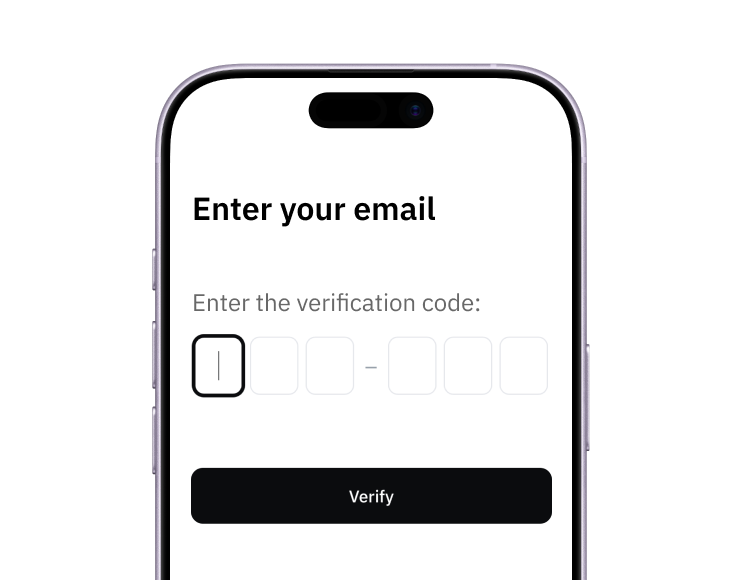
1. Sign up
Create your account from a web browser. No need to download an app.
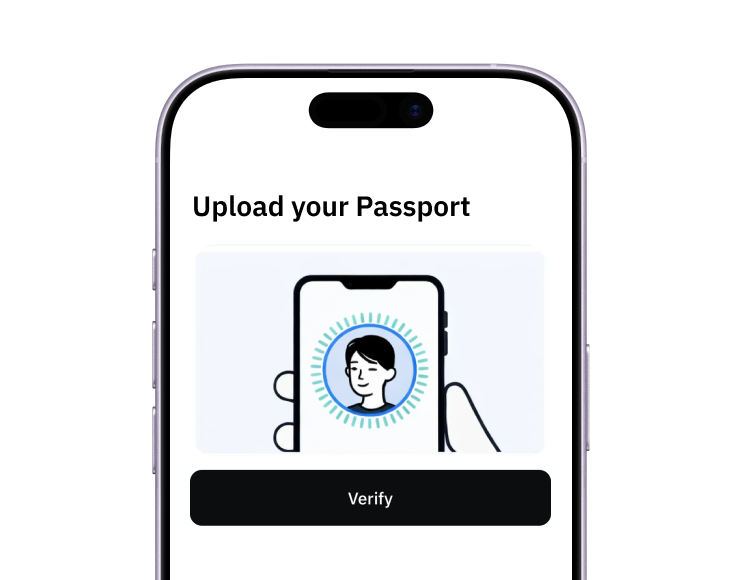
2. Verify
Verify you're a real person in 3 minutes, from the US or any of 120+ countries.
3. Fund
Add funds by debit/credit card, Apple Pay, Google Pay, bank transfer, stablecoins, or crypto.
Pay with Halocard
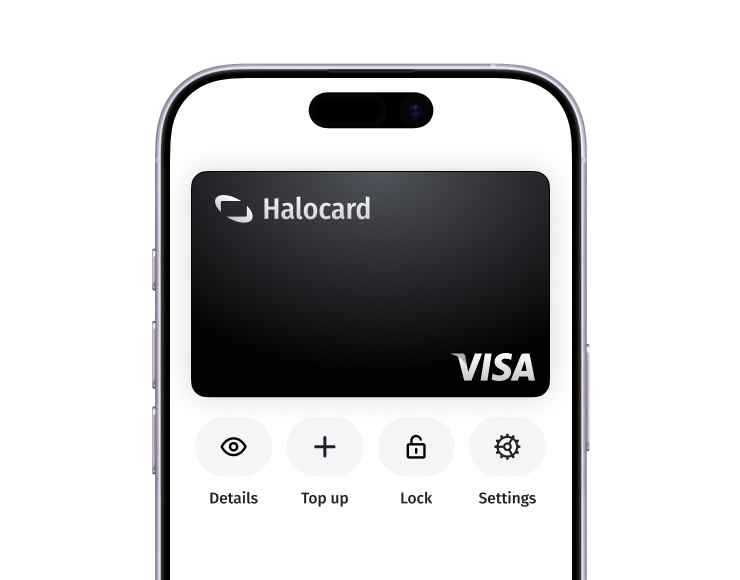
Pay online and in-person wherever Visa is accepted. You can also order a physical Halocard if you prefer.