

Quick Answer: Halocard is the best KOHO alternative for private online payments, with a US-issued Visa credit card, per card spending limits and CAD bank funding. Neo Financial and Wealthsimple are the closest everyday swaps for cash back and interest, Wise suits international payments, and Venn or Float cover business spending. KOHO itself remains a solid, well reviewed app for Canadians who want a single account.
KOHO is a Canadian financial technology company, not a bank, offering a prepaid Mastercard, interest on the entire balance and credit building tools to 2.5 million+ Canadians. Deposits are held through Peoples Trust, a federally regulated partner, and KOHO raised $130 million in June 2026 as it continues pursuing a federal bank license. It is an exciting time for Canadian fintech on paper, with KOHO, Neo and Wealthsimple all expanding beyond the banking services of a traditional bank, but fee structures are shifting just as quickly.
People compare KOHO alternatives for a handful of concrete reasons. The Essential plan is only free if you set up direct deposit or add $1,000 a month, the lower plans charge foreign transaction fees, and there is one virtual card rather than a card per merchant. Customer service is the most common complaint on Reddit, and a competitor reported in September 2026 that KOHO is winding down Rent Reporting. KOHO holds 4.5/5 on Trustpilot from roughly 2,668 reviews, so this is a question of fit rather than safety. This guide compares 12 options that issue working virtual cards.
Key Takeaways
-
Halocard is the best KOHO alternative for privacy and US payments. A separate Visa per merchant, a billing address you choose, 0% on USD purchases and no credit check.
-
Neo Financial is changing its fees. From January 1, 2027, Neo Chequing charges $1 per Interac e-Transfer sent and a $4.99 NSF fee unless you hold a paid membership.
-
Wealthsimple is the strongest free everyday swap. No monthly fee, no FX fees and ATM fees refunded, with interest from 1.25% by client tier.
-
Rent reporting is moving elsewhere. Neobanc, Chexy, TenantPay, Zenbase and Borrowell all report rent to Equifax, each with a different fee structure.
-
Fraud keeps climbing in Canada. The Canadian Anti-Fraud Centre logged over $704 million in reported losses in 2025, and only 5% to 10% of victims report.
Quick Comparison Table
| Provider | Card / Account Type | Availability | Virtual Card Capacity | Key Pricing and Fees | Best For |
|---|---|---|---|---|---|
| Halocard | US issued Visa credit | US and 120+ countries, including Canada | 3 to 60 cards | From $12 USD/month; 0% on USD, 1.5% + $0.30 other currencies | Private payments to US platforms |
| Neo Financial | Chequing account with prepaid Neo Money card | Canadian residents | Instant virtual card | Essentials free; Build $9.99, Grow $14.99 | Cash back and savings |
| Wealthsimple | Chequing with prepaid Mastercard | Canadian residents | Virtual card on signup | No monthly fee; 0% FX | Free everyday banking |
| Wise | Multi currency account with prepaid Visa | Canada and 160+ spending countries | Digital cards | No subscription; ATM fees above free limits | International payments |
| Brim Financial | Mastercard credit cards | Canadian residents | App based card | $0 to $89 annually; 1.5% FX | Credit card rewards at partners |
| Crypto.com Card | Prepaid Visa | Canada and other markets | Virtual and physical | Tiered by CRO stake or subscription | Crypto holders |
| Cloaked Pay | Masked Mastercard in a privacy app | US citizens only | Waitlisted | From $9.99 USD/month billed annually | Identity masking |
| Venn | Business account and cards | Canadian businesses | Unlimited | Free plan available | Small business banking |
| Float | Business spend platform | Canadian businesses | Unlimited virtual | Free Essential plan | Team spending controls |
| Ramp | Business cards and expenses | Canadian businesses | Unlimited | Free plan; Plus CA$15 per user | Growing finance teams |
| Airwallex | Multi currency business account | Businesses in 69 countries, including Canada | Unlimited | Free plan; paid tiers | Cross-border businesses |
| Loop | Business cards in four currencies | Canadian businesses | 20 on the free plan | Free plan; paid tiers | Multi currency card spend |
What KOHO Offers Today
Before comparing alternatives, it helps to know exactly what KOHO charges and pays in September 2026, since several figures have moved in the past year.
KOHO Plans, Cash Back and Interest Rates
KOHO's plan pages list three tiers, each with a free 30 day trial:
| Plan | Monthly price | Cash back on groceries, transport, food and drink | Interest on your balance | Foreign transaction fees |
|---|---|---|---|---|
| Essential | $0 with direct deposit or $1,000 added monthly | 1% | 2% | Yes |
| Extra | CA$12 | 1.5% | 2.5% | No |
| Everything | CA$14.75, or billed annually | 2%, plus 0.5% on all other purchases | 3.5% | No |
KOHO offers cash back of 1% to 2% depending on the plan, plus up to 6.5% extra at partner merchants, and unlimited transactions and free e-Transfers on every tier. Independent reviews list the Essential fee at $4 a month when neither condition is met. Out-of-network ATMs cost $2 to $3 because KOHO owns no machines, and the paid tiers include one free international ATM withdrawal a month.
Interest is paid on the entire balance once you opt in, with no minimum balance, which is more generous than the basic account at most big banks. KOHO promotes Everything as free of hidden fees, and it also offers Cover, a cash advance of up to $500, but no personal loans or investing products beyond in-app crypto trading.
Is KOHO Safe? Deposits, Regulation and Complaints
KOHO is legitimate. The card is issued by KOHO Financial under a Mastercard license, deposits are held with CDIC member Peoples Trust, a federally regulated trust company, and KOHO says up to CA$100,000 is eligible for CDIC protection. Signup requires Canadian residency, age 18 or 19 depending on the province, and government ID, with no credit check.
The reliability questions come from users rather than regulators. A widely read Reddit thread on KOHO safety includes reports of e-Transfers that could not be traced and one blunt verdict that KOHO is only "good" if you have bad credit.
In a January 2025 customer service review, a two year user described 16 hours waiting for support over a phantom balance, then noted that support moved faster after the post went public. Treat KOHO as a spending account rather than your only place for savings, which is how most of its satisfied users describe it.
KOHO Credit Building and the Rent Reporting Question
KOHO Credit Building is a $225 line of credit reported to Equifax, discounted 30% on Extra and 50% on Everything, and KOHO says members gain an average of 31+ points in four months. Rent Reporting is more restricted than its marketing suggests.
KOHO's eligibility rules exclude anyone with a roommate or spouse on the lease, anyone paying weekly or in installments, and e-Transfer rent above $5,000, and require a paid plan or Credit Building.
Neobanc reported in September 2026 that KOHO told members on August 11 that Rent Reporting is being discontinued, with existing tradelines closed after September 30, 2026. We could not confirm that notice on KOHO's public pages, so check the app, and see the rent section below for replacements.
Best KOHO Alternatives for Virtual Cards and Everyday Spending
The order runs from private payment cards to everyday accounts, then credit and crypto cards, and finally platforms for business owners.
1. Halocard
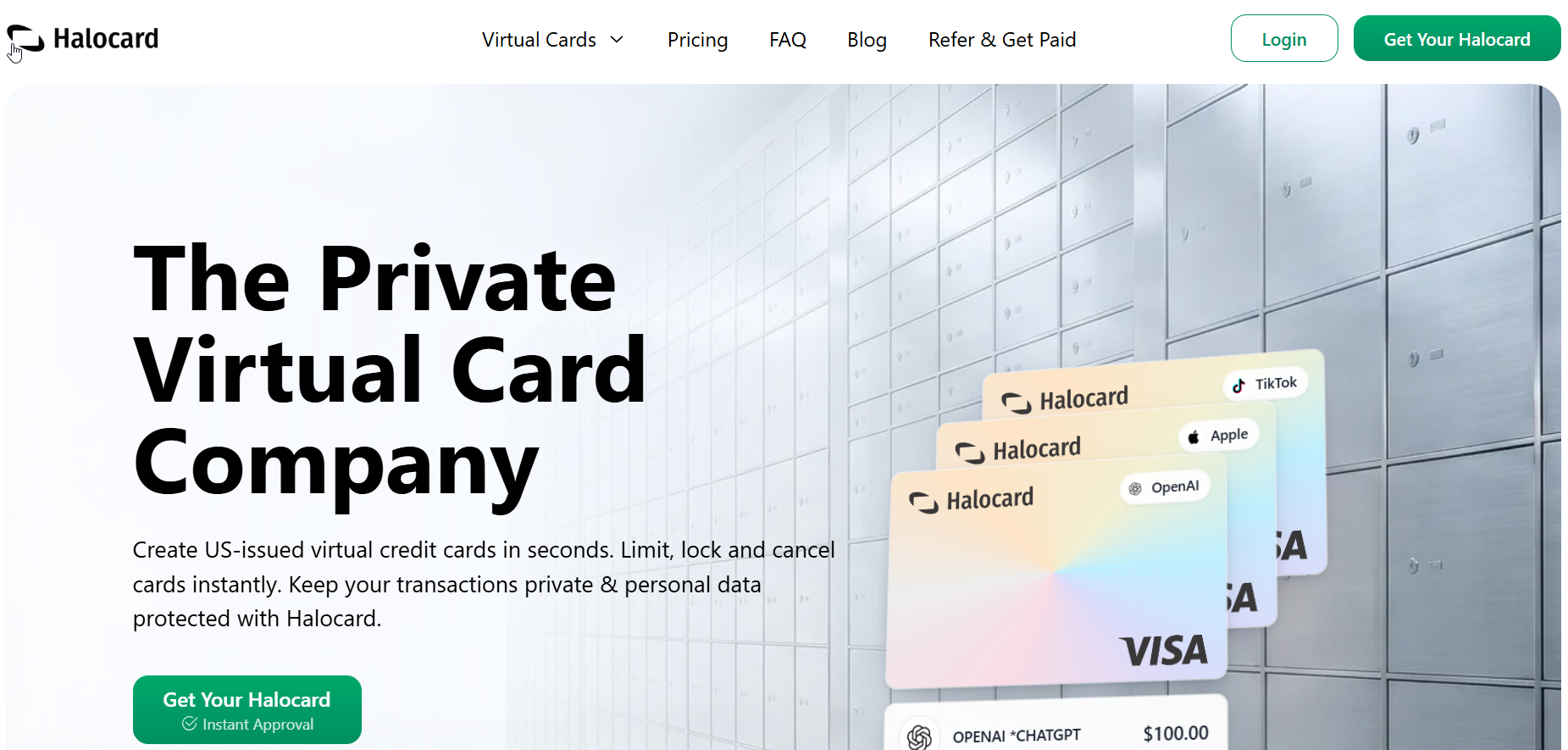
Halocard is a US based fintech platform that issues virtual and physical Visa cards to customers in the US and 120+ countries, including Canada. KOHO gives you one card for everything; Halocard gives you a separate card for each merchant, each with its own rules.
How Halocard Works
You sign up in a browser, pass an identity check in under three minutes, and start creating cards without downloading an app. Cards are issued through financial partners under Visa, carry 3D Secure by Visa, and work online or in stores through Apple Pay and Google Pay.
Halocard Costs & Fees
Personal plans are $12 USD a month for 3 cards, $15 for 12 and $75 for 60, or $144, $180 and $900 billed annually. Annual plans add disposable cards each month and a physical card. USD purchases carry no fee, other currencies 1.5% + $0.30.
Halocard Spending Limits and Funding
Funding is flexible and does not depend on a Canadian bank relationship. You can top up with debit/credit card, Apple Pay, Google Pay, bank transfer, stablecoins, or crypto. Bank transfers now accept USD, CAD, EUR or GBP, and everything lands in one USD balance. Each card takes its own per transaction, daily and monthly limit, plus instant lock, auto-cancel after one use, and a custom billing address.
Virtual payment cards let you create a card for each purpose for enhanced privacy, and merchant specific cards are the practical answer to the fraud Canadians report most. Card numbers leak in bulk: FICO notes that a single Europol operation found 119 million stolen cards offered for sale, and Security.org's 2026 fraud survey found repeat charges from the same merchant rising to 22% of fraud cases.
Identity fraud topped the Canadian Anti-Fraud Centre's 2025 list with 8,403 reports, ahead of investment and service fraud. A card that works at one merchant only keeps primary account details off every other checkout, offers a degree of transaction anonymity from the merchant's side, and makes virtual credit cards a stronger layer of online shopping security than a single debit card. The CAFC's own advice is to check whether a payment method has a fraud protection policy before you rely on it.
Halocard Advantages
-
A separate card per merchant, each with its own spending limits
-
US issued Visa that clears US platforms, with 0% on USD purchases
-
No credit check, and funding by crypto, CAD bank transfer or card
-
Business plans from $29 USD for teams and side hustles
Halocard Drawbacks
-
Your balance is held in USD, so CAD spending adds a conversion step and 1.5% + $0.30 on non-USD purchases
-
No interest, cash back, savings accounts or e-Transfers
-
A monthly fee unless you refer enough people
-
4.2/5 (11 reviews) on Trustpilot, too few to lean on
Who Halocard Is Best For
Canadians paying US services such as ChatGPT Plus, ad platforms and software, and anyone who wants merchant level control. A US billing address on each card helps with platforms that reject Canadian cards. Our guide to Canada's virtual credit cards covers local options too.
Why Someone Would Choose Halocard Over KOHO
Control rather than rewards. Halocard gives you as many isolated cards as your plan allows, a billing address per card, and USD spending without conversion, which KOHO's single card cannot. Keep KOHO or a bank for CAD bills and pay. See Halocard vs KOHO side by side.
2. Neo Financial
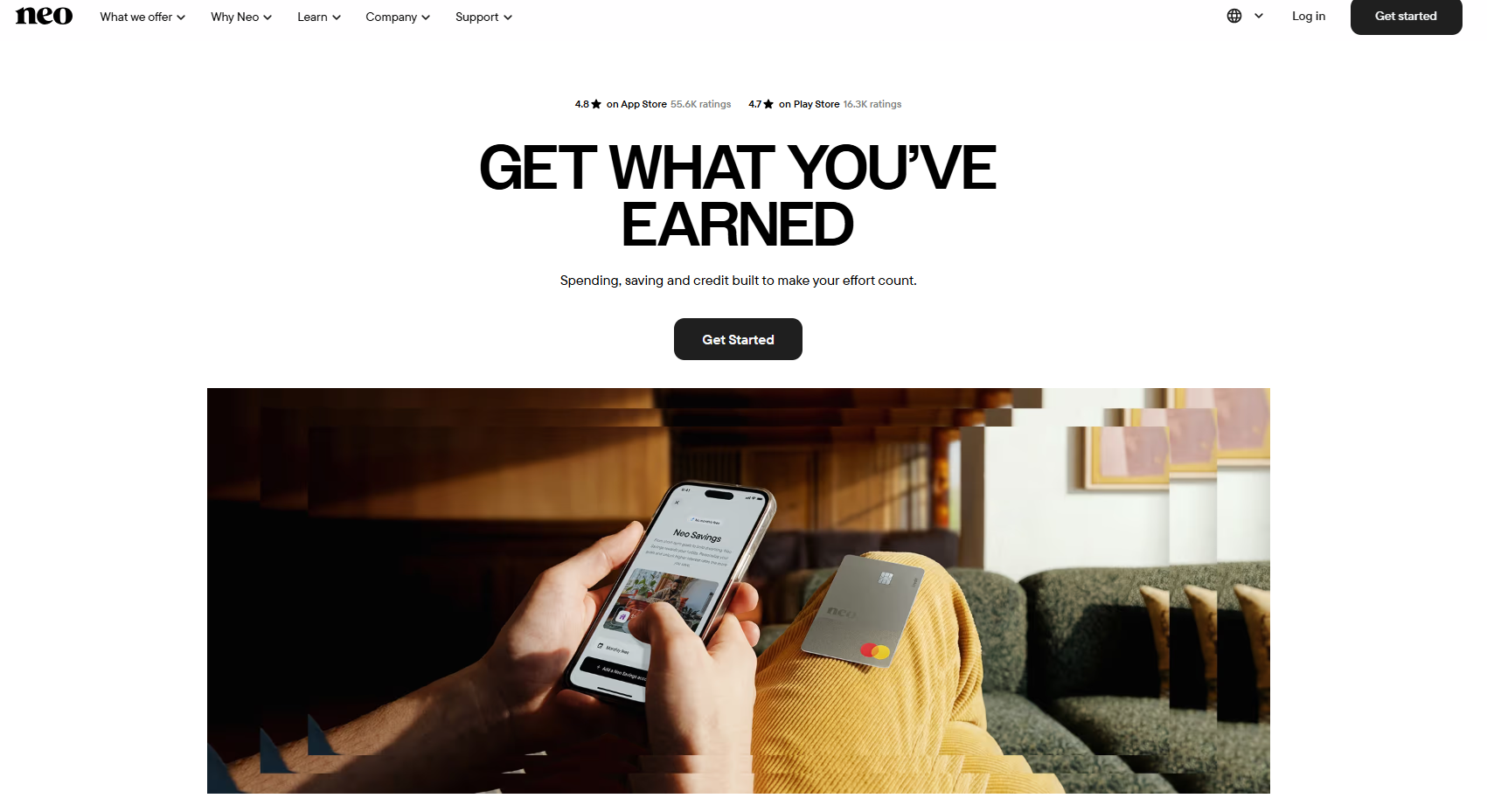
Neo Financial is the Calgary fintech most often compared with KOHO, and it is in the middle of a fee overhaul.
How Neo Financial Works
The Neo Chequing account comes with a Neo Money card, a debit card alternative available as a virtual card as soon as you open the account, plus Neo Savings and a range of credit cards. Funds are held in trust at a CDIC member institution.
Neo Financial Costs & Fees
From October 1, 2026, Neo's memberships are Essentials (free), Start ($0 with payroll deposit or $4.99, coming soon), Build ($9.99, up from $7.99) and Grow ($14.99, up from $12.99). From January 1, 2027, Essentials users pay $1 per Interac e-Transfer sent, $4.99 per NSF and $1.50 per cash withdrawal.
Neo Financial Spending Limits and Funding
The Neo Money card earns 1% on gas and groceries up to a monthly spend limit. Savings interest now depends on membership, from 2.0% on Essentials to 2.75% on Grow. The card carries a 2.5% FX fee, rebated on Grow.
Neo Financial Advantages
-
Free virtual card from day one, with partner cash back
-
Clear savings rates by tier
-
Credit building tools and a secured card on paid memberships
Neo Financial Drawbacks
-
Free e-Transfers and the absence of NSF fees end for Essentials users in 2027
-
Secured cardholders must keep Build or Grow to use the card
-
2.5% FX on the Neo Money card unless you pay for Grow
Who Neo Financial Is Best For
Canadians who deposit their pay and want cash back plus savings in one place.
Why Someone Would Choose Neo Financial Over KOHO
A similar package, with membership fees waived for payroll depositors on Start. The 2027 fee schedule is worth checking before you move your pay.
3. Wealthsimple

Wealthsimple's chequing account is the closest no fee replacement for KOHO's everyday account.
How Wealthsimple Works
You open a chequing account and immediately receive a virtual prepaid Mastercard with a different number from the physical card. Online purchases may prompt a six digit code for extra security.
Wealthsimple Costs & Fees
No monthly fee, no FX fees, and ATM operator fees reimbursed worldwide. Interest rates run 1.25% for Core clients, 1.75% for Premium and 2.25% for Generation, with CDIC coverage up to $1 million across partner institutions.
Wealthsimple Spending Limits and Funding
Fund by e-Transfer, direct deposit or transfer, and earn interest on every dollar, with e-Transfer limits up to $50,000 for eligible clients. Overdraft coverage has no fee, with interest from 3.95%.
Wealthsimple Advantages
-
No monthly fee and no foreign transaction fees
-
Instant virtual card with its own number
-
Up to $1 million in CDIC coverage
Wealthsimple Drawbacks
-
Higher interest rates require large balances with Wealthsimple
-
No way to earn cash back on the prepaid card
-
No merchant locked or disposable cards
Who Wealthsimple Is Best For
People who want a free account and already invest with Wealthsimple.
Why Someone Would Choose Wealthsimple Over KOHO
No fees and no FX charges on any tier, where KOHO charges FX on Essential.
4. Wise
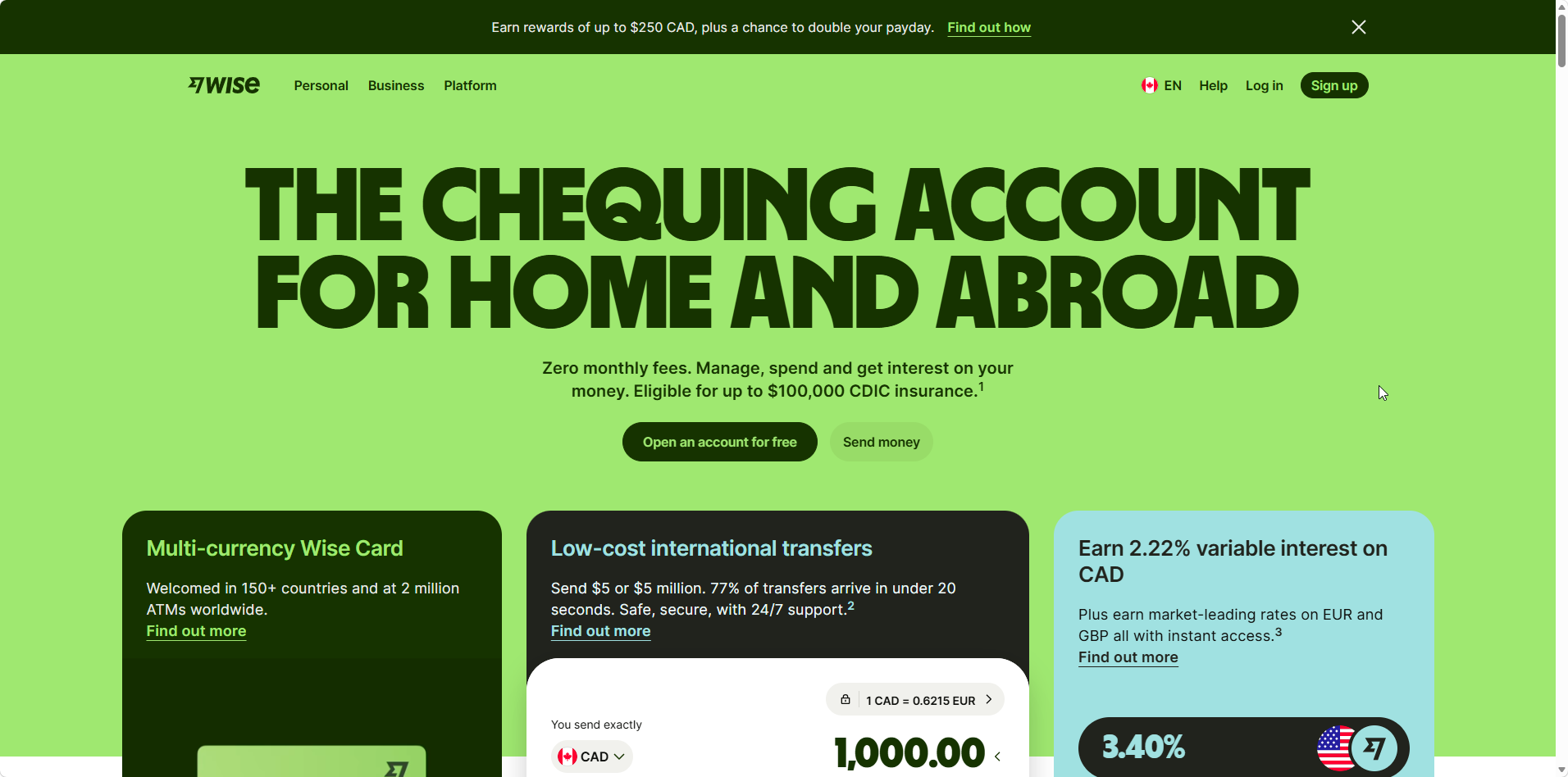
Wise is built for moving and spending money across currencies, and its card works in Canada.
How Wise Works
You hold and convert 40+ currencies at the mid market rate and pay with a digital Visa card in over 160 countries, including through Apple Pay and Google Pay.
Wise Costs & Fees
According to Wise's Canadian card fees, there is no subscription, the digital card is free, and a replacement card costs $5 CAD. Two ATM withdrawals up to $350 a month are free, then $1.50 each plus 1.75% above $350.
Wise Spending Limits and Funding
Fund from a Canadian bank or card, and spend from whichever currency you hold. Account funding transactions, such as e-wallet top ups, cost 2%.
Wise Advantages
-
Low, visible conversion fees
-
Free digital cards
-
4.3/5 from 300,000+ Trustpilot reviews
Wise Drawbacks
-
Not CDIC insured like a bank deposit
-
No interest or cash back in Canada
-
No merchant locking
Who Wise Is Best For
Canadians paying in foreign currencies or sending money abroad.
Why Someone Would Choose Wise Over KOHO
Cheaper international payments without a monthly plan.
5. Brim Financial
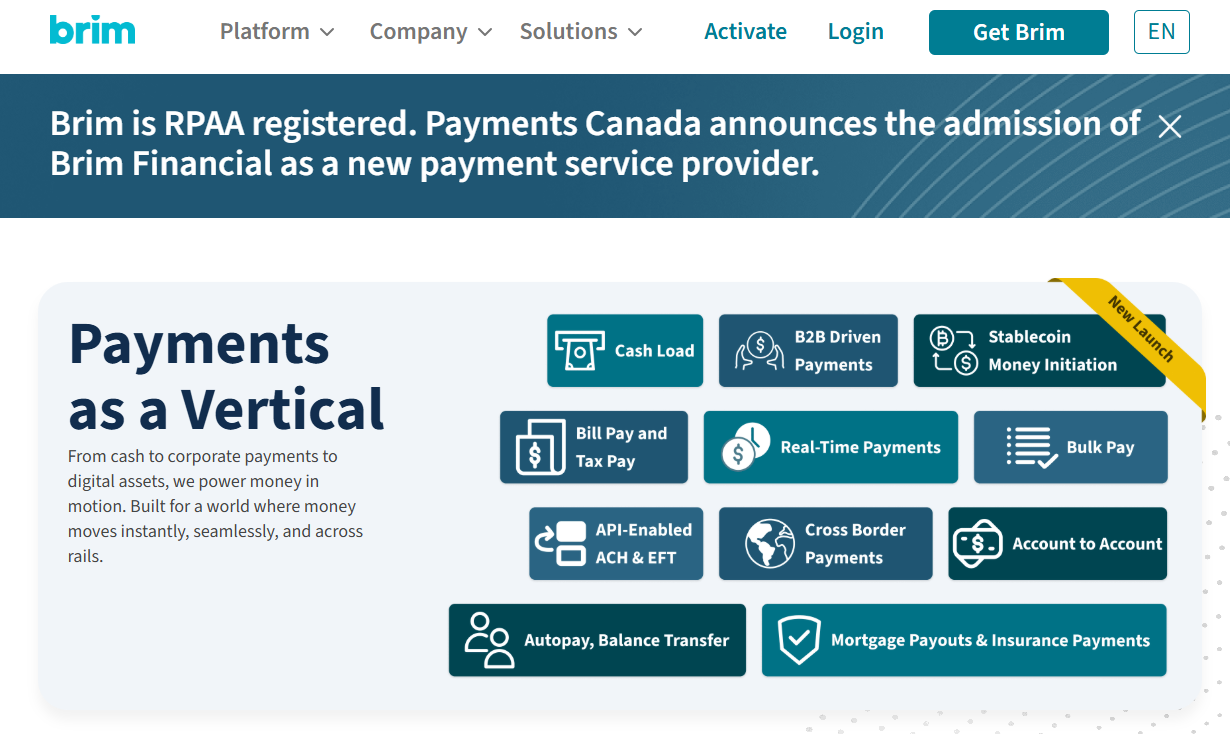
Brim is a Canadian fintech credit card issuer, relevant to KOHO users ready for a traditional credit card with app controls.
How Brim Financial Works
Brim issues Mastercard credit cards managed in its app, with mobile wallet support, instant card controls and installment plans on purchases above $500.
Brim Financial Costs & Fees
The Brim Mastercard has no annual fee, and the World Elite costs $89. Brim's own notice of change added a 1.5% foreign currency conversion fee, even though several comparison sites still describe Brim as FX free.
Brim Financial Spending Limits and Funding
A credit limit set at approval, with points redeemable as a statement credit at one cent each.
Brim Financial Advantages
-
A real credit card that builds credit history
-
Partner offers through Brim Marketplace
-
Mobile device and event ticket insurance
Brim Financial Drawbacks
-
Credit check required
-
A low base earn rate of 1 point per $2 on the no fee card
-
1.5% FX, contrary to older reviews
Who Brim Financial Is Best For
KOHO users graduating from prepaid to credit.
Why Someone Would Choose Brim Over KOHO
To build credit history with a full credit card rather than a $225 line.
6. Crypto.com Card
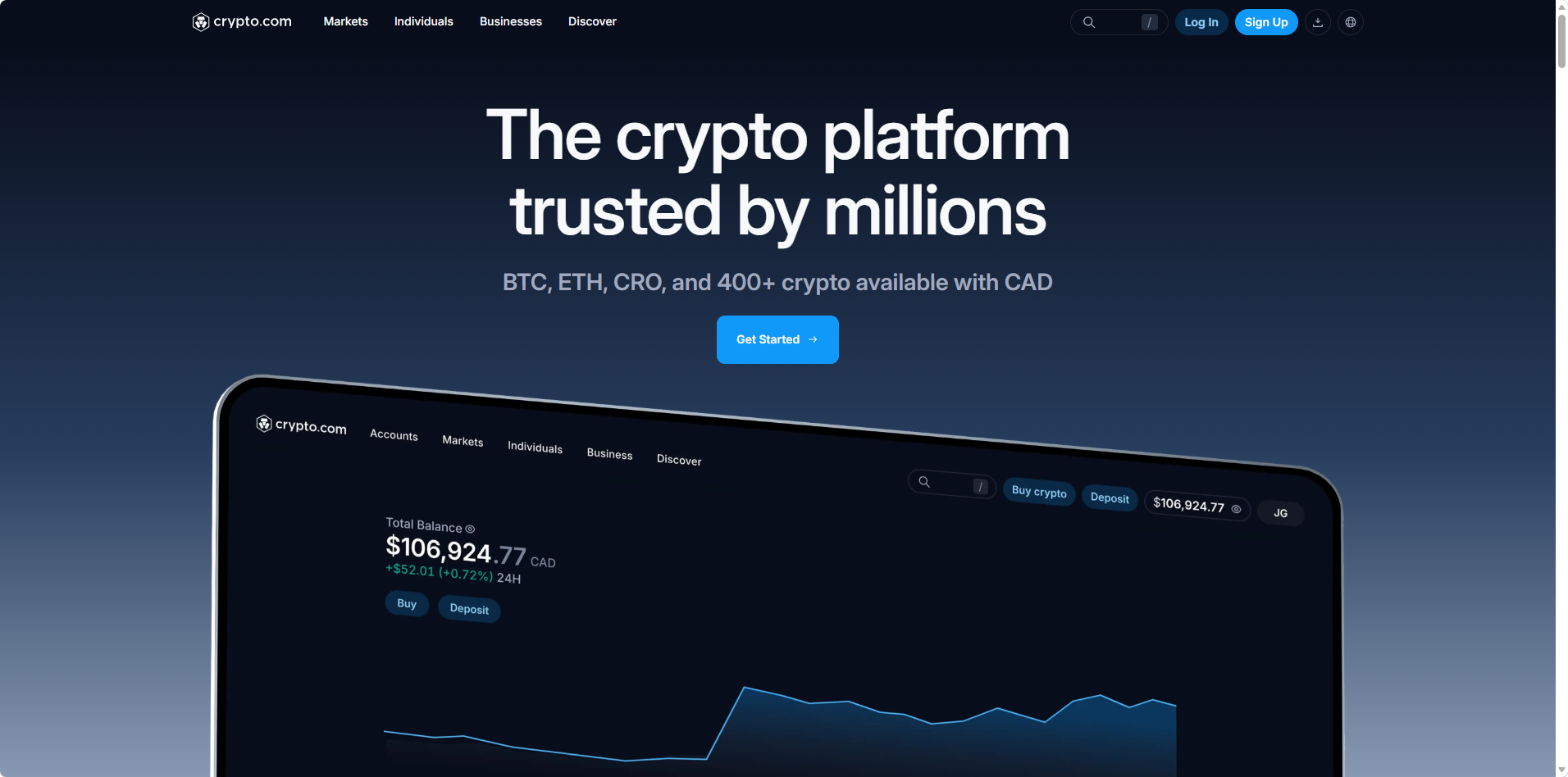
The Crypto.com Card is a prepaid Visa available to Canadians who hold crypto.
How the Crypto.com Card Works
You load CAD from your Crypto.com account, including by selling crypto, and spend through a virtual or physical card issued by Digital Commerce Bank.
Crypto.com Card Costs & Fees
The entry Midnight Blue card no longer earns rewards. Higher tiers require staking CRO or a subscription, so check current terms in the app.
Crypto.com Card Spending Limits and Funding
Limits depend on tier and verification.
Crypto.com Card Advantages
-
Virtual card for immediate online use
-
Converts crypto holdings into spendable CAD
Crypto.com Card Drawbacks
-
Rewards tied to a volatile token
-
Tier terms have changed repeatedly
Who the Crypto.com Card Is Best For
Existing Crypto.com users.
Why Someone Would Choose Crypto.com Over KOHO
Spending crypto balances directly, which KOHO's crypto trading does not offer.
7. Cloaked Pay
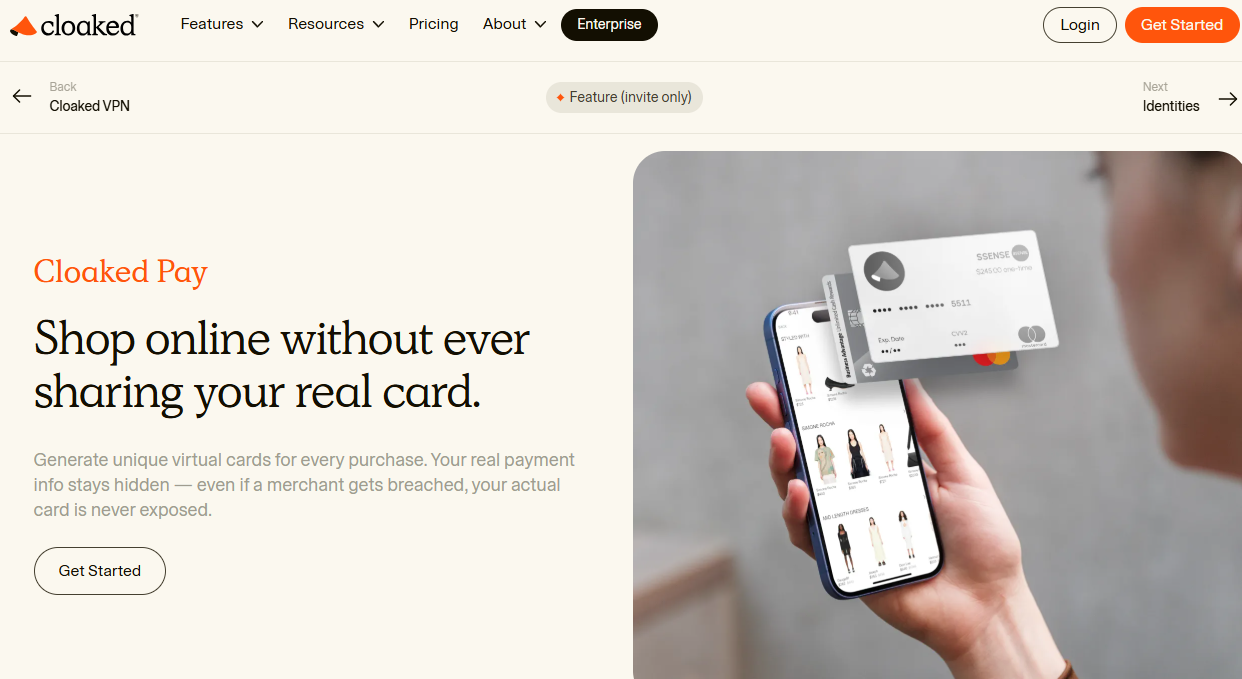
Cloaked Pay is the card feature inside Cloaked, one of the few privacy suites available in Canada.
How Cloaked Pay Works
Each identity gets its own email alias, phone number and masked Mastercard, alongside a password manager and data broker removal.
Cloaked Pay Costs & Fees
From $9.99 USD a month billed annually, or $14.99 monthly.
Cloaked Pay Spending Limits and Funding
Funds are assigned per identity.
Cloaked Pay Advantages
-
Unlimited aliases and phone numbers
-
Separate identities per service
Cloaked Pay Drawbacks
-
Card access is waitlisted
-
The card identity check asks US applicants for a Social Security number, so confirm what Canadian applicants need
Who Cloaked Pay Is Best For
Privacy focused users with US identity documents.
Why Someone Would Choose Cloaked Pay Over KOHO
Identity masking that KOHO does not attempt, if you can get access.
8. Venn
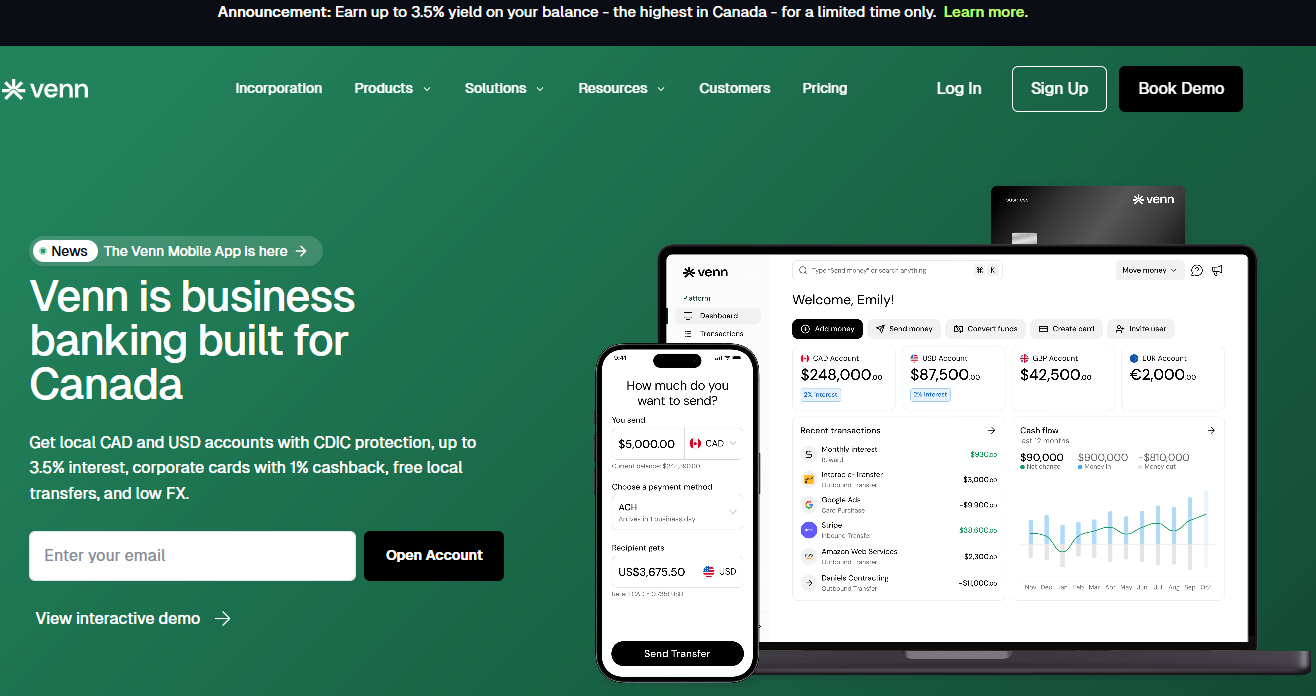
Venn is a Canadian business account with cards, suited to KOHO users running a side business.
How Venn Works
You open free local CAD, USD, GBP and EUR accounts and issue unlimited physical and virtual cards with custom limits.
Venn Costs & Fees
A free plan is available. Venn's site lists 2% interest on CAD and USD balances and 1% cash back with no cap.
Venn Spending Limits and Funding
Deposits are CDIC protected up to $100,000 through Peoples Trust infrastructure, with unlimited free Interac e-Transfers.
Venn Advantages
-
Unlimited virtual cards with per card limits
-
Multi currency cards that spend the matching balance
Venn Drawbacks
-
Business accounts only
-
Some features sit on paid plans
Who Venn Is Best For
Freelancers and small businesses leaving personal accounts for business ones. Our guide to small business virtual cards compares more.
Why Someone Would Choose Venn Over KOHO
A proper business account with cash back and cards for every vendor.
9. Float
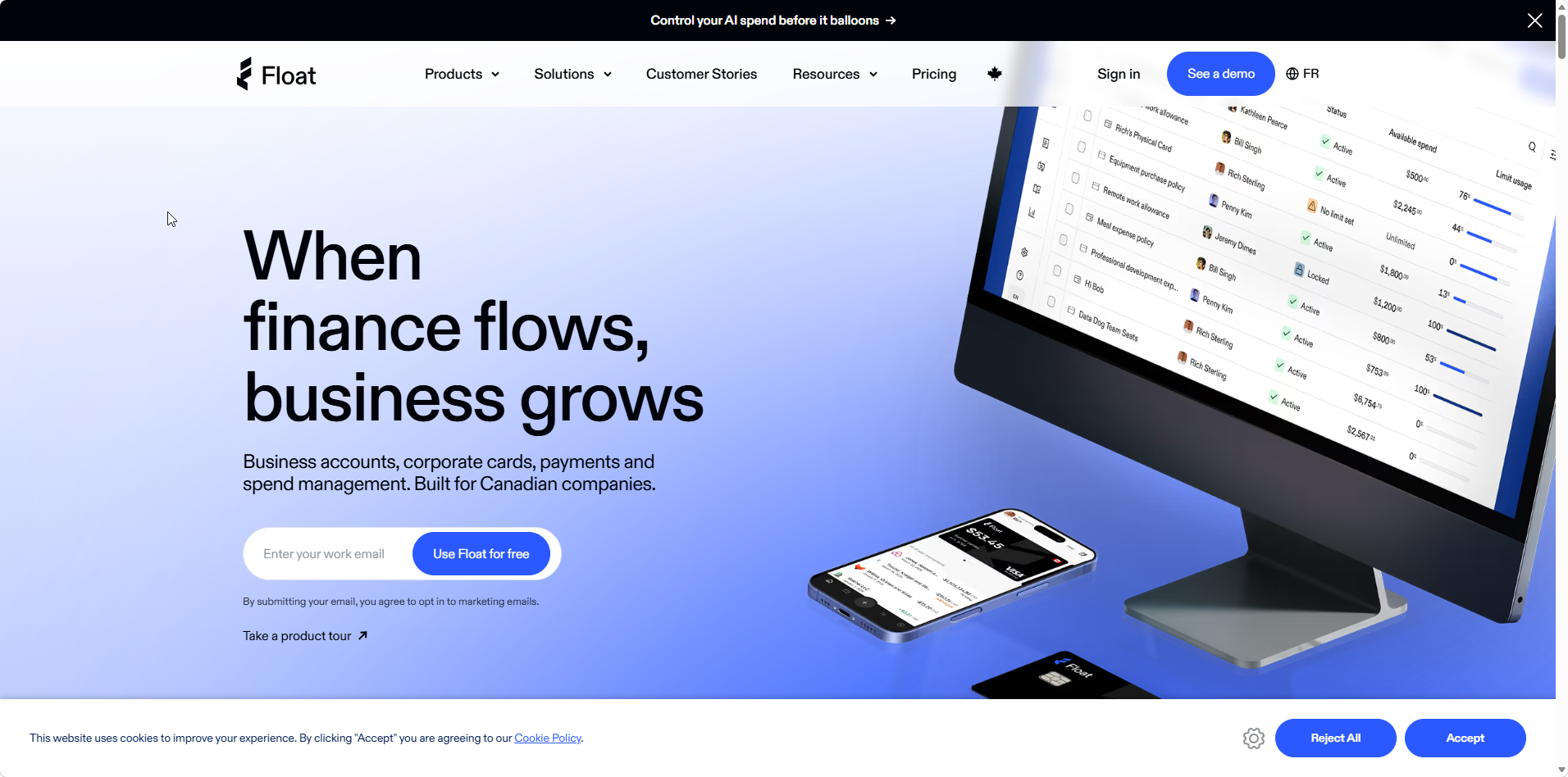
Float is a Toronto spend management platform with unlimited virtual cards.
How Float Works
Businesses issue cards to employees and vendors, including single use virtual cards for one-off purchases, and collect receipts automatically.
Float Costs & Fees
The Essential plan is free with unlimited virtual cards and 20 physical cards. Float's platform page lists up to 3.5% interest on deposits in its prepaid model.
Float Spending Limits and Funding
Pre-funded balances or credit terms, with recurring limits suited to subscriptions.
Float Advantages
-
Single use cards and recurring limits
-
Accounting sync with QuickBooks and Xero
Float Drawbacks
-
Business only
-
Advanced controls cost extra
Who Float Is Best For
Teams managing software and vendor spending.
Why Someone Would Choose Float Over KOHO
Expense management KOHO does not offer.
10. Ramp
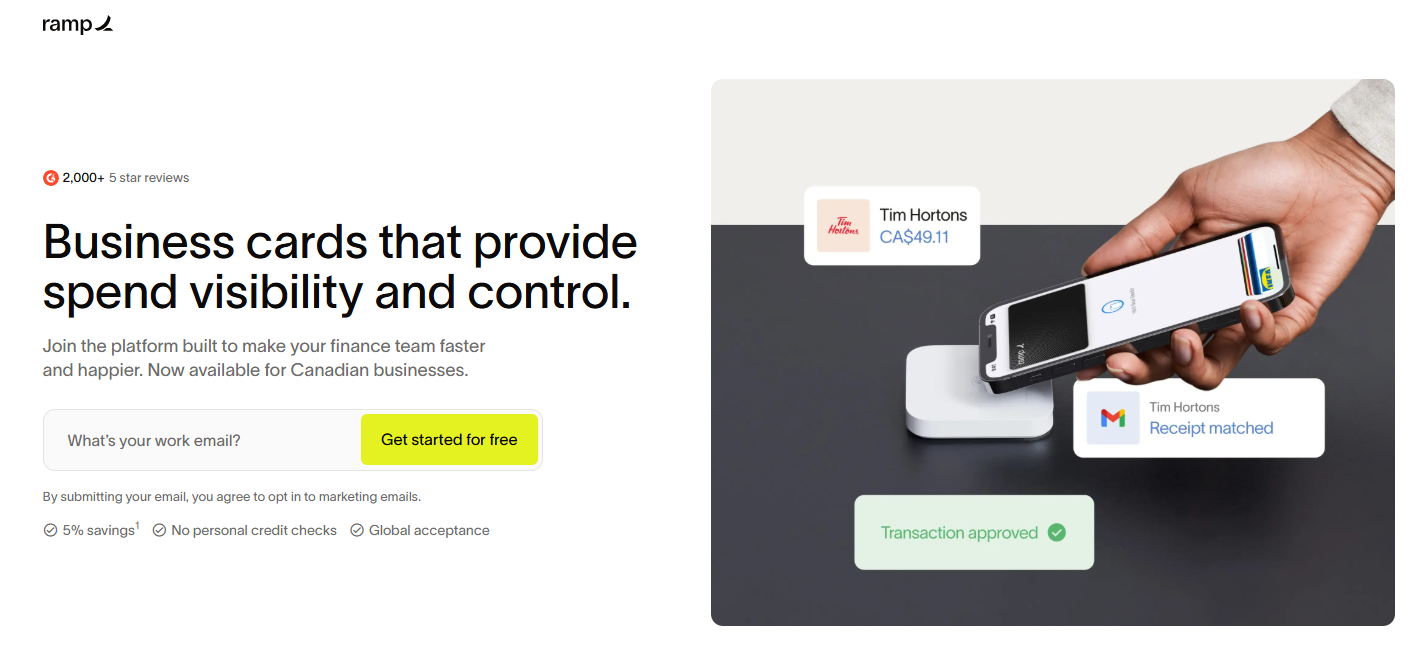
Ramp now serves Canadian businesses, with cards issued in Canada by Peoples Trust.
How Ramp Works
Unlimited physical and virtual cards with spending rules, bill pay and reimbursements in one platform.
Ramp Costs & Fees
According to Ramp's Canadian pricing summary, the free plan costs CA$0 per user, and Plus costs CA$15 per user per month.
Ramp Spending Limits and Funding
Limits by card, user and category.
Ramp Advantages
-
Free plan with unlimited cards
-
CAD and USD cards on one login
Ramp Drawbacks
-
Business only
-
Newer to Canada than local rivals
Who Ramp Is Best For
Growing finance teams.
Why Someone Would Choose Ramp Over KOHO
Business controls and cards at no cost.
11. Airwallex
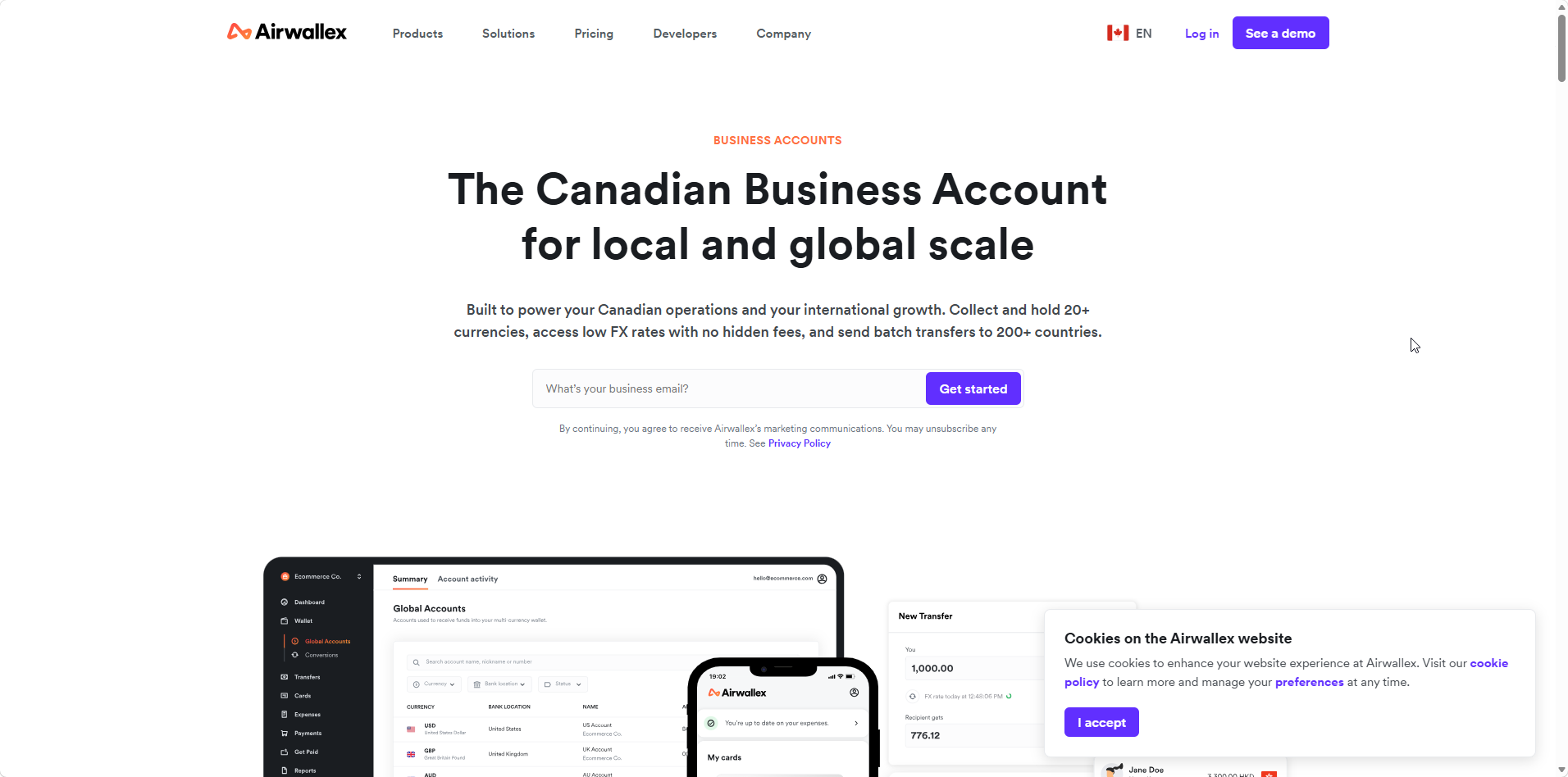
Airwallex launched its Borderless Visa Card in Canada in April 2024 for businesses selling across borders.
How Airwallex Works
Businesses receive money in 20+ currencies and issue unlimited multi currency corporate cards.
Airwallex Costs & Fees
A free plan and paid tiers. Airwallex Yield is not available in Canada as of September 2026, according to Airwallex's Canadian blog.
Airwallex Spending Limits and Funding
Per card limits set by administrators.
Airwallex Advantages
-
Unlimited corporate cards
-
Accounting integrations
Airwallex Drawbacks
-
Not a bank, and no CAD interest
-
Business only
Who Airwallex Is Best For
E-commerce and cross-border businesses.
Why Someone Would Choose Airwallex Over KOHO
Multi currency business payments.
12. Loop
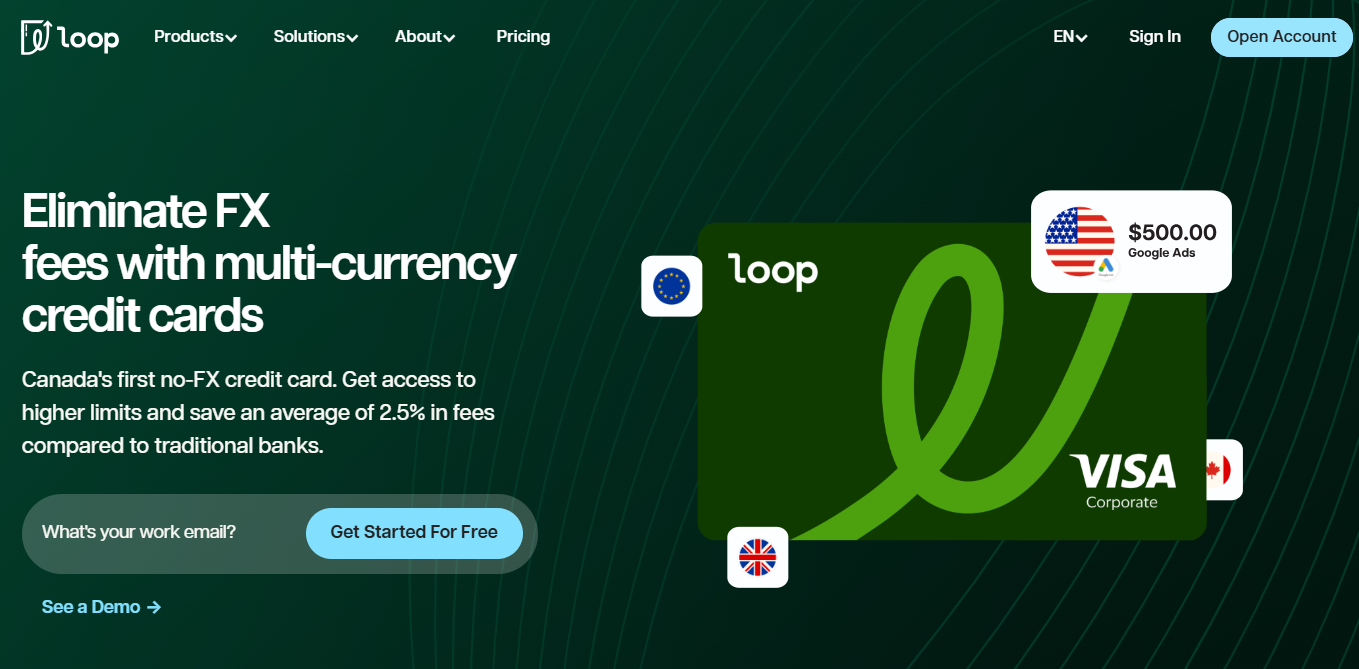
Loop offers business cards in CAD, USD, EUR and GBP with revenue based credit.
How Loop Works
Businesses issue cards in four currencies and manage spending through one dashboard.
Loop Costs & Fees
The free plan includes two physical cards and 20 virtual cards, per Ramp's comparison.
Loop Spending Limits and Funding
Credit limits tied to business revenue.
Loop Advantages
-
Four currency cards
-
Credit that scales with revenue
Loop Drawbacks
-
Business only
-
Limited virtual cards on the free plan
Who Loop Is Best For
Retail and e-commerce teams.
Why Someone Would Choose Loop Over KOHO
Multi currency business cards with credit.
What Users Think About KOHO and These Alternatives
Scores shift, so weigh sample size and recency, and follow the links to read the reviews yourself.
KOHO
KOHO holds 4.5/5 on Trustpilot from about 2,668 reviews and invites customers to review. Praise centers on credit building and ease of use; recent negatives include members locked out abroad after two-step verification changes and complaints about fees adding up.
Halocard
4.2/5 (11 reviews) on Trustpilot, too few reviews to judge. Reviewers describe cards working on US AI and app store subscriptions, and a Canadian reviewer on Halocard's own site reports smooth use on GrapheneOS.
Neo Financial
We did not find a large, verifiable third party score. Its October 2026 notice says Neo granted over 70,000 credit limit increases in 2026.
Wealthsimple
No single review score we could verify, though its support pages document a clear virtual card setup.
Wise
4.3/5 from 300,000+ Trustpilot reviews, one of the largest samples in fintech.
Brim Financial
Independent reviewers praise its perks but criticize customer service and the reintroduced FX fee.
Crypto.com Card
Feedback focuses on reward downgrades on lower tiers.
Cloaked Pay
Cloaked holds 3.7/5 from 756 Trustpilot reviews, with frustration over waitlisted cards.
Venn
Venn cites a 4.8 rating from more than 10,000 Canadian businesses on its own site, which is self reported.
Float
Mostly business software reviews; test with a free plan.
Ramp
Little Canadian consumer feedback yet.
Airwallex
Mostly business feedback; no Canadian specific score.
Loop
Limited public review coverage.
If You Want a Bank Account: Online Banks and High Interest Savings Accounts
Not every KOHO user needs a virtual card. If you mainly want a no fee bank account with free e-Transfers, online banks are simpler.
EQ Bank for High Interest Savings
EQ Bank is a trade name of Equitable Bank, a CDIC insured bank. Its Personal Account has no monthly fees and unlimited free transactions, and its prepaid EQ Bank Card pays 0.5% cash back with no FX fees and ATM fees reimbursed in Canada. EQ Bank's bonus interest terms list a 1.25% base rate and 3.30% with at least $2,000 a month in payroll direct deposits, while several comparison sites show lower figures, so confirm the rate in the app.
Simplii Financial and Other Chequing Accounts
Simplii Financial, owned by CIBC, offers a no-fee chequing account with free CIBC ATM access and a Cash Back Visa. Tangerine and other online banks offer similar chequing accounts with lower fees than the big banks. None of these issue merchant specific virtual cards, which is the gap Halocard fills.
Credit Building Through Rent After KOHO
If KOHO's Rent Reporting was your credit building tool, several Canadian services move your rent money and report it to Equifax, and one, Borrowell, reports rent without handling the payment at all. Figures below come from Neobanc's September 2026 comparison, which cites each provider's pricing page, and a Milesopedia review of rent apps:
| Service | Credit card fee | Rent reporting | Notes |
|---|---|---|---|
| Neobanc | 1.50% with 1% cash back, or 2.25% with 2% | Free to Equifax | Up to 6% combined with card rewards |
| Chexy | 1.75% (2.5% for international cards) | Equifax and TransUnion on Plus ($20/month) | Essential $9.99/month |
| Casa | 1.75%, or 0% with ScotiaGold Passport Visa | Not offered | Launched with Scotiabank in March 2026 |
| TenantPay | Visa 1.75%, Mastercard 2.75% | Free to Equifax | $4.99 flat PAD; operating since 2006 |
| Zenbase | Credit cards not accepted | CreditBuilder from $3/month | Both bureaus at partner buildings |
| Borrowell Rent Advantage | Reporting only | $10/month | Equifax only |
The "up to 6%" figures that Neobanc and TenantPay advertise combine platform cash back with your own card's rewards; native cash back is 1% to 2%.
How to Compare KOHO With Its Alternatives
The cheapest option depends on how you use the account. These examples use KOHO's published rates.
Fraud costs. Worldwide, card fraud cost $33.41 billion in 2024 according to the Nilson Report's figures, which is why card controls belong in the comparison next to cash back and interest.
Everyday spending. On Extra, a household spending $1,000 a month on groceries, transport and dining earns $5 more cash back than on Essential, and a $3,000 balance earns about $1.25 more interest. That $6.25 does not cover the CA$12 plan. Everything pays roughly $15 more cash back on $1,000 of category spending and $1,000 of other purchases, plus about $3.75 in extra interest, which just clears its CA$14.75 price.
US subscriptions. A Canadian paying $100 USD a month to US services on KOHO Essential pays a foreign transaction fee on each charge, and can earn cash back only in KOHO's eligible categories. On Halocard, USD purchases carry no fee, though a CAD bank transfer still involves conversion into USD.
When a Credit Card Beats a Prepaid Card
Prepaid cards such as KOHO's can be declined for car rentals and hotel deposits, as one Reddit user noted. If you need those, a credit card from Brim or a bank is the better tool. For online purchases, a virtual credit card with per card limits combines the safety of a prepaid balance with credit card acceptance.
Premium Services Worth Paying For
Paid plans make sense when a feature replaces a real cost:
-
No FX fees, if you spend in other currencies every month
-
Per card controls, if you pay many subscriptions or vendors
-
Credit building discounts, if you use KOHO's Credit Building
-
ATM reimbursement, if you withdraw cash regularly
Canadian fraud data supports paying for control. The Competition Bureau says reported fraud losses since 2021 passed $2 billion, and in the US the FBI recorded $893 million in losses tied to AI related complaints in 2025. Setting spending limits on each card caps what any single breach can take.
How to Get Halocard
Halocard suits Canadians who need what KOHO does not provide: a card per merchant, a US issued Visa for US platforms, and funding from crypto or CAD bank transfers. It works for AI and cloud billing, subscriptions, advertising and private purchases, and Halocard for business supports teams.
Halocard is not a bank. It pays no interest or cash back, offers no e-Transfers, and holds your balance in USD, so keep a Canadian account for bills and pay.
More reading: how Halocard protects privacy, virtual card safety, masked card services, getting a card online, paying for Claude and earning through referrals.
Step-by-Step
-
Sign up at halocard.co in a web browser, no app needed.
-
Complete a quick identity check with your passport or driver's license.
-
Add funds by stablecoin, crypto, CAD bank transfer or card.
-
Create a card for each merchant and set its spending limits.
-
Add cards to Apple Pay or Google Pay, and freeze any card instantly.
Frequently Asked Questions
Answers to the questions Canadians ask most when leaving KOHO.
Is KOHO a Bank?
No. KOHO is a financial technology company. Deposits are held with Peoples Trust, a federally regulated CDIC member, and KOHO is applying for its own bank license.
Does KOHO Do a Credit Check?
No, opening a KOHO account involves no credit check. Credit Building is also available without a credit check, which is part of its appeal for people rebuilding credit history.
Can I Use KOHO Outside Canada?
The card works wherever Mastercard is accepted, but only Canadian residents can open accounts, and Essential charges foreign transaction fees. Wise, Wealthsimple and KOHO's paid tiers avoid those fees.
Which KOHO Alternatives Have No Monthly Fees?
Wealthsimple, Wise, Neo's Essentials membership and EQ Bank have no monthly fees, and Venn, Float and Ramp offer free business plans. Halocard charges a monthly fee from $12 USD.
Is Neo Financial Better Than KOHO?
It depends on your fees under Neo's 2027 schedule. Neo offers similar cash back and savings, but Essentials users will pay for e-Transfers and NSFs. KOHO charges FX on Essential, while Neo charges 2.5% FX unless you pay for Grow.
What Is the Best KOHO Alternative for Credit Building?
For rent, Neobanc and TenantPay each reports rent to Equifax for free, and Chexy's Plus plan reports to both bureaus. For a credit card, Brim or a secured Neo card builds history directly.
Can a Virtual Card Be Traced?
Yes, by the issuer and by authorities with legal grounds. A virtual card keeps your real number away from merchants, but the provider verifies your identity and keeps transaction records under anti money laundering rules. Fintech platforms prioritize user control over who sees your card, not secrecy from regulators.
Does Halocard Require an SSN?
Not for Canadians. Anyone outside the US signs up with a passport or national ID only, and there is no credit check.
Is Halocard Available in Canada?
Yes. Halocard serves 120+ countries, including Canada, and accepts CAD bank transfers. Cards can be used for shopping online or offline through digital wallets. Only a few countries are excluded, among them China, India, Russia, Turkey and Iran.
Sources
-
Trustpilot. Halocard Reviews
-
KOHO. Essential Plan
-
KOHO. Extra Plan
-
KOHO. Everything Plan
-
KOHO. Rent Reporting Eligibility
-
Trustpilot. KOHO Reviews
-
Reddit. Is KOHO Legit
-
Reddit. KOHO Customer Service Review
-
BNN Bloomberg. KOHO Raises $130 Million
-
Neo Financial. What's Changing
-
Wealthsimple. Chequing
-
Wealthsimple. Virtual Prepaid Mastercard
-
Wise. Card Fees in Canada
-
Trustpilot. Wise Reviews
-
Brim Financial. Notice of Change
-
Trustpilot. Cloaked Reviews
-
Venn. Venn vs Loop
-
Float. Platform
-
Ramp. Float Alternatives
-
Ramp. Venn Alternatives
-
Airwallex. Free Business Accounts in Canada
-
EQ Bank. Bonus Interest Terms
-
Neobanc. Chexy Alternatives
-
Milesopedia. Cash Back on Rent
-
Canadian Anti-Fraud Centre. Top 10 Frauds in 2025
-
Competition Bureau Canada. Fraud Prevention Month
-
The Record. FBI Cyber Fraud Report
-
FICO. Card Not Present Fraud
-
Security.org. 2026 Credit Card Fraud Report
-
Nilson Report. Global Card Fraud Losses
Sourced September 21, 2026
*Please see Halocard's Terms of Service or Pricing for the most up to date pricing and fee information. This publication is provided for general information purposes and does not constitute legal, tax or other professional advice from Halocard LLC or its subsidiaries and its affiliates, and it is not intended as a substitute for obtaining advice from a financial advisor or any other professional. We make no representations, warranties or guarantees, whether expressed or implied, that the content in the publication is accurate, complete or up to date.
Halocard Virtual Cards


Instant approval
Create your first card in under 5 minutes.

Private purchases
Purchases never appear on your bank account.

Powered by Visa
Accepted at 175M+ merchants globally.
3 steps to create your virtual credit card

1. Sign up
Create your account from a web browser. No need to download an app.

2. Verify
Verify you're a real person in 3 minutes, from the US or any of 120+ countries.

3. Fund
Add funds by debit/credit card, Apple Pay, Google Pay, bank transfer, stablecoins, or crypto.

Pay with Halocard
Pay online and in-person wherever Visa is accepted. You can also order a physical Halocard if you prefer.