

Halocard is the strongest IronVest alternative if the masked card was the part you used, with a US-issued Visa credit card for customers in the US and 120+ countries, per card limits and a billing address you choose. Privacy.com is the best free US option, Cloaked comes closest to replacing the whole identity suite, and Capital One or Citi cardholders may already have virtual numbers included.
IronVest grew out of Abine Blur and bundles a password manager with masked emails, virtual phone numbers and masked credit cards, protected by AES 256 bit encryption, a zero knowledge architecture and decentralized biometrics, including two factor authentication by facial recognition. The security engineering is real. The card is not. Its browser extension listing, Android app listing and pricing page all carry the same footnote: masked cards are temporarily unavailable during payment and banking infrastructure upgrades. Reviewers have reported that outage since at least mid 2024.
The company has moved in two directions at once. Its main site now sells fraud prevention technology to banks, while the consumer masked payments product has reappeared under a separate brand, Ivy by IronVest. Ivy is a relaunch rather than a rename: separate login, separate billing, no data migration, US only, and a Chrome listing showing nine users and no ratings in September 2026. IronVest is legitimate, not a scam. It is simply not shipping the feature most people subscribed for.
Key Takeaways
-
Halocard is the best IronVest alternative for cards that work. A US issued virtual Visa in 120+ countries, with per transaction, daily and monthly limits and a custom billing address.
-
Match the alternative to what you used. Cards point to Halocard or Privacy.com, the full suite to Cloaked or MySudo, and passwords alone to a standard password manager.
-
Ivy is a separate product, not an upgrade path. Different account, different billing, no data transfer, and a card service nobody has tested at scale.
-
Browser based masked cards are a shrinking market. IronVest's cards are offline, Citi reset its virtual numbers in 2025, and the Capital One Eno extension closes on 30 September 2026.
-
Per merchant cards are the control that matters. Security.org found 51% of cardholders using one card for autopay and everyday spending.
Quick Comparison Table
| Provider | Card / Account Type | Availability | Virtual Card Capacity | Key Pricing and Fees | Best For |
|---|---|---|---|---|---|
| Halocard | US-issued Visa credit card | 120+ countries | 3 to 60 by plan | From $12/month; 1.5% + $0.30 | Global users needing US cards |
| Privacy.com | US virtual debit, merchant locked | US residents with a US bank | 12 to 60 monthly | Free, then $5, $10 or $25; 3% FX on lower tiers | Free per merchant cards |
| Cloaked | Masked Mastercard in a privacy suite | US citizens only | Waitlisted | From $9.99/month billed annually | Email, phone and card masking together |
| MySudo | One Mastercard per profile | US users and US merchants | 3 to 9 by plan | $1.99 to $14.99/month; 2.99% + $0.31 per buy | Compartmentalized identities |
| Capital One Eno | Virtual numbers on your own card | Eligible US cardholders | Unlimited | Free; extension retiring 30 September 2026 | Cardholders wanting no new account |
| Citi Virtual Account Numbers | Virtual numbers on your own card | Eligible US cardholders | Multiple, with limit and expiry | Free with the card | Free trials and unknown merchants |
| Revolut | Multi currency account with cards | UK, EEA, US and more | 20 active plus 1 disposable | $0, $9.99 or $16.99/month | Banking plus virtual cards |
| Wise | Multi currency account with cards | 160+ spending countries | Multiple | No monthly fee; card issue about $9 | Spending at the mid market rate |
| Klutch | US Visa credit or preload card | US residents | Unlimited | No annual fee; 1% back, up to 6% selected | Rules based automation, free |
What Happened to IronVest Masked Cards and Where Ivy Fits
The company's own pages tell three different stories, so it is worth setting them out before you pick a replacement.
IronVest Review: What the Current Record Shows
IronVest offers a free version plus two paid tiers, and on paper a robust set of features. Published pricing lists Plus at $39/year with 50 masked emails and up to 35 cards, and Ultimate at $99/year with unlimited emails and cards plus fee free bank funding. Earlier pages listed those tiers monthly, Plus at $5.95 and Ultimate at $14.95 per month, so check what your account is billed.
Two fee structures also appear. The pricing footnote states a $2 fee per masked credit card plus 1.5% on any card funded above $100, while the help center describes 2.9% + $0.30. Both agree bank funding is free, but when a company's pages conflict, confirm before funding anything.
The asterisk sits on that same page: you can still buy a plan whose headline features include virtual cards, with a footnote saying they are unavailable.
IronVest UX and the Complaints That Pushed Users Out
The IronVest UX complaints cluster tightly, which makes them credible despite the small sample. Reviewers describe the app hanging after sign in, crashing after a device switch, and the extension failing to create masked emails in several browsers. Support does reply publicly, more than many competitors manage, but the interface complaints keep coming.
Two complaints matter most. Long standing Blur customers report masked email forwarding arriving late or never, serious when those addresses are the login identity for dozens of online accounts. And in April 2026 a reviewer reported free tier masking moving behind a paid Ivy subscription, which IronVest's own page contradicts, so verify your plan.
Ivy by IronVest and Its Masked Payments Service
Ivy offers features IronVest never shipped, including an assistant that scores pages for phishing risk, alongside masked email, phone numbers and cards. Free includes 5 masked emails, 3 active cards and unlimited password storage. Pro is $10.99 monthly or $99 a year for 500 emails, 12 cards and 2 US phone numbers.
The fee schedule decides most switching questions. Card funding costs 2.9% + $0.30, ACH is free, and closing a card to refund the balance additionally costs 2.9% + $0.30. New accounts start on card funding, with ACH only after an eligibility review, so loading $100 and closing it unspent costs about $6.40. Cards run from $10 to $1,000, the ceiling on each is set by a fraud assessment rather than by you, and the terms require a verifiable US street address and allow IronVest to order a credit report.
Cards and phone numbers are US only, and the product is a Chrome or Chromium extension with no desktop app or iOS app yet, replacing one that had both. Ivy is not bad, it is an unproven product, and for most people that is the deciding factor.
Best IronVest Alternatives for Masked Cards and Online Privacy
The order runs from dedicated card providers to identity suites, then to free options you may already hold.
1. Halocard
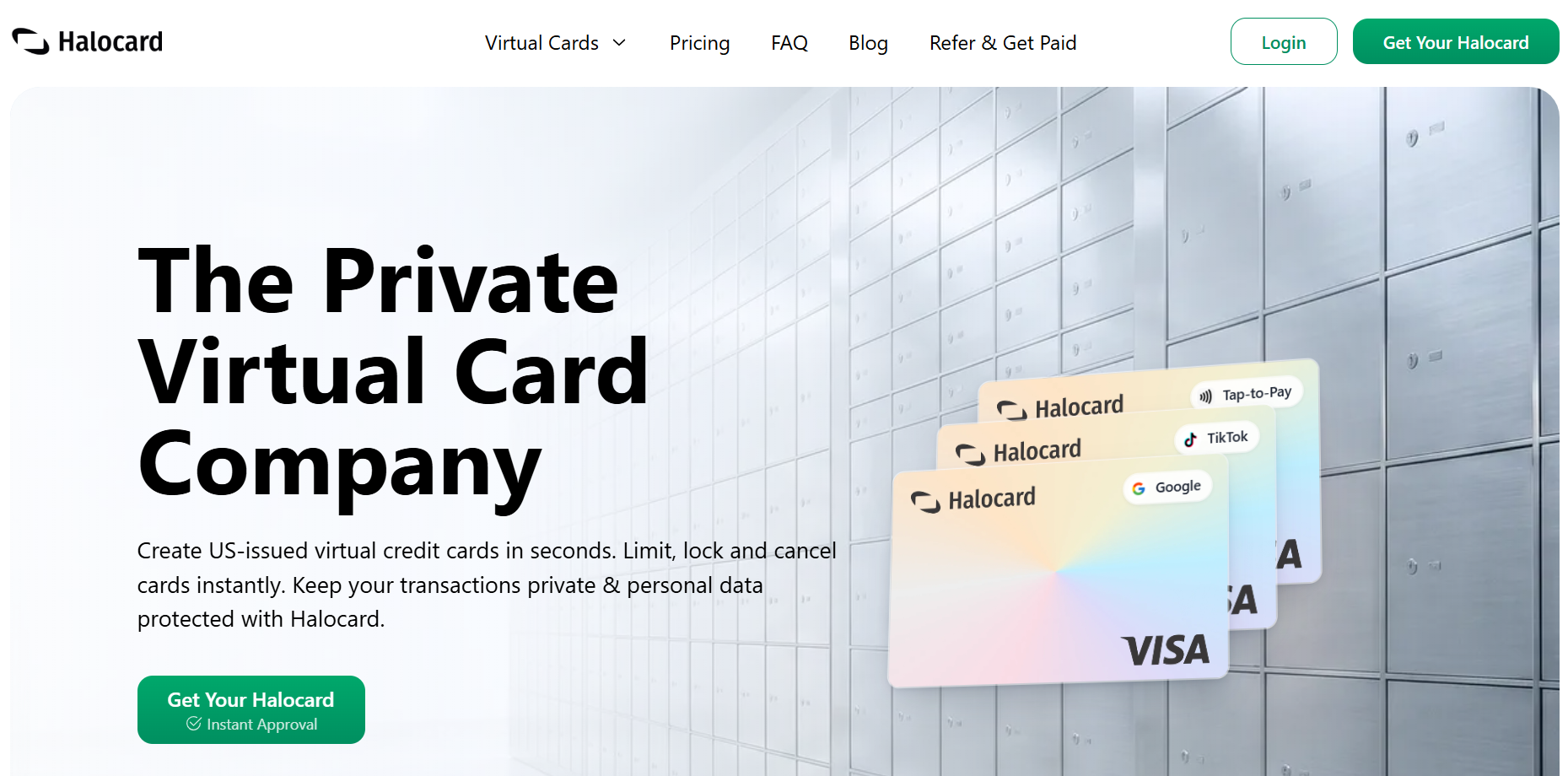
Halocard is a US based fintech whose entire product is the virtual card, the opposite of IronVest's bundle everything approach. Nothing else in the account depends on the card program staying online. See Halocard vs Ivy by IronVest side by side.
How Halocard Works
Registration happens on the web, no app needed. Identity checks clear in about three minutes against a passport or national ID, no SSN is asked for outside the US, and uploaded files are destroyed after approval.
Halocard Costs & Fees
The $12 tier carries 3 cards, $15 carries 12 and $75 carries 60, with business plans from $29. Spending in dollars adds no markup, anything else 1.5% + $0.30. You can top up by debit/credit card, Apple Pay, Google Pay, bank transfer, stablecoins, or crypto.
Halocard Spending Limits and Funding
Each card takes its own per transaction, daily and monthly ceiling, freezes in one tap, and carries a billing address you nominate. Disposable cards retire themselves after a single purchase.
That separation earns its keep. The Identity Theft Resource Center logged 3,322 data breaches in 2025, a record, with 80% of consumers surveyed receiving a notice.
Security.org's 2026 fraud research puts 61.3 million Americans on the receiving end of fraudulent charges in a single year, totaling about 6.1 billion dollars, and found a physical card was stolen in just 5% of cases while 38% of cardholders keep card details saved in their browsers. A number that buys from one merchant answers both.
Halocard Key Advantages
-
A US BIN and custom billing address that clear checks where foreign cards fail
-
Per card limits, instant freeze and disposable cards, not one shared limit
-
120+ countries, no residency test, and Apple Pay and Google Pay on every plan
Halocard Specific Drawbacks
-
No masked emails or virtual phone numbers, so it replaces one part of IronVest
-
A paid subscription, with no cashback, accounting integration or bill pay
-
Not a bank, and a Trustpilot sample of only 4.2/5 (11 reviews)
Who Halocard Is Best For
People whose IronVest use was the card, especially outside the United States, and anyone paying US platforms that reject foreign cards. See our guide to US billing address cards.
Why Someone Would Choose Halocard Over IronVest
The cards work, they are the only business, and they are not waiting on an infrastructure upgrade. You give up masked emails and phone numbers, replaceable elsewhere for a few dollars a month. Our explainer on masked card services covers the categories.
2. Privacy.com
Privacy.com is the US benchmark for merchant locked cards.
How Privacy.com Works
US residents aged 18 and over link a US checking account, then create cards that lock to the first merchant charging them, with a browser extension filling checkout fields.
Privacy.com Costs & Fees
Personal is free with 12 new cards a month, then $5, $10 and $25 tiers for 24, 36 and 60. Foreign transactions cost 3% on lower tiers, waived on Pro and Premium, which pay 1% back.
Privacy.com Spending Limits and Funding
Cards draw on your linked bank account, with caps by transaction, month, year or total spend.
Privacy.com Key Advantages
-
Merchant locking that declines everyone else automatically
-
A free tier covering most household needs
-
The category's best record, 4.5/5 across 3,358 ratings
Privacy.com Specific Drawbacks
-
US residents with a US bank account only
-
No masked emails or phone numbers
-
Reported account closures, and slow refunds to closed cards
Who Privacy.com Is Best For
US readers who want per merchant cards at no cost.
Why Someone Would Choose Privacy.com Over IronVest
It does the card job free, and its cards stayed live throughout the period IronVest's did not. Our Privacy.com alternatives roundup covers the gaps.
3. Cloaked
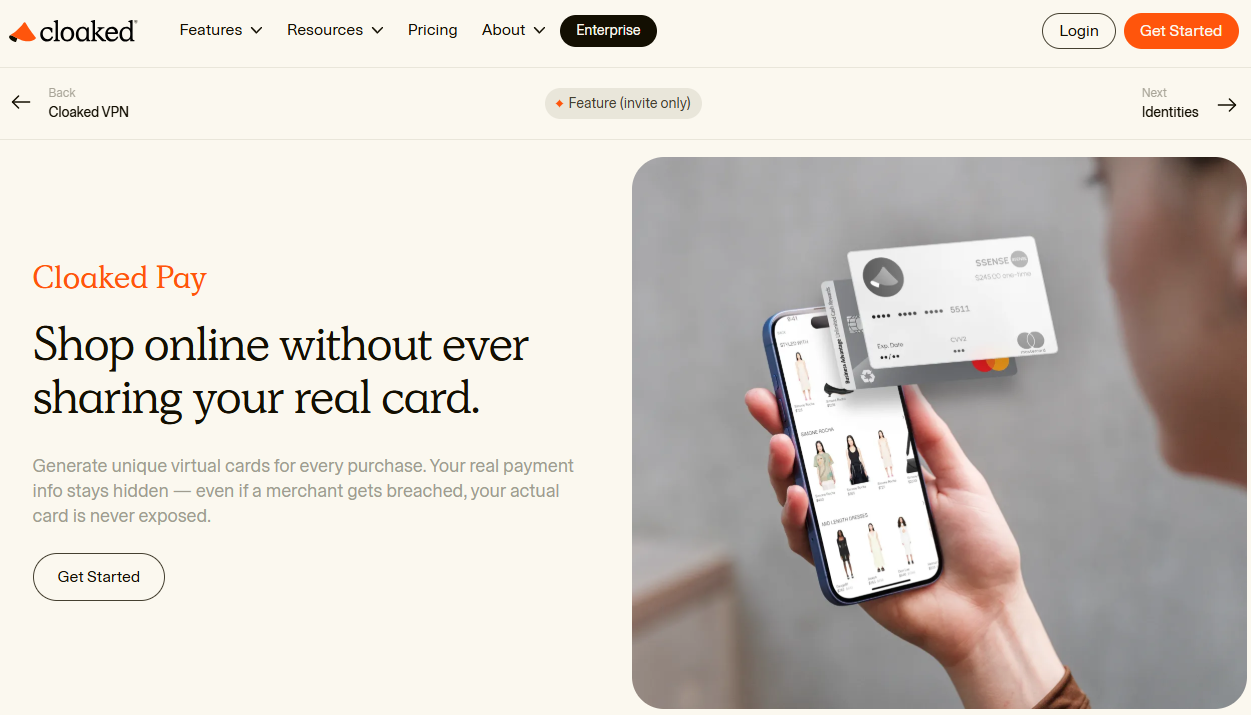
Cloaked is the closest match to IronVest's original bundle.
How Cloaked Works
You create an identity per service, each with its own address and number, storing the login in the built in vault. Cloaked offers unlimited email addresses and phone numbers, plus data broker removal.
Cloaked Costs & Fees
Individual plans are $9.99 a month billed annually or $14.99 monthly, with family tiers above.
Cloaked Spending Limits and Funding
Cloaked Pay funds each identity separately, so every merchant holds its own balance.
Cloaked Key Advantages
-
Unlimited aliases and numbers, the feature IronVest users miss most
-
Data broker removal and breach monitoring included
Cloaked Specific Drawbacks
-
Cloaked Pay is waitlisted, so paying does not guarantee cards
-
Card access needs an identity check including your Social Security number
-
Cloaked Pay is for US citizens only (the wider Cloaked suite covers the US and Canada), with VoIP numbers rejected by some banks
Who Cloaked Is Best For
North American users wanting the whole suite in one place.
Why Someone Would Choose Cloaked Over IronVest
The masking layer functions, with a far larger review base. The caveat is that a queued card feature is the pattern that brought you here.
4. MySudo
MySudo allows users to create secure digital profiles, called Sudos.
How MySudo Works
You set one up per area of life and hand out that identity instead of your own, with its card ringfenced to that persona.
MySudo Costs & Fees
SudoFree carries no cards. SudoGo is $1.99, SudoPro $4.99 and SudoMax $14.99 a month, for three, three and nine cards. Each purchase costs 2.99% + $0.31, minimum $0.50, or 10% on a $5 buy.
MySudo Spending Limits and Funding
One linked US card funds everything, under account wide caps of $250 per purchase and $350 per day.
MySudo Key Advantages
-
Real compartmentalization of phone, email and card per identity
-
A cheap entry point next to full privacy suites
-
Neutral statement descriptors that hide the merchant
MySudo Specific Drawbacks
-
The $250 and $350 caps rule out larger purchases
-
US users and US merchants only, never in store
-
Per purchase fees that punish small amounts, and a thin review record
Who MySudo Is Best For
US users making small, frequent purchases who want identities, not just numbers.
Why Someone Would Choose MySudo Over IronVest
The identity model is more rigorous and the cards actually issue, though the caps are strict enough that many people run a second provider too.
5. Capital One Eno
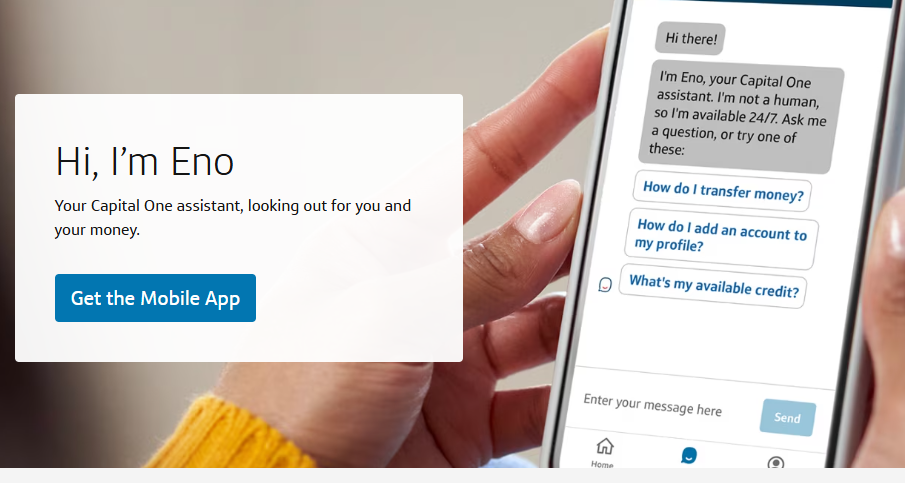
Eno turns a Capital One card you already hold into per merchant numbers.
How Capital One Eno Works
You generate a number tied to your real account, then lock, unlock or delete it. Numbers survive card replacement.
Capital One Eno Costs & Fees
Nothing beyond the card you hold, with the same rewards and protections.
Capital One Eno Spending Limits and Funding
Spending runs against your credit line, so there is no deposit to strand.
Capital One Eno Key Advantages
-
Free, with rewards and card benefits intact
-
Unlimited per merchant numbers, locked individually
-
Numbers survive card replacement, so stored details do not break
Capital One Eno Specific Drawbacks
-
The extension is discontinued on 30 September 2026, leaving a manual process
-
Open only to certain cardholders, with no masking of email, phone or address
Who Capital One Eno Is Best For
Capital One customers who want separation without a subscription.
Why Someone Would Choose Eno Over IronVest
It costs nothing and is backed by a national bank, though the shutdown shows that a feature owned by a bank runs on the bank's schedule.
6. Citi Virtual Account Numbers
Citi runs the same idea for its own cardholders.
How Citi Virtual Account Numbers Work
You log in, generate a number, then set a spending limit and expiry date before checkout.
Citi Virtual Account Numbers Costs & Fees
Free with an eligible Citi credit card, with normal rewards and protections.
Citi Virtual Account Numbers Spending Limits and Funding
Each number carries its own ceiling and end date, which suits trials.
Citi Virtual Account Numbers Key Advantages
-
Spending limits and expiry dates set before purchase
-
No subscription, no funding step, and useful for ending free trials
Citi Virtual Account Numbers Specific Drawbacks
-
Citi reset the system in August 2025 and older numbers stopped working
-
Eligibility varies by card, with no published list
-
Online only, with no mobile wallet or in store use
Who Citi Virtual Account Numbers Are Best For
Citi cardholders worried about unfamiliar merchants and trials.
Why Someone Would Choose Citi Over IronVest
It is free and available now, though the 2025 reset mirrors the IronVest problem: your numbers run on someone else's timetable.
7. Revolut
Revolut is the mainstream account with virtual cards attached.
How Revolut Works
You open an account in the app, hold 30+ currencies at interbank rates, and create virtual cards including a single use one.
Revolut Costs & Fees
US plans run Standard at $0, Premium $9.99 and Metal $16.99, with exchange free to a monthly allowance.
Revolut Spending Limits and Funding
Cards spend from your Revolut balance, with in app freezing.
Revolut Key Advantages
-
Up to 20 active virtual cards plus one disposable, free
-
Multi currency spending at interbank rates
-
A very large review base at around 4.7/5 app wide
Revolut Specific Drawbacks
-
Disposable cards cannot handle subscriptions or mobile wallets
-
No masked emails, phone numbers or custom billing address
-
Account restrictions during reviews are the recurring complaint
Who Revolut Is Best For
People wanting a full account with capable virtual cards.
Why Someone Would Choose Revolut Over IronVest
Twenty active cards on a free plan beats a paid plan with cards switched off, though the masking side is absent.
8. Wise
Wise is the multi currency specialist for international spending.
How Wise Works
You hold 40+ currencies, convert at the mid market rate, and spend in 160+ countries.
Wise Costs & Fees
No monthly fee, a one time card issue fee of around $9 in the US, and transfers from 0.33%.
Wise Spending Limits and Funding
Cards draw on whichever currency balance you hold.
Wise Key Advantages
-
Multiple free virtual cards and transparent conversion pricing
-
Local account details in several currencies
Wise Specific Drawbacks
-
Not a US issued card, so it is weak on US address verification
-
No merchant locking, masked emails or phone numbers
Who Wise Is Best For
Freelancers and travelers paying in several currencies.
Why Someone Would Choose Wise Over IronVest
Cost control rather than privacy depth. Wise will not hide your identity, but its cards issue instantly and it is among the most reviewed fintechs in the market.
9. Klutch
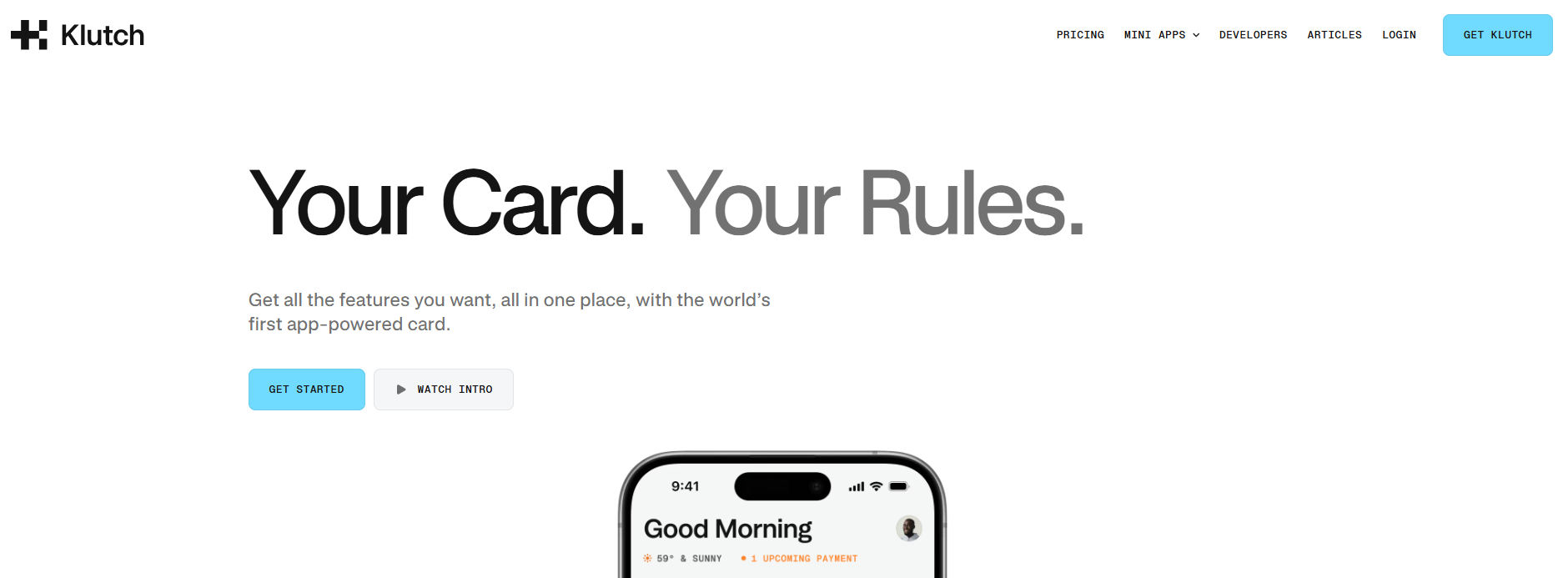
Klutch is a small US fintech built around card automation.
How Klutch Works
You use a Klutch credit or preload card, then create unlimited virtual cards, merchant locked or single use, with a subscription monitor and an API.
Klutch Costs & Fees
No annual fee, 1% cashback with up to 6% on selected spend, and a 3% foreign transaction fee.
Klutch Spending Limits and Funding
Limits follow your credit line or preloaded balance, with rules you define.
Klutch Key Advantages
-
Unlimited virtual cards at no subscription cost
-
Automation rules and alerts, and it integrates with Google Sheets
-
Cashback on a product that also offers merchant locking
Klutch Specific Drawbacks
-
A thin independent review record, so test with small amounts
-
US residents only, and the credit route involves a credit decision
Who Klutch Is Best For
US users wanting free per merchant cards with automation.
Why Someone Would Choose Klutch Over IronVest
Comparable control at no subscription cost, though diligence matters more with a young provider.
What Users Think About These IronVest Alternatives
Sample size matters more than the headline, so every claim links to its source.
IronVest sits at 2.4/5 from 13 Trustpilot reviews against 4.3 from 4,400 extension ratings and 2.9/5 on Google Play. The critical reviews are consistent: forwarding failures, sign in loops, and a card feature that never came back.
Halocard sits at 4.2/5 (11 reviews) on Trustpilot, a pool too shallow to carry weight, and we would rather say that than dress it up. The write ups come from people whose payments to US services finally went through, with the subscription price the persistent gripe.
Privacy.com leads the field at 4.5/5 from 3,358 ratings, and the grumbling is about account closures, not about whether cards work. Cloaked holds 3.7/5 from 756 reviews, praised for cutting spam, criticized by annual subscribers who expected cards. MySudo has only 7 reviews, one calling it genius for killing spam texts, while an independent review called the free tier a bait and switch.
Capital One and Citi are rated as banks, so their scores say little about virtual numbers, though the Eno extension holds 4.6 from 6,700 ratings, with recent reviews dominated by the shutdown. Revolut and Wise score 4.7/5 and 4.3/5 from very large samples.
Password Manager Options if Passwords Were the Point
If what you valued was the vault rather than the card, none of the tools below issue virtual cards, and none need to.
A standard password manager stores credentials in an encrypted vault, works as a password generator, and helps you manage passwords across browsers and devices, with privacy focused options adding sharing controls so a vault can be split without exposing the master credentials. 1Password provides shared password vaults for team collaboration, the pick for households and businesses needing delegated access.
Dashlane includes dark web monitoring, watching for your details in breach dumps. Keeper uses a zero trust security architecture and is common in regulated enterprises. Bitwarden remains the value choice.
Two IronVest features are not standard anywhere. Masked emails hide your real email address online, so a breach exposes an address you can delete rather than the inbox behind it, and they can be generated for anonymous online accounts instantly. SimpleLogin, Firefox Relay and Apple's Hide My Email cover that cheaply, Hushed and Burner handle phone numbers, and identity theft protection is a separate category covering services that remove personal data from brokers.
No password manager stops phishing on its own, and multi factor authentication is still the highest value habit to add: adoption rose from 55% in 2024 to 66% in 2026, while 43% of cardholders reuse passwords across online accounts.
How to Switch Off IronVest or Ivy Without Losing Access
The risk here is not the card. It is the masked email addresses your other accounts use as their login.
1. Inventory your masked emails before cancelling. Any account registered under a masked address is reachable only while that address forwards. Change the address on each account, because email is usually the one field you cannot edit later without support.
2. Export your vault while the subscription is live. Export the passwords, import them into the new manager, then delete the file.
3. Clear any balance on a masked card. Funds return to the funding source when a card is deactivated, and forgotten balances can end up with the state as unclaimed property.
4. Match the funding route to what you spend. Halocard takes deposits by debit/credit card, Apple Pay, Google Pay, bank transfer, stablecoins, or crypto, and the cost differs enough by route to matter over a year.
Run the numbers rather than comparing headline prices. Ivy Pro at $99 a year undercuts Halocard's $144 Essential plan on subscription alone, but put $500 a month through IronVest's Ivy card funding at 2.9% + $0.30 and you add roughly $178 a year in fees, pushing the real total past $275, while the same spend funded with stablecoins on Halocard stays at $144. If Ivy approves you for ACH, its fees vanish and it wins.
5. Issue one card per merchant. Set each monthly limit slightly above the subscription price so an increase fails loudly instead of passing quietly, as our guide to managing SaaS subscriptions sets out.
6. Set the billing address first, and leave the old card live for a month. On a US platform that declined you before, the billing address usually fixes address verification, and refunds route back to the card that paid it.
Security Features to Compare Before You Switch
Use this to navigate the options, because what differs is rarely what the marketing leads with.
-
Card availability today. Confirm the program is live, not queued or paused, the lesson of IronVest and Cloaked Pay.
-
Where the card is issued. A US BIN with a chosen billing address clears checks a foreign card fails.
-
Per card controls and fees in both directions. Look for limits per transaction, day and month, and ask what it costs to load a card and to get an unspent balance back.
-
Encryption and architecture. Zero knowledge storage and AES 256 encryption are table stakes; biometric authentication sits on top, not instead.
-
Platform coverage. Check the browser extensions, supported browsers, iOS and Android apps, whether a desktop app exists, and whether cards are compatible with wallets.
-
Portability and review depth. Can you import and export your data, and is the score built on 40 reviews or 40,000?
How to Get Halocard
If the outage is what brought you here, the answer is a provider whose only job is the card. Halocard issues on the Visa network, with a ceiling on each card, a freeze switch and an address you choose. Typical uses run to media buying, AI and cloud billing, shopping and subscriptions and private purchases, while teams get seats through Halocard for business.
Where it falls short is breadth. Masked emails, spare phone numbers, a password vault and dark web monitoring all sit outside what Halocard sells, as do rewards and banking, and the subscription only goes away if you hit the referral thresholds. Anyone wanting one app for everything is better served by Cloaked or MySudo.
More background: our ultimate guide, how virtual cards work, virtual card safety, and recovering a hacked card.
Step-by-Step
-
Open an account on the web, or start from a phone number to move faster.
-
Pass the ID check with a passport or national ID; no SSN outside the US.
-
Add funds by debit/credit card, Apple Pay, Google Pay, bank transfer, stablecoins, or crypto.
-
Issue a card, choose its ceilings and billing address, and load it into a mobile wallet.
-
Lock, cancel or replace any card from the account center.
Frequently Asked Questions
Does IronVest Still Offer Masked Cards?
Not at present. The same footnote appears on the browser extension, the mobile app listing and the pricing page: masked cards are temporarily unavailable during payment and banking infrastructure upgrades. Plans listing virtual cards as a feature remain on sale, so read the asterisk first.
What Is Ivy by IronVest and Is It the Same Company?
Ivy is a new consumer app from IronVest, Inc., built by the same team, and not a rename. It uses a separate login and billing, the company states that existing accounts are unchanged, and confirms data cannot currently move from the IronVest app into Ivy. Ivy's masked cards and phone numbers are US only.
What Are the Best IronVest Alternatives for Masked Emails and Phone Numbers?
Cloaked is the closest full replacement, with unlimited aliases and numbers plus a password manager, and MySudo bundles a number, an address and a card per identity. For aliases alone, SimpleLogin, Firefox Relay and Hide My Email cost little or nothing.
Can a Virtual Card Be Traced?
Private is not the same as anonymous. The issuer can tie every purchase to the account holder, records are retained, and courts and government agencies get answers when they ask lawfully. The protection points outward only: the shop you paid sees a number that buys nothing anywhere else.
Are Virtual Cards Safer Than One Card Everywhere?
For online spending, yes. Card fraud losses reached $33.41 billion worldwide in 2024, with the US accounting for 26% of card volume but 42% of those losses. Virtual cards allow spending limits per merchant, one time use cards minimize fraud risk, and masked credit cards protect financial details by keeping your real number off merchant systems. Digital wallets now carry 53% of ecommerce spend.
Are Anonymous Prepaid Cards a Real Alternative?
Prepaid debit cards can be issued anonymously and paid for with cash, then used for online or offline purchases, but they rarely reload, often fail address verification, and a lost card is a lost balance. For recurring bills, a reloadable virtual card is more practical.
Does Halocard Require an SSN?
Only US residents supply one, because US regulation requires it. Everyone else finishes signup without an SSN or ITIN, and nobody is credit checked. The review usually completes inside three minutes, after which your documents are wiped.
Is Halocard Available in My Country?
Coverage runs to 120+ countries, with a handful left out, China, India, Russia, Turkey and Iran among them. The live list sits on halocard.co. Wherever you sign up from, the card is issued in the United States.
Sources
-
Trustpilot. Halocard Reviews
-
IronVest. Consumer Pricing
-
Chrome Web Store. IronVest Extension
-
Google Play. IronVest App
-
Trustpilot. IronVest Reviews
-
Ivy by IronVest. Masked Payments
-
Ivy by IronVest. Pricing
-
Ivy by IronVest. For IronVest Users
-
Ivy by IronVest. Terms and Fees
-
Chrome Web Store. Ivy Extension
-
All Things Secured. IronVest Review
-
Privacy.com. Pricing
-
Trustpilot. Privacy.com Reviews
-
Trustpilot. Cloaked Reviews
-
Chrome Web Store. Eno From Capital One
-
Upgraded Points. Citi Virtual Numbers
-
Identity Theft Resource Center. 2025 Data Breach Report
-
Security.org. 2026 Credit Card Fraud Report
-
Nilson Report. Global Card Fraud Losses
-
FICO. Card Not Present Fraud
Sourced on September 15, 2026
*Please see Halocard's Terms of Service or Pricing for the most up to date pricing and fee information. This publication is provided for general information purposes and does not constitute legal, tax or other professional advice from Halocard LLC or its subsidiaries and its affiliates, and it is not intended as a substitute for obtaining advice from a financial advisor or any other professional. We make no representations, warranties or guarantees, whether expressed or implied, that the content in the publication is accurate, complete or up to date.
Halocard Virtual Cards


Instant approval
Create your first card in under 5 minutes.

Private purchases
Purchases never appear on your bank account.

Powered by Visa
Accepted at 175M+ merchants globally.
3 steps to create your virtual credit card

1. Sign up
Create your account from a web browser. No need to download an app.

2. Verify
Verify you're a real person in 3 minutes, from the US or any of 120+ countries.

3. Fund
Add funds by debit/credit card, Apple Pay, Google Pay, bank transfer, stablecoins, or crypto.

Pay with Halocard
Pay online and in-person wherever Visa is accepted. You can also order a physical Halocard if you prefer.