

Quick Answer: Halocard is the strongest Getsby alternative if you want a virtual card that works outside Europe: US-issued Visa cards in 120+ countries with a custom billing address and set spending limits, against Getsby's EEA-only prepaid Mastercard. Privacy.com suits US residents wanting merchant-locked cards, Wise and Revolut cover multi currency spending, and Cloaked Pay bundles a card with a wider privacy suite.
Getsby is a Netherlands-based online bank alternative and virtual wallet service selling euro-denominated prepaid Mastercards, a reloadable Green Card and a disposable Black Card, issued by DiPocket under FCA and Bank of Lithuania authorisation. It is a real, licensed banking platform, and for a resident of the European Economic Area who wants a private card for online purchases, it does the job well enough that many other virtual card providers get compared against it.
The catch shows up fast for anyone outside that footprint. Getsby is restricted to EEA, EFTA and UK residents aged 18 and over, so most of the world cannot open an account at all. Even for eligible users, the fee structure adds up: a €3.99 or €2.99 activation fee plus 3% on every card, a 3% top-up fee, and a 2% foreign transaction fee on anything spent outside euros. Its Trustpilot score sits at 2.3/5 from 123 reviews, with identity verification stalling and refunds being hard to obtain the most repeated complaints. This guide compares 11 alternatives, every one of which issues virtual cards, weighted toward the providers that solve what Getsby cannot: multiple countries of coverage, higher limits, no foreign transaction fees on major currencies, or a genuine credit card rather than a prepaid balance.
Key Takeaways
-
Halocard is the best Getsby alternative for global reach. A US-issued virtual credit card across 120+ countries, with no EEA residency requirement, a custom billing address, and set spending limits on every card.
-
Match the alternative to the gap Getsby leaves. Privacy.com covers US merchant-locked cards, Wise and Revolut handle multi currency accounts and international payments, bunq gives you far more cards from a licensed EU bank, and Cloaked Pay bundles a card with broader privacy tools.
-
Getsby's region lock is the real constraint. EEA, EFTA and UK residents only, with a euro-only balance and a 2% fee on anything else.
-
Verification and refunds are where Getsby's reviews concentrate. Its own Trustpilot profile shows stalled ID checks and difficulty getting money back as the dominant themes, not the card itself failing at checkout.
-
Disposable virtual cards exist for a reason. They change details after each transaction or close entirely, which limits what a compromised number can do, adding an extra layer of protection that several alternatives here offer more flexibly than Getsby's fixed Black Card, and running multiple cards across merchants compounds that protection.
Quick Comparison Table
| Provider | Card Type | Availability | Virtual Cards | Key Pricing | Best For |
|---|---|---|---|---|---|
| Halocard | US-issued Visa virtual credit card | US and 120+ countries, minimal KYC | 3 to 60, custom billing address | $12–$75/mo; 1.5% + $0.30 | Global reach and set spending limits |
| Privacy.com | US virtual payment cards | US residents with a US bank | 12–60 new cards/month | $0–$25/mo; 3% FX on lower tiers | Merchant-locked cards for US shoppers |
| Wise | Multi-currency account + card | Broad international | Up to 3 active digital cards | No monthly fee; card ~$9 | International payments, 40+ currencies |
| Revolut | Multi-currency account + cards | UK, EEA, US, more | 1 free, up to 5 on paid plans | $0–$16.99/mo | Disposable virtual cards and FX |
| bunq | Licensed Dutch bank | ~30 EU/EEA + UK | Up to 25 on higher plans | €0–€18.99/mo | Most cards from a licensed EU bank |
| Monzo | Licensed UK bank | UK residents | Paid tiers only | Free base; paid tiers above | UK banking with spending tracking |
| Skrill | Digital wallet + prepaid Mastercard | EEA + UK (card); wallet wider | Virtual prepaid Mastercard | No account fee; transaction-based | Wallet-based EU spending |
| Cloaked Pay | Privacy suite + virtual card | US citizens only | Invite-only, unlimited once granted | $9.99–$29.99/mo (suite) | A privacy suite with a card bundled in |
| RedotPay | Crypto-funded virtual/physical card | 100+ countries (not US) | Reloadable, mobile wallets | $10 virtual; Pro $12.90/mo | Crypto and stablecoin spending |
| Moon | Crypto-funded Visa prepaid card | Global (X) / US (1X) | Reloadable and disposable | First card free; 1% per transaction | Spending Bitcoin and stablecoins |
| Airwallex | Business multi-currency platform | Businesses in 69 countries | Unlimited corporate cards | Explore $0; user fees above | Business accounts and cross-border spend |
Best Getsby Alternatives for Virtual Cards and Global Spending
Below are the 11 best alternatives to Getsby, starting with the dedicated card platform, then multi-currency accounts, European banks, a privacy suite and business platforms.
1. Halocard
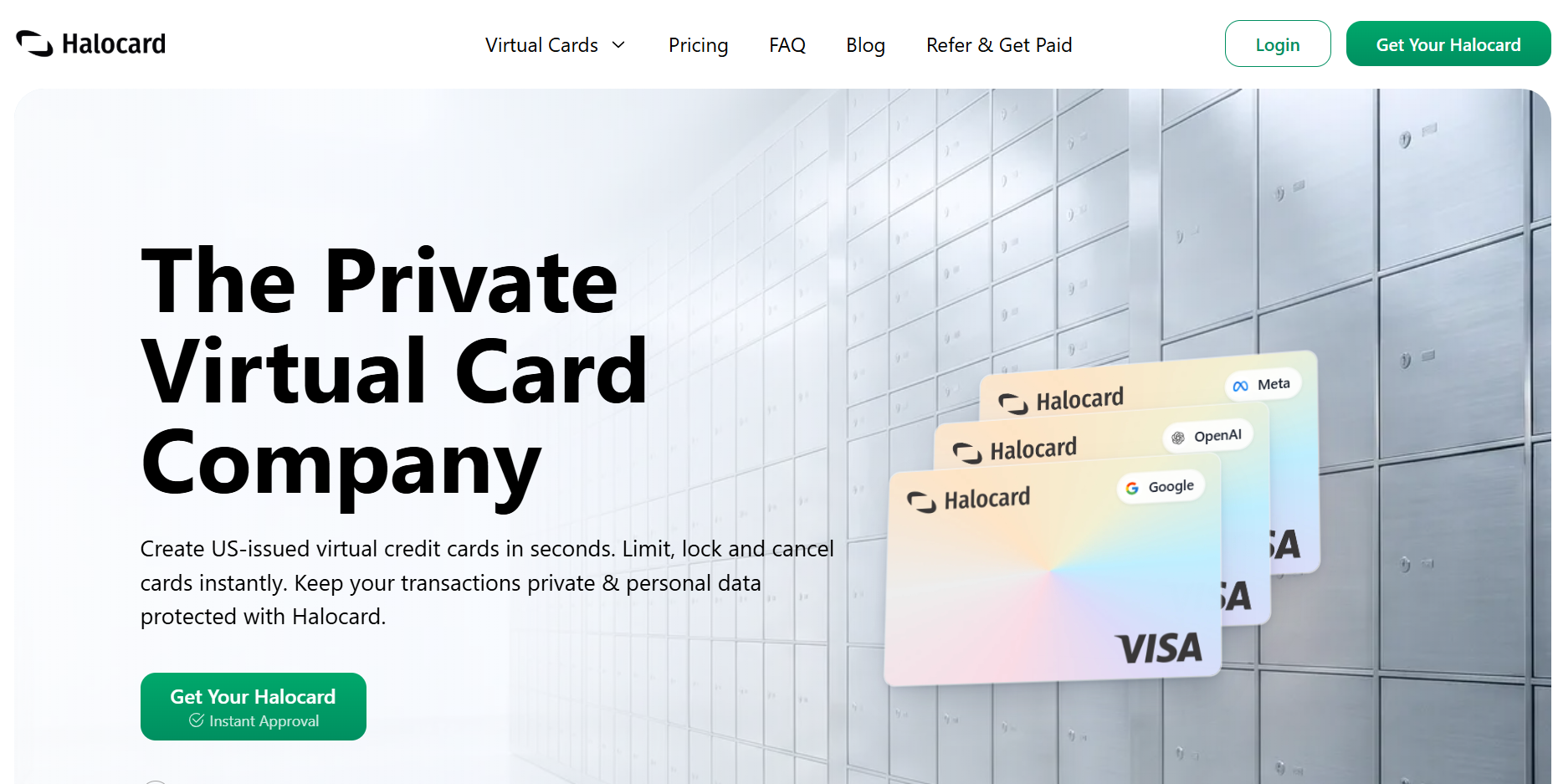
Halocard offers virtual and physical payment cards prioritizing privacy and security, emphasizing transaction anonymity and safeguarding primary account details, and unlike Getsby it is not tied to a single region. Where Getsby stops at the EEA border, Halocard issues a US-format virtual card for customers in the US and 120+ countries. See Halocard vs Getsby side by side.
How Halocard Works
You sign up in a browser, no app download needed, and verify with a passport or national ID in under three minutes with no SSN required for non-US residents. Each card is a multi use virtual card rather than a single-purchase virtual debit number. Halocard cards are issued through financial partners under Visa, work at more than 175 million merchants, and can be used for online or offline purchases via Apple Pay and Google Pay integration, with the mobile wallet integration adding a layer that helps enhance online shopping security at checkout.
Halocard Costs & Fees
-
Essential: 3 virtual cards, $12/month or $144/year
-
Pro: 12 cards, $15/month or $180/year
-
Elite: 60 cards, $75/month or $900/year
-
Business accounts from $29/month
-
1.5% + $0.30, versus Getsby's flat 2% foreign transaction fee on anything outside euros
Halocard Spending Limits and Funding
Halocard allows loading funds through multiple methods including cryptocurrency, plus card and bank transfer, and there is no credit check since you spend a balance you deposit rather than borrow against. Halocard provides options for setting spending limits per transaction, per day and per month on each merchant-specific virtual card individually, and any card can be frozen instantly or cancelled if it is compromised, without touching the rest. Because the merchant only ever sees a substitute number, this helps mask your real bank account details behind a card built for one purpose.
That per-card separation matters more than it sounds. Card fraud losses reached $33.41 billion worldwide in 2024, heading for $41.06 billion by 2030 according to the Nilson Report, and Security.org's 2026 research found 61.3 million Americans hit by fraudulent transactions in a single year, with 51% of cardholders using one card for both everyday spending and recurring payments, creating a single point of failure. A separate card per merchant does what their own recommendation suggests: keep autopay and everyday spending apart.
Halocard Key Advantages
-
120+ countries with minimal KYC, no EEA residency requirement
-
A custom billing address on every card, which Getsby does not offer at all
-
Registers as a credit product rather than prepaid, clearing merchant checks that block prepaid BINs
-
Per-card spending limits and instant freeze, so a compromised card does not put every other card at risk
-
Multiple funding methods including cryptocurrency: debit/credit card, Apple Pay, Google Pay, bank transfer, stablecoins, or crypto
-
Built for maximum security so you can spend safely without exposing your real account information or aiming for complete anonymity from the merchant's side
Specific Halocard Drawbacks
-
No cashback, rewards or interest
-
Not a bank, so no savings account or deposit guarantee
-
A monthly subscription rather than Getsby's pay-per-card model
-
FX fee of 1.5% + $0.30 on non-USD spending
Who Halocard Is Best For
International shoppers outside the EEA, media buyers running ad accounts, and anyone opening a new account who wants a genuine credit card with unique features like per-card billing addresses rather than a euro-only balance. Our guide to virtual cards with a US billing address explains why address verification matters at checkout.
Why Someone Would Choose Halocard Over Getsby
The region lock alone settles it for most people. Getsby cannot serve anyone outside the EEA, EFTA or UK, while Halocard opens to 120+ countries with no residency test. Add that Halocard is a credit product with a custom billing address, and it clears checks a European-issued prepaid card fails outright.
2. Privacy.com
Privacy.com is the US benchmark for merchant-locked virtual cards, and the closest equivalent to Getsby's Black Card if your users are American rather than European.
How Privacy.com Works
US residents 18 and over link a US checking account, then create virtual cards that lock to a single merchant, close after one use, or carry custom limits. A browser extension autofills fresh virtual card numbers at checkout, so generating a separate card per site across different merchant types is nearly effortless.
Privacy.com Costs & Fees
-
Personal free, 12 new cards a month; Plus $5, Pro $10, Premium $25
-
3% foreign transaction fee on the free and Plus plans, 0% on Pro and Premium with 1% cashback up to $4,500 a month
Privacy.com Spending Limits and Funding
Cards draw funds from the linked checking account, with limits set per card rather than one account-wide cap, and single-use cards shut themselves off automatically after use.
Privacy.com Key Advantages
-
A free tier that beats Getsby's per-card activation fee model entirely
-
Merchant-locked cards that can be locked to a single merchant, a control Getsby does not offer, created instantly via the app
-
Granular per-card spending limits
Specific Privacy.com Drawbacks
-
US residents with a US checking account only
-
No multi currency accounts or international transfers
-
No physical card option
-
3% FX on the lower tiers
Who Privacy.com Is Best For
American users who want per-merchant card privacy without Getsby's activation and top-up fees.
Why Someone Would Choose Privacy.com Over Getsby
Free merchant-locked cards for US residents, at no activation cost. It solves a different geography than Getsby entirely, so this is a choice of which region you live in, not which product is better in the abstract. See our best Privacy.com alternatives roundup.
3. Wise
Wise is the specialist in this comparison for international payments. Wise supports 40+ currencies for international transactions, letting you hold multiple currencies and settle at the mid market exchange rate.
How Wise Works
You open a multi-currency account with local bank details in several regions, hold balances across 40+ currencies, and issue up to 3 active digital cards. Conversion happens at the mid market rate with a visible fee rather than a markup hidden in the rate itself.
Wise Costs & Fees
-
No monthly account fees
-
One-time card issuance around $9 in the US
-
Transfer fees typically 0.33% to 1%
Wise Spending Limits and Funding
Balance-based, funded from your held currencies, with auto-conversion at spend time if the needed currency is empty.
Wise Key Advantages
-
40+ currencies held, well past Getsby's single euro balance
-
Transparent fees with no hidden costs
-
No monthly account fees at all
-
Local accounts for receiving in several regions, not just spending
Specific Wise Drawbacks
-
Only 3 active digital cards, with no per-card limits
-
Not a US-issued card, so US billing-address checks still fail
-
No credit product, rewards, or physical credit card option
-
Fewer security features than a dedicated privacy card
Who Wise Is Best For
Freelancers with international clients, and anyone whose main frustration with Getsby was being stuck in one currency.
Why Someone Would Choose Wise Over Getsby
No monthly fee, no activation charge, and far broader currency coverage. It gives up Getsby's disposable card model in exchange for genuine multi currency accounts.
4. Revolut
Revolut combines currency exchange, budgeting and both regular and disposable virtual cards, useful for anyone who wants to add virtual cards to manage subscriptions separately, and it reaches well beyond the EEA that Getsby is confined to.
How Revolut Works
Standard and Plus users get one active multi-use virtual card, while Premium and Metal unlock up to five plus unlimited disposable virtual cards that change details after each transaction. Revolut supports 30+ currencies with a linked card.
Revolut Costs & Fees
-
Standard free; Premium and Metal add cost for more cards and features
-
Weekday FX free within a monthly allowance, then a markup; a further markup at weekends
-
2% foreign ATM fee across plans
Revolut Spending Limits and Funding
Cards draw from your Revolut balance across currencies, with custom monthly limits settable per card in the security settings.
Revolut Key Advantages
-
One free virtual card with no activation fee, unlike Getsby's per-card charge
-
Disposable virtual cards on paid plans that regenerate after each purchase
-
30+ currencies for spending
-
Broader country availability than Getsby's EEA-only footprint
Specific Revolut Drawbacks
-
Only one active card on the free plan
-
Not a US-issued card
-
Fees apply once you exceed the monthly FX allowance
-
Account freezes during compliance review are a recurring complaint
Who Revolut Is Best For
Travellers who want multi currency spending and a disposable card without Getsby's activation fee.
Why Someone Would Choose Revolut Over Getsby
A free virtual card with no per-card activation cost, plus multi currency reach Getsby's single euro balance cannot match. See our Revolut vs Wise vs Halocard comparison.
5. bunq
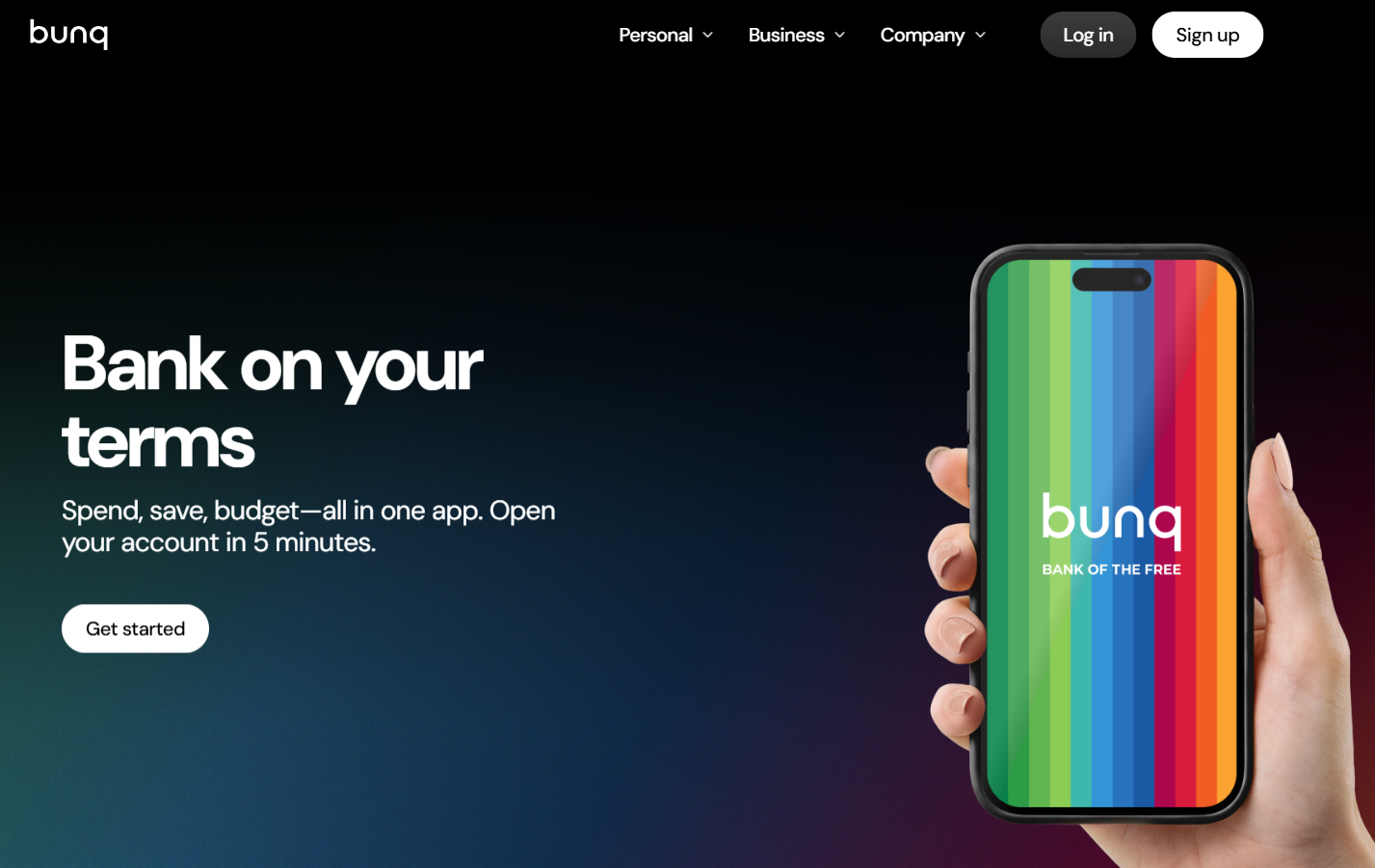
bunq is a licensed Dutch bank, headquartered in the same country as Getsby, but with a far larger card allowance and full banking protections.
How bunq Works
You open an account and create digital Mastercards, up to 25 on Pro and Elite plans, with a rotating CVC that can refresh every five minutes. Cards link to sub-accounts, each with its own IBAN, so spreading spending across different accounts caps exposure to that pot of money, useful for anyone managing multiple accounts at once.
bunq Costs & Fees
-
Free plan €0; Core €3.99; Pro €9.99; Elite €18.99 per month
-
An extra pack of 25 cards for €19.99 monthly
-
Deposit protection up to €100,000
bunq Spending Limits and Funding
Cards spend from linked sub-accounts rather than one shared balance, and can be created or cancelled instantly.
bunq Key Advantages
-
Up to 25 digital cards against Getsby's 3 per 3 years
-
A rotating CVC, a security feature Getsby does not offer
-
A licensed bank with deposit protection, unlike Getsby's e-money model
-
Sub-accounts with individual IBANs
Specific bunq Drawbacks
-
Card count sits behind the pricier plans
-
Still limited to Europe and the UK
-
No US billing address
-
Support speed is the recurring criticism in reviews
Who bunq Is Best For
Europeans who want far more cards than Getsby allows, from a fully licensed bank.
Why Someone Would Choose bunq Over Getsby
Roughly eight times the card allowance at the top tier, plus real deposit protection, while staying in the same general region Getsby serves.
6. Monzo
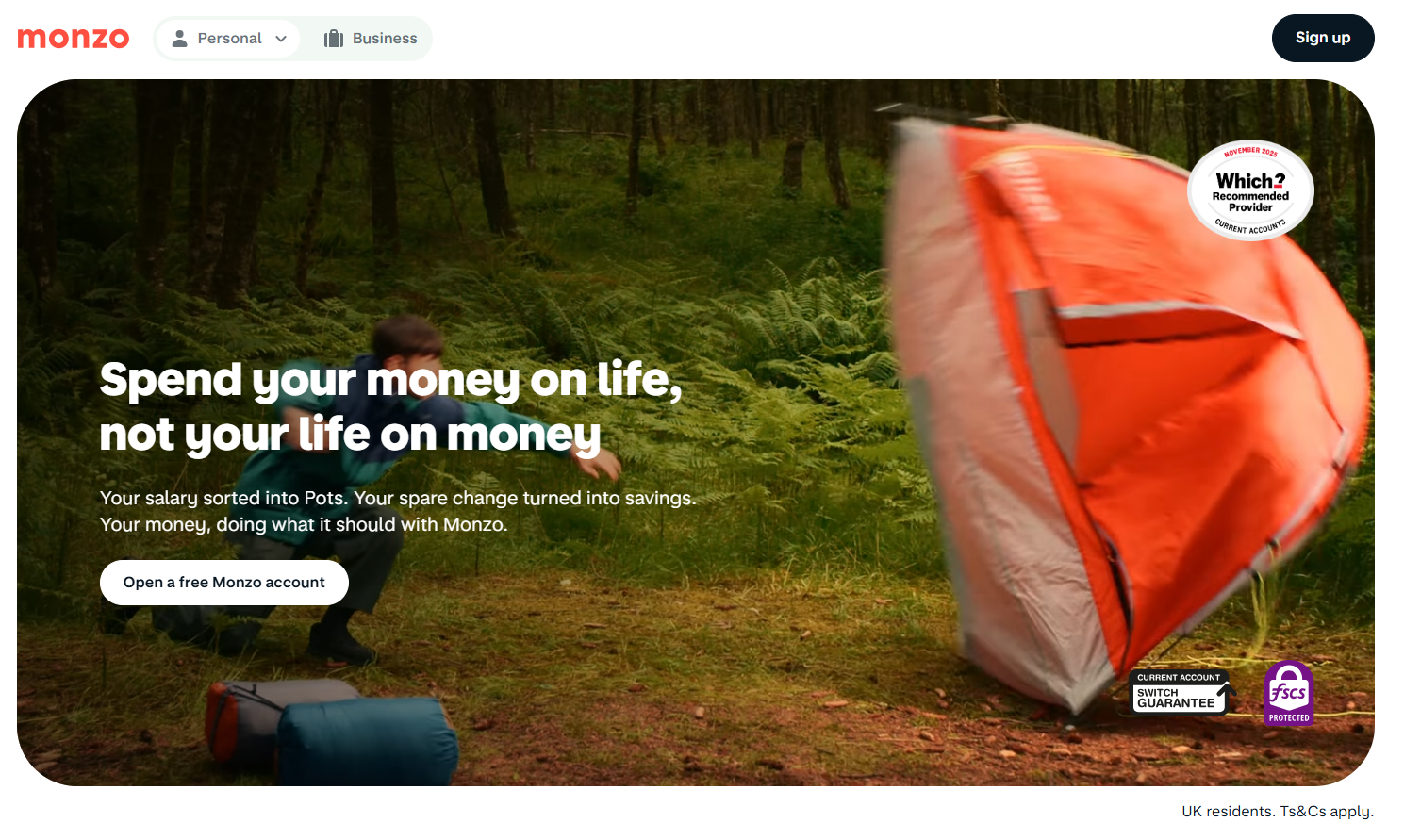
Monzo is a licensed UK bank, relevant for anyone in the UK who found Getsby's EEA card structure did not fit them well.
How Monzo Works
You open a UK current account, use Pots to separate savings, and get automatic spending categorisation. Virtual cards are a paid-tier feature on Plus and Max rather than a free inclusion, and cards can be linked to specific Pots as a natural spending cap.
Monzo Costs & Fees
-
Free base current account
-
Plus and Max paid tiers unlock virtual cards and extra features
-
Fee-free spending abroad on the Mastercard wholesale rate
Monzo Spending Limits and Funding
Cards draw from the current account or a linked Pot, and Monzo users can track spending habits through the app's automatic categorisation.
Monzo Key Advantages
-
A fully licensed UK bank with deposit protection
-
Widely rated budgeting and savings tools
-
No markup on foreign spending
-
Real-time transaction notifications
Specific Monzo Drawbacks
-
No virtual cards on the free plan
-
UK residents only
-
Not built for multi currency holding
-
No US billing address
Who Monzo Is Best For
UK residents who want strong budgeting alongside a virtual card, and are comfortable paying for the paid tier to get it.
Why Someone Would Choose Monzo Over Getsby
Full UK banking with budgeting tools Getsby has no equivalent for, though the free plan gives you no card at all where Getsby at least offers one for a fee.
7. Skrill
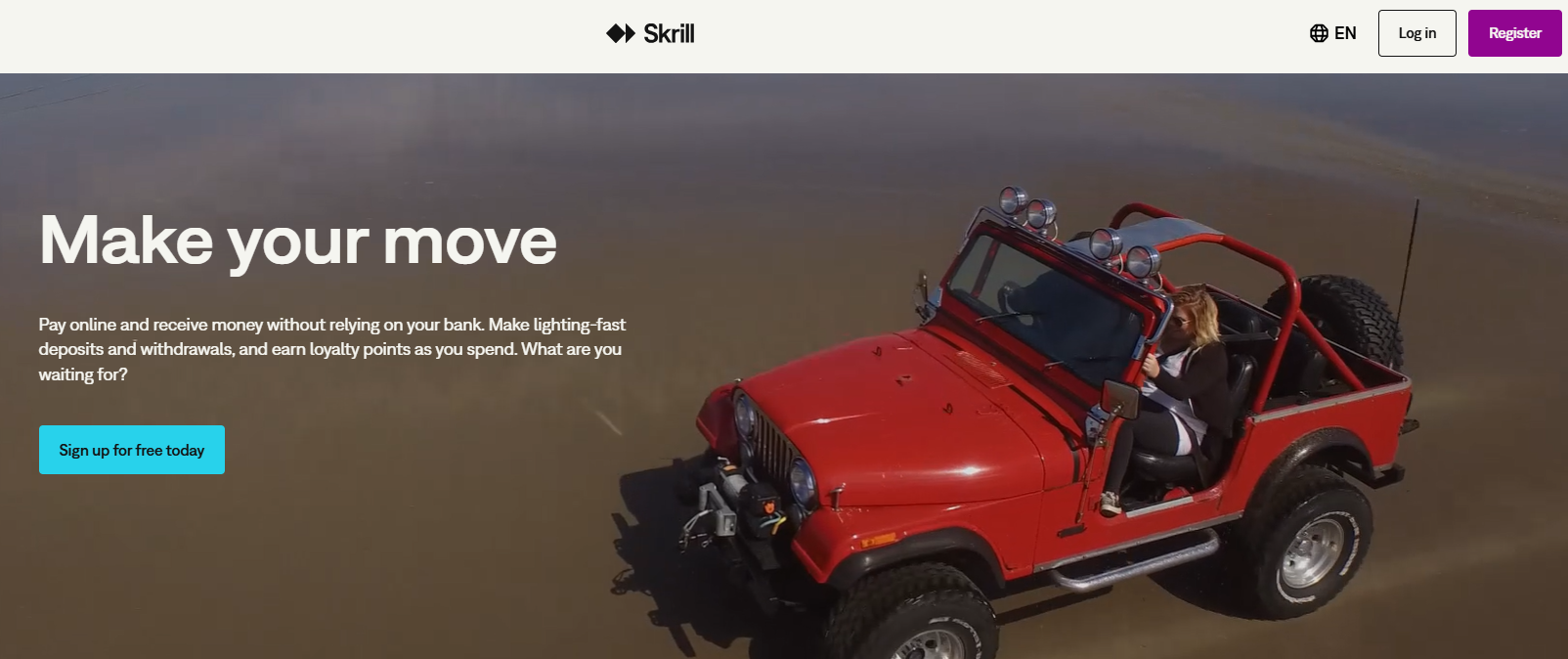
Skrill is a long-running digital wallet operated by Paysafe, and its prepaid Mastercard sits in the same regulatory footprint as Getsby.
How Skrill Works
As the card issuer, Skrill lets you load funds onto its prepaid cards instantly from a wallet balance, then spend through a virtual prepaid Mastercard added to Apple Pay or Google Pay while a physical card ships within 15 business days, with two factor authentication protecting account access and a design meant to manage subscriptions easily alongside everyday spending. Skrill virtual cards support multiple currencies for international transactions on the wallet side, though the prepaid Mastercard product itself is available only to EEA and UK residents, the same regional limit Getsby has.
Skrill Costs & Fees
-
No account fee to hold a Skrill wallet
-
Card ordering and transaction fees vary; inactivity fees apply on dormant wallets
-
A Knect loyalty points programme on card spending
Skrill Spending Limits and Funding
Funded from the wallet balance, with the digital card usable immediately and the physical card following by post.
Skrill Key Advantages
-
No credit checks, and the balance stays separate from your bank account
-
Loyalty points on every card transaction
-
Widely accepted where Mastercard is taken
-
A long operating history since 2001
Specific Skrill Drawbacks
-
The Mastercard is for EEA and UK residents only (US residents get a separate Visa card), despite Skrill's wallet reaching far more countries
-
Currency conversion fees apply on the wallet balance
-
Card delivery takes up to 15 business days for the physical version
-
Fewer per-card controls than a dedicated privacy card
Who Skrill Is Best For
Users already inside the Skrill wallet ecosystem who want a card without opening a separate account elsewhere.
Why Someone Would Choose Skrill Over Getsby
A loyalty programme and an established wallet brand, though the card's regional restriction mirrors Getsby's almost exactly, so this is a lateral move rather than an upgrade in reach.
8. Cloaked Pay
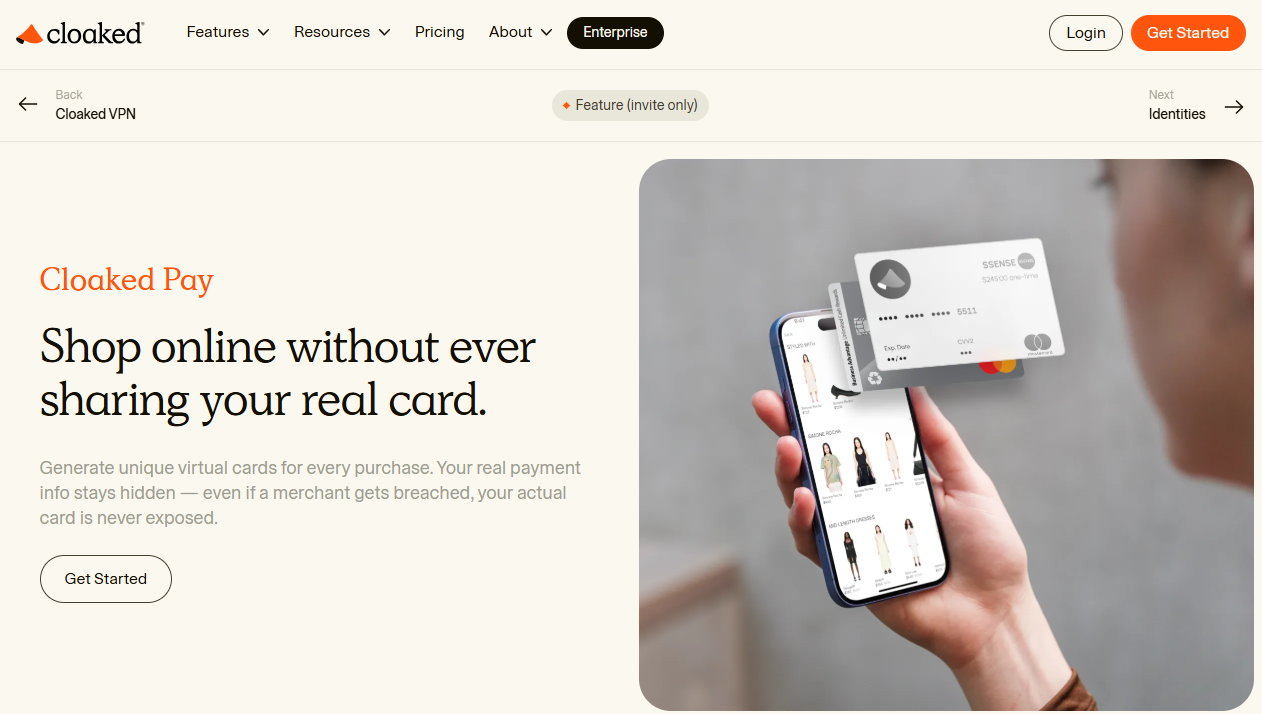
Cloaked Pay is worth including precisely because it approaches privacy from a different direction than Getsby: a full privacy suite with a virtual card bundled in, rather than a card sold on its own.
How Cloaked Pay Works
Cloaked bundles unlimited email aliases, masked phone numbers, a password manager, dark web monitoring, data broker removal and a virtual card called Cloaked Pay into one subscription. The card is invite-only: you need a paid subscription and must complete a one-time identity check with your legal name, address and social security number before a card is issued. Once granted, cards are Mastercard-based and can be created per merchant.
Cloaked Pay Costs & Fees
-
Individual $9.99/month annual or $14.99 monthly; Couple $14.99/$19.99; Family $24.99/$29.99
-
No separate card fee once access is granted, since it is part of the suite
Cloaked Pay Spending Limits and Funding
Cards fund from a linked source rather than crypto, and account access to the wider suite includes identity theft insurance.
Cloaked Pay Key Advantages
-
A full privacy suite beyond just the card: aliases, password manager, data broker removal
-
No per-card activation fee once you have access
-
BBB accredited with real backing
-
Identity theft insurance included
Specific Cloaked Pay Drawbacks
-
The card is waitlisted; paying for the subscription does not guarantee a working card
-
Cloaked Pay is for US citizens only (the wider Cloaked suite covers the US and Canada)
-
Requires a social security number for the identity check
-
Documented cases of users paying for annual plans and finding the card feature unavailable
Who Cloaked Pay Is Best For
US or Canadian users who want the privacy suite as a whole and are willing to wait for card access.
Why Someone Would Choose Cloaked Pay Over Getsby
A far broader privacy toolkit than a card alone, if you can tolerate the wait. Getsby's card works immediately upon signup; Cloaked Pay's does not, which is the trade worth weighing.
9. RedotPay
RedotPay is a crypto-funded card platform reaching well beyond Europe, relevant if Getsby's euro-only balance was the specific frustration.
How RedotPay Works
You verify, fund a balance with crypto or stablecoins, and issue a reloadable virtual or physical card linking to Apple Pay, Google Pay or PayPal. US residents cannot sign up, since the US sits on RedotPay's unsupported list.
RedotPay Costs & Fees
-
$10 virtual card, $100 physical, both non-refundable
-
Optional Pro tier at $12.90/month
-
Roughly 1% local, 1.2% FX
RedotPay Spending Limits and Funding
Crypto and stablecoin funding, with limits set by verification tier, and no rewards to speak of.
RedotPay Key Advantages
-
Reloadable, unlike Getsby's disposable Black Card
-
Available in 100-plus countries beyond the EEA
-
Mobile wallet support for in-person spending
-
No monthly fee
Specific RedotPay Drawbacks
-
Identity verification required, and it is not a bank account
-
Declined-transaction fees and account-freeze complaints in reviews
-
A Trustpilot rating near 3.1 with a high-risk-investment notice
-
Not available to US residents
Who RedotPay Is Best For
Crypto holders outside the US who want a card that works globally rather than in one currency zone.
Why Someone Would Choose RedotPay Over Getsby
Far wider country reach and reloadable cards, funded from crypto rather than a euro-only top-up. See our RedotPay vs Halocard comparison.
10. Moon
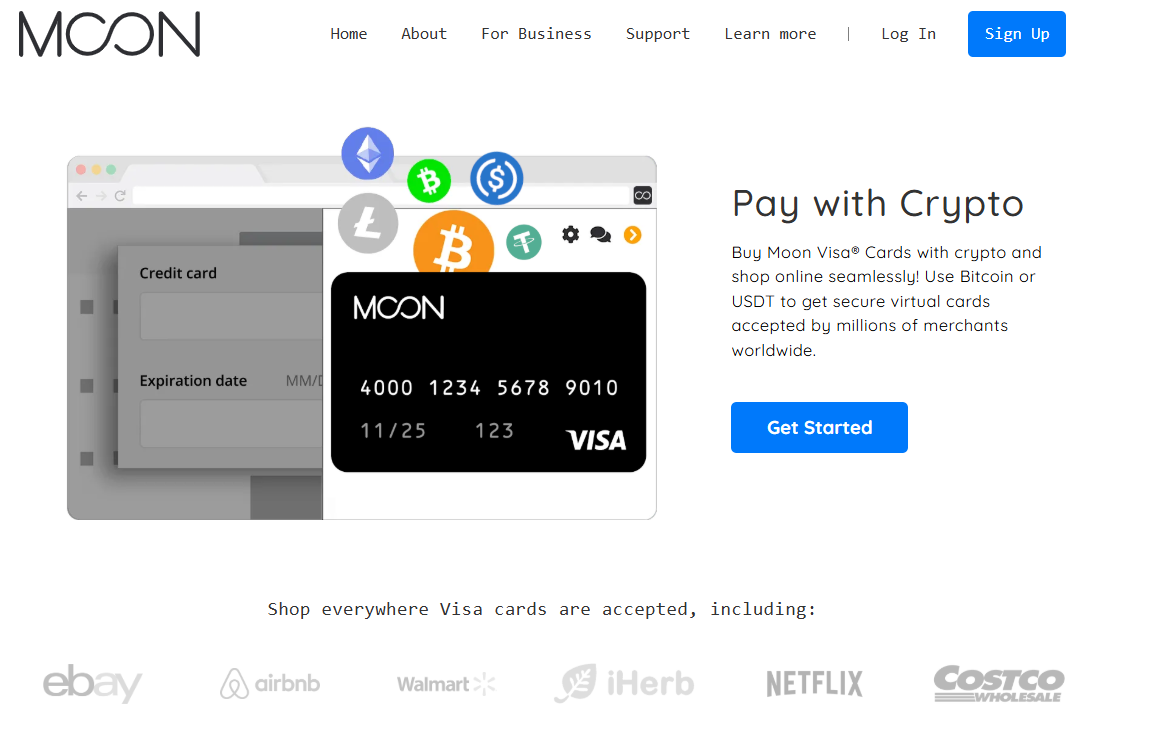
Moon sells Visa prepaid cards funded with Bitcoin and stablecoins, aimed at low-fee crypto spending across many merchants.
How Moon Works
Moon allows funding virtual cards with Bitcoin and USDT, issuing a reloadable Moon X Card for global use or a disposable Moon 1X Card for US merchants specifically.
Moon Costs & Fees
-
Moon X: first card free, extra cards $2.99, 1% per transaction, no FX fee
-
Moon 1X: $1.49 issuance, 0% transaction fee
-
No load fees
Moon Spending Limits and Funding
Bitcoin, Lightning, USDC and USDT funding, with an account-wide monthly spend cap.
Moon Key Advantages
-
Reloadable global card with near-zero fees
-
No load fees on top-ups
-
Bitcoin-first funding for crypto holders
-
A free first card
Specific Moon Drawbacks
-
As of early 2026, many reports allege the platform has gone offline or refused refunds, so treat it as higher risk
-
Account restrictions surface in recent reviews
-
Crypto-only funding
-
A monthly spend cap limits heavier use
Who Moon Is Best For
Bitcoin holders wanting low-fee card spend who test with small amounts given the recent reliability reports.
Why Someone Would Choose Moon Over Getsby
Lower fees and reloadable global reach on paper, though the recent reliability concerns mean this is not a straightforward upgrade, and caution applies to both sides here.
11. Airwallex
Airwallex is a good alternative and the strongest option here for business accounts specifically, combining multi currency accounts with unlimited corporate cards for teams that shop online and pay online across many vendors at once.
How Airwallex Works
Businesses open Global Accounts with local details in 20-plus currencies and issue unlimited virtual or physical Visa corporate cards with approval workflows and per-card controls, supporting over 160 payment methods for collecting from international clients.
Airwallex Costs & Fees
-
Explore plan free in the US, conditional elsewhere
-
Grow around $12 per active spend user monthly plus a platform fee
-
FX 0.5% above interbank on major currencies, 1% on others
Airwallex Spending Limits and Funding
Card limits set per card and per currency wallet, funded from business balances rather than a credit line.
Airwallex Key Advantages
-
Unlimited virtual cards for corporate use, far past Getsby's per-card allowance
-
160-plus payment methods for international customers
-
Genuine expense management with accounting software integrations
-
150-plus countries of reach
Specific Airwallex Drawbacks
-
Built for businesses, not personal shoppers
-
Free access outside the US is conditional
-
Reports of account reviews and held funds
-
A Trustpilot rating around 3.0
Who Airwallex Is Best For
Companies with cross-border payments and international clients who have outgrown a single personal prepaid card.
Why Someone Would Choose Airwallex Over Getsby
A genuine business account with unlimited cards and dozens of currencies, where Getsby offers neither multi currency support nor a business-scale card allowance.
What Users Think About These Getsby Alternatives
Scores move constantly, so weigh volume and recency alongside the number. Links go to the sources so you can verify them directly.
Getsby
Getsby's Trustpilot profile sits at 2.3/5 from 123 reviews, a smaller sample than many alternatives on this list carry. The dominant themes are identity verification stalling or failing outright, refunds being difficult to obtain, and gift card redemption described as overcomplicated. Several reviewers report paying an activation fee before discovering they also needed proof of address, with no clear path to a refund if verification then failed.
Few reviews focus on the card's limits, such as being unable to create unlimited virtual cards or hold multiple virtual cards at once, which suggests the ceiling itself is rarely what frustrates users, unlike the onboarding process. Getsby does reply to many negative reviews and points users to its support channels, and the underlying regulatory structure through DiPocket is genuine and properly licensed, so this reads as a support and onboarding problem rather than a fraud concern.
Halocard
Halocard's Trustpilot presence is small but positive, at 4.2/5 (11 reviews), too thin a sample to weigh heavily. Reviewers describe a clean setup on the privacy-focused GrapheneOS system, responsive support, and payments clearing on platforms that had declined their local cards. The standing criticism is the subscription fee.
Privacy.com
Privacy.com holds about 4.5/5 from 3,358 reviews, the strongest among dedicated card providers here, with merchant locking and spending caps the standout features and unexplained account closures the main negative.
Wise and Revolut
Wise holds roughly 4.3/5 from 300,000+ reviews, valued for transparent fees and low transfer costs. Revolut sits at 4.7/5 across 470,000+ reviews, praised for its app and currency handling, with account freezes during compliance review the recurring complaint.
bunq and Monzo
bunq holds about 3.7/5 from 19,517 reviews, praised for sub-accounts, criticised on support speed. Monzo consistently ranks near the top of UK banking satisfaction surveys, with Pots and budgeting the most praised features, and account closures following compliance reviews the main complaint.
Skrill
Skrill carries a long, mixed record typical of an established wallet, with loyalty points and broad acceptance praised, and verification delays plus currency conversion costs the recurring friction points in independent reviews.
Cloaked Pay
Cloaked holds around 3.7/5 from 756 Trustpilot reviews, strong on aliasing and spam reduction, softer on the card's availability. At least one documented complaint describes paying for an annual plan expecting virtual cards and finding the feature waitlisted.
RedotPay and Moon
RedotPay sits near 3.3/5 on Trustpilot, with declined-transaction fees after freezing a card a recurring complaint. Moon draws serious recent concern, with many early-2026 reports of the platform going offline or refusing refunds, so treat it as higher risk.
Airwallex
Airwallex sits at 2.8/5 from 2,582 reviews, split between praise for account managers and serious complaints about held funds.
How to Match a Virtual Card to Where You Actually Shop
This is the part most comparison pages skip: the right virtual card depends less on features and more on whose checkout you are trying to clear. A card's country of issuance, not its brand, is usually what determines whether a payment goes through.
If you shop mostly at European online merchants, a euro-denominated card like Getsby's, bunq's, or Revolut's clears address checks cleanly, since the billing details naturally match. Getsby's 2% foreign transaction fee is a fair trade for European users who rarely leave the euro zone.
If you shop mostly at US merchants, a European card, however well-run, runs into the same wall repeatedly: the billing address does not match what the merchant expects, and the payment can fail even when your balance is fine. This is the single most common reason people search for Getsby alternatives once they start buying from American ad platforms, SaaS tools or subscription services. A US-issued card with a custom billing address is built specifically for this, letting you nominate an address that matches the checkout's expectations.
If you shop across multiple regions, multi currency accounts like Wise or Revolut let you hold several currencies and spend from whichever matches the transaction, avoiding a conversion fee on every purchase, though neither solves the US billing-address problem on its own.
A practical setup many people land on: keep a European card for European spending, and add a separate card for the US platforms that keep failing. Running one card everywhere means every merchant sees the same details, which is both a privacy weak point and, in practice, the reason a card that works fine at home gets declined abroad. Separate cards by region rather than by provider, and you solve both problems at once.
How to Get Halocard
If Getsby's EEA-only footprint or its per-card activation fees are what sent you looking, Halocard addresses both directly.
It issues virtual and physical payment cards through financial partners under Visa, available for customers in the US and 120+ countries with minimal KYC and no residency test. Every card carries its own spending limits, a billing address you nominate, and instant freeze, funded by stablecoins, other crypto, card or bank transfer. USD purchases carry no fee, and because it runs on a deposited balance rather than a credit line, there is no credit check.
For more detail, see the ultimate guide to virtual cards, the guide on whether virtual credit cards are safe, our roundup of masked card services, and more on the cards themselves.
Step-by-Step
-
Register in your browser.
-
Clear identity verification with a passport or national ID; residents outside the US need no SSN.
-
Add money using stablecoins, another crypto, a card, or a bank transfer.
-
Generate a card, pick its billing address and caps, then load it into Apple Pay or Google Pay.
-
Start spending, whether online or at a physical terminal, and freeze or swap out any card whenever you need to.
Frequently Asked Questions
Can I Get a Virtual Card Without a Bank Account?
Yes. Halocard, RedotPay, and Moon all issue virtual cards funded by crypto or card, with no bank account required and no credit check. Skrill funds from a wallet balance rather than a bank. Cloaked Pay and Privacy.com sit at the other end, since Cloaked Pay requires an identity check and Privacy.com requires a linked US checking account. Getsby itself needs no separate bank account, only proof of identity and address during verification.
Do These Alternatives Accept Mastercard, Apple Pay and Google Pay for Online Shopping?
Most do. Halocard, Revolut, Wise, bunq, Skrill, RedotPay, and Moon all integrate with Apple Pay and Google Pay, letting you tap to pay in store as well as spend online. Getsby also supports both on its Green and Black cards. Digital wallets add a layer of security by passing a tokenised number to the merchant rather than your real card details, which is useful regardless of which underlying card sits behind the wallet.
Which Alternatives Are Best for International Payments and International Transactions?
Wise is the specialist, holding 40+ currencies and settling international transactions at the mid market exchange rate with transparent fees. Revolut supports 30+ currencies. Airwallex handles the business side with 160-plus payment methods for collecting from international clients. Getsby, by contrast, holds only euros, so any international transactions outside the eurozone carry its flat 2% foreign transaction fee.
Is Getsby's Card a Credit Card or One of the Prepaid Debit Cards?
Getsby issues a virtual debit card rather than a credit card. You load money before you spend, and the card is capped at whatever balance you have added, with no borrowing involved, making it well suited to online payments where you want a hard spending ceiling. Halocard, by contrast, is structured as a virtual credit card, which matters at checkout because many merchants and platforms specifically check whether a card is credit or prepaid, and prepaid BINs are declined more often on subscriptions and recurring billing.
How Do Disposable Virtual Cards Help Control Spending?
Disposable virtual cards change details after each transaction, or in some cases close entirely after one use, so a number that leaks or gets stolen is worthless afterward. Getsby offers disposable virtual cards without credit checks through its Black Card, capped at €500 per load. Revolut allows users to create disposable virtual cards on paid plans with a similar model, Moon offers its own version with different limits, and Halocard lets you configure a card to expire after a single transaction as one of several spending limit options rather than a fixed product tier.
How Does Getsby's Fee Structure Compare to the Alternatives?
Getsby's fee structure charges an activation fee of €3.99 or €2.99 plus 3% on every card, a 3% top-up fee on the reloadable Green Card, and a flat 2% on anything spent outside euros. That is a real cost every time you need a new card. Halocard, Wise, and Revolut all avoid a per-card activation charge, instead charging either a flat monthly subscription or nothing at all, which tends to be cheaper for anyone creating cards regularly rather than occasionally.
Which Alternatives Offer Business Accounts?
Airwallex is the strongest for business accounts here, with unlimited corporate cards, 20-plus currencies, and accounting software integrations built in. Vivid-style e-money institutions and bunq also support business use in Europe. Getsby offers a separate business gift card and card program, but it is not built as a full business account the way Airwallex is, so a genuinely multi-user, multi-currency setup means looking elsewhere.
Does Cloaked Pay Work as a Getsby Alternative?
It depends what you valued about Getsby. Cloaked Pay bundles a virtual card with email aliases, a password manager, and data broker removal, so if privacy tools beyond payments matter to you, it goes further than Getsby ever tried to. The trade-off is access: Cloaked Pay's card is invite-only and requires a social security number during identity verification, so a paid subscription does not guarantee a working card the way signing up for Getsby does.
How Does Customer Support Compare Across These Providers?
Support quality varies more than fees do. Getsby's own reviews describe verification issues that go unresolved and refunds that are hard to secure, even though the company does reply to negative reviews and lists other features like gift card activation and charity donations on its site. Halocard offers chat, email, and phone support on every plan. Larger platforms like Wise and Revolut lean on in-app chat and AI-assisted triage, which handles simple questions quickly but can slow down exactly when an account issue needs a human.
Why Do Getsby Users Look for Alternatives?
Most people start looking once they hit the region lock: Getsby only serves EEA, EFTA, and UK residents, so anyone who moves, travels, or simply lives elsewhere cannot use it at all. Others are put off by the per-card activation fees stacking up, or by the verification and refund issues that dominate its review profile. Getsby remains a properly licensed product for the market it does serve, so this is a question of eligibility and cost rather than legitimacy.
Sources
-
Getsby. Compare the Fees and Limits of the Getsby Virtual Cards
-
Getsby. Virtual Black Card
-
Getsby. How It Works
-
Getsby. Payment Methods
-
Trustpilot. Getsby Reviews
-
Trustpilot. Halocard Reviews
-
Nilson Report. Global Card Fraud Losses at $33 Billion
-
FICO. Card-Not-Present Fraud Remains a Leading Concern
-
Security.org. 2026 Credit Card Fraud Report
-
Privacy.com. Virtual Cards
-
Trustpilot. Privacy.com Reviews
-
Wise. Multi-Currency Account and Card
-
Trustpilot. Wise Reviews
-
Revolut. Plans and Pricing
-
Trustpilot. Revolut Reviews
-
bunq. Personal Plans
-
Trustpilot. bunq Reviews
-
Monzo. Homepage
-
Skrill. Prepaid Mastercard
-
Skrill. Virtual Prepaid Card
-
Cloaked. Cloaked Pay
-
Cloaked. Pricing Plans
-
Trustpilot. Cloaked Reviews
-
RedotPay. Homepage
-
Trustpilot. RedotPay Reviews
-
Pay with Moon. Homepage
-
Airwallex. Corporate Cards and Pricing
-
Trustpilot. Airwallex Reviews
Sourced September 13, 2026
*Please see Halocard's Terms of Service or Pricing for the most up to date pricing and fee information. This publication is provided for general information purposes and does not constitute legal, tax or other professional advice from Halocard LLC or its subsidiaries and its affiliates, and it is not intended as a substitute for obtaining advice from a financial advisor or any other professional. We make no representations, warranties or guarantees, whether expressed or implied, that the content in the publication is accurate, complete or up to date.
Halocard Virtual Cards


Instant approval
Create your first card in under 5 minutes.

Private purchases
Purchases never appear on your bank account.

Powered by Visa
Accepted at 175M+ merchants globally.
3 steps to create your virtual credit card

1. Sign up
Create your account from a web browser. No need to download an app.

2. Verify
Verify you're a real person in 3 minutes, from the US or any of 120+ countries.

3. Fund
Add funds by debit/credit card, Apple Pay, Google Pay, bank transfer, stablecoins, or crypto.

Pay with Halocard
Pay online and in-person wherever Visa is accepted. You can also order a physical Halocard if you prefer.