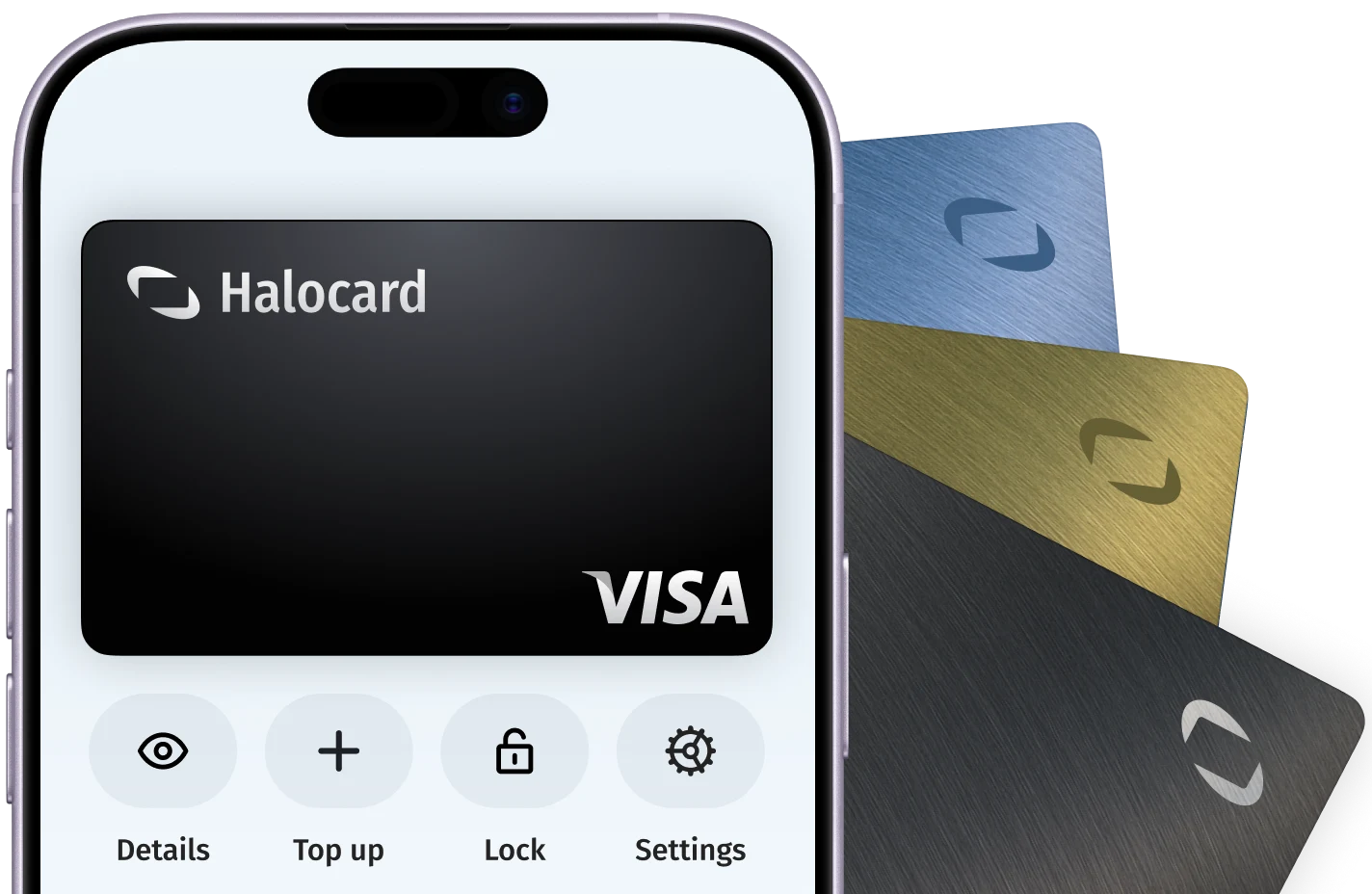
Halocard vs Capital One Virtual Cards

Private virtual cards for the US and 120+ countriesFor holders of an eligible Capital One credit card

Halocard is the better alternative to Capital One virtual cards for anyone without a Capital One credit card, and for anyone who wants limits and billing addresses on each card. Halocard is a US-issued Visa credit card for customers in the US and 120+ countries, with no credit check, a separate card for each merchant, daily, weekly or monthly limits, a billing address you choose on every card, and Apple Pay and Google Pay. Halocard has no free plan, but Essential+ is free with 3 referrals, and every friend you refer earns you $5 or more a month.

Capital One virtual card numbers are a free security feature of eligible Capital One credit cards: tokenized numbers that draw on your existing credit line. They suit US residents who already hold a Capital One card and want safer online shopping with card rewards and no foreign transaction fees.

Halocard pros and cons

  • Pros: A US-issued Visa credit card with no credit check
  • Pros: A separate card for each merchant, with limits you control
  • Pros: Any billing address you choose, on each card
  • Pros: Apple Pay and Google Pay on every card
  • Pros: Fund by debit/credit card, Apple Pay, Google Pay, bank transfer, stablecoins, or crypto
  • Pros: US residents and residents of 120+ countries
  • Cons: No free plan, though Essential+ is free with 3 referrals
  • Cons: 1.5% on purchases in other currencies
  • Cons: No card rewards

Capital One Virtual Cards pros and cons

  • Pros: Free with an eligible Capital One credit card
  • Pros: Earns your card's rewards
  • Pros: No foreign transaction fees
  • Pros: Lock or delete each number
  • Cons: Capital One credit card holders only
  • Cons: US residents only, with a credit check to get the card
  • Cons: No per-card spending limits or billing address
  • Cons: Can't be added to Apple Pay or Google Pay

Halocard vs Capital One Virtual Cards compared

Capital One offers virtual card numbers as a security feature of its credit cards. Halocard is a dedicated virtual card platform for subscriptions, online spending, advertising and AI tools, with US-issued Visa credit cards, stablecoin funding and custom billing addresses, for customers in the US and 120+ countries.

Eligibility

HalocardAdvantage: US residents and residents of 120+ countriesCapital One Virtual CardsUS Capital One credit card holders
Customers outside the USHalocard120+ countriesCapital One Virtual CardsNot supported
Existing credit card neededHalocardNoCapital One Virtual CardsAn eligible Capital One credit card
Credit checkHalocardNoneCapital One Virtual CardsWhen you apply for the card
ID for US residentsHalocardMay ask for an SSN or ITINCapital One Virtual CardsSSN, or ITIN on some cards

Halocard is a US-issued Visa credit card for customers in the US and 120+ countries, with no credit check. Outside the US? You don't need an SSN, a US address or a US bank account. Capital One's virtual numbers require an eligible Capital One credit card and US residency, and getting the card means a hard credit inquiry; some new accounts wait about 30 days before they can create virtual numbers. See supported countries

Card structure

HalocardAdvantage: Dedicated Visa credit cardsCapital One Virtual CardsTokenized numbers on your credit card
What you spendHalocardThe balance you loadCapital One Virtual CardsYour Capital One credit line
Cards held at onceHalocard3 to 50, by plan (up to 10 extra a month on annual plans)Capital One Virtual CardsOne general-use number plus store-specific numbers
Single-use cardsHalocardAnnual plans, from 2 a monthCapital One Virtual CardsStore-specific numbers can be single-use
Card rewardsHalocardNo cashback, but a monthly referral commissionCapital One Virtual CardsYour card's rewards

Capital One virtual numbers are tokenized versions of the credit card you already hold, with the same rewards and fraud protection, built for safer online shopping. Halocard is a dedicated card platform where each card is its own Visa credit card for a subscription, vendor or ad account. Halocard works like a debit card: you spend the balance you load, with no credit line and no credit check. Check merchant acceptance

Controls

HalocardAdvantage: Per-card limits, custom name and billing addressCapital One Virtual CardsLock or delete each number
Per-card spending limitsHalocardDaily, weekly or monthlyCapital One Virtual CardsUnknown
Lock or delete a cardHalocardInstantCapital One Virtual CardsYes
Custom billing addressHalocardYes, on each cardCapital One Virtual CardsNot supported
Custom cardholder nameHalocardYesCapital One Virtual CardsNot supported
Store-specific numbersHalocardA separate card per merchantCapital One Virtual CardsYes

Capital One lets you lock or delete each virtual number and lock store-specific numbers to one merchant; it documents no per-card spending limit, and every number uses your account's billing address. Halocard lets you set daily, weekly or monthly limits on each card, lock or cancel any card instantly, and choose the billing address and cardholder name on each card. See card spending limits

Funding

HalocardAdvantage: Card, Apple Pay, Google Pay, Bank Transfer, Stablecoins & CryptoCapital One Virtual CardsYour Capital One credit line
Bank transferHalocardUSD, CAD, EUR or GBPCapital One Virtual CardsNot supported
Debit or credit cardHalocardVisa, MastercardCapital One Virtual CardsNot supported
StablecoinsHalocardUSDC, USDTCapital One Virtual CardsNot supported
CryptoHalocardBTC, ETH, SOLCapital One Virtual CardsNot supported
Credit lineHalocardNoneCapital One Virtual CardsYes, repaid on your card statement

Capital One virtual numbers spend your existing credit line, repaid on your monthly statement. Halocard keeps one balance you top up by debit/credit card, Apple Pay, Google Pay, bank transfer, stablecoins, or crypto, with no bank-issued credit behind it. See how to deposit

US bank account

HalocardAdvantage: Your own US account and routing numberCapital One Virtual CardsOnly with a separate 360 Checking account
Your own account and routing numberHalocardYesCapital One Virtual CardsWith a 360 Checking account
Receive ACH transfersHalocard1 to 3 business daysCapital One Virtual CardsYes, into 360 Checking
Receive same-day ACHHalocardYesCapital One Virtual CardsUnknown
Receive domestic wiresHalocardThe same dayCapital One Virtual CardsYes, free into 360 Checking
Send ACH & wire transfersHalocardComing soonCapital One Virtual CardsYes; domestic wires $30
Send stablecoinsHalocardUSDC, coming soonCapital One Virtual CardsNot supported

Halocard includes a US bank account with its own account and routing numbers, so you can receive salary, transfers from friends and family, and any other payment you'd send to a US checking account. ACH transfers arrive in 1 to 3 business days and domestic wires the same day, straight into your Halocard balance and ready to spend. Capital One's virtual numbers spend a credit line, so a bank account means opening a 360 Checking account separately; it receives ACH and domestic wires free and charges $30 for each outgoing domestic wire. Send and receive USD payments

In-person payments

HalocardAdvantage: Physical card, plus Apple Pay and Google PayCapital One Virtual CardsNone
Physical cardHalocardFree with any annual plan or $100 on a monthly planCapital One Virtual CardsNot supported
Apple Pay and Google PayHalocardEvery cardCapital One Virtual CardsNot supported
Tap to pay in storesHalocardYesCapital One Virtual CardsNot supported

Every Halocard can go in Apple Pay and Google Pay for tap-to-pay anywhere Visa is accepted, and you can add a physical card, free with any annual plan or $100 on a monthly plan. Capital One's virtual numbers are for online shopping only: they can't be added to a digital wallet or used in stores, so paying in person means using the physical Capital One card behind them. Set up Apple Pay and Google Pay

Fees

HalocardAdvantage: No fee in USD; 1.5% in other currenciesCapital One Virtual CardsNo foreign transaction fees
Purchases in USDHalocardNo feeCapital One Virtual CardsNo fee
Purchases in other currenciesHalocard1.5%Capital One Virtual CardsNo fee
InterestHalocardNone, no credit lineCapital One Virtual CardsOn balances not paid in full

Capital One charges no foreign transaction fees on any of its US-issued credit cards, but as credit cards they charge interest on balances you don't pay in full. Halocard charges nothing on US-dollar purchases and 1.5% on others, and with no credit line there is no interest. See all Halocard fees

Pricing

HalocardAdvantage: From $15 a month, or free with 3 referralsCapital One Virtual CardsFree with an eligible card
Virtual cardsHalocard$15, $20 and $75 a monthCapital One Virtual CardsFree
Underlying card annual feeHalocardNo card neededCapital One Virtual Cards$0 to $395
Referrals pay for your planHalocard3 referrals cover Essential+Capital One Virtual CardsNot supported

Capital One virtual numbers are free for eligible cardholders, on cards with annual fees from $0 to $395. Halocard plans are $15, $20 and $75 a month, and Essential+ is free with 3 referrals. Compare Halocard plans

Support

HalocardAdvantage: Chat, email, and phone on every planCapital One Virtual CardsPhone, plus the Eno chatbot
ChatHalocardYesCapital One Virtual CardsEno chatbot only
EmailHalocardYesCapital One Virtual CardsNo
PhoneHalocardYesCapital One Virtual CardsYes

Halocard answers by chat, email, and phone on every plan. Capital One's chat is Eno, an automated assistant, so reaching a person means calling. Visit the help centre

Trust and transparency

HalocardAdvantage: A registered US company and a named card issuerCapital One Virtual CardsAdvantage: A large public US bank
Company and countryHalocardHalocard LLC, USACapital One Virtual CardsCapital One, N.A., USA (public parent)
Registration or licenceHalocardFintech, not a bank. Registered MSB with FinCEN, BSA ID 31000317046430Capital One Virtual CardsNational bank (OCC); FDIC member
Card issuerHalocardThird NationalCapital One Virtual CardsCapital One, N.A.
Account held atHalocardSSB, Member FDICCapital One Virtual CardsNo balance: a Capital One credit line
Founders namedHalocardEdward TaylorCapital One Virtual CardsRichard Fairbank and Nigel Morris
FoundedHalocard2024Capital One Virtual Cards1994
TrustpilotHalocard4.2/5 (11 reviews)Capital One Virtual Cards1.2/5 (4,300+ reviews)

Capital One is one of the largest US banks, but its 1.2/5 from 4,300+ reviews centres on account restrictions, denied disputes, and long waits. Halocard names its company, card issuer, account bank and founder. About Halocard

Why Halocard is the better alternative to Capital One Virtual Cards

Built for every kind of online spending

Capital One's virtual numbers are built for secure consumer shopping and fraud prevention. Halocard is built for online spending: ad campaigns, subscriptions, AI tools, cloud services, recurring billing and vendor payments.

Better for AI, subscriptions and cloud services

Halocard is accepted at OpenAI, Anthropic, AWS and Google Ads, Meta Ads, TikTok Ads, and X Ads, and gives each tool its own card, limit and billing address.

Easier to get

Capital One virtual numbers are for US residents only, and only those who hold an eligible Capital One credit card. Halocard is a US-issued Visa credit card for customers in the US and 120+ countries, with no credit check.

More flexible funding

Capital One virtual numbers draw on a credit line. Halocard takes debit/credit card, Apple Pay, Google Pay, bank transfer, stablecoins, or crypto.

Controls on every card

Halocard lets you set daily, weekly or monthly limits on each card, lock or cancel any card instantly, and choose the billing address and cardholder name on each card, and every card goes in Apple Pay and Google Pay.

See all Capital One Virtual Cards alternatives

Key drawbacks of Capital One Virtual Cards

Capital One credit card holders only

You need an eligible Capital One credit card, which means being a US resident and passing a hard credit inquiry when you apply. Debit cards and some partner cards aren't eligible.

No spending limits or billing address per card

Capital One documents no per-card spending limit, and every virtual number carries your account's billing address.

Online only

Virtual numbers can't be added to Apple Pay or Google Pay or used in stores; only your physical card can.

The browser extension is gone

The Eno browser extension was discontinued on September 30, 2026, so new numbers now come from the Capital One app, website or Google Pay autofill in Chrome.

Read our Capital One Virtual Cards review

About Halocard

Halocard is a US-issued Visa credit card for customers in the US and 120+ countries, with a separate virtual card for each merchant you pay. Halocard works like a debit card: you spend the balance you load, with no credit line and no credit check. It is built for online spending: subscriptions, AI tools, cloud services, Google Ads, Meta Ads, TikTok Ads, and X Ads, and recurring bills.

Create cards in seconds from a web browser, set daily, weekly or monthly limits on each card, lock or cancel any card instantly, and choose the billing address and cardholder name on each card. Fund your balance by debit/credit card, Apple Pay, Google Pay, bank transfer, stablecoins, or crypto. Outside the US? You don't need an SSN, a US address or a US bank account.

About Capital One Virtual Cards

Capital One is a major US bank that offers credit cards, checking and savings accounts, loans and other consumer financial services. In May 2025 it completed its acquisition of Discover, and it has begun moving select credit cards onto the Discover network.

Capital One virtual card numbers are a free security feature of eligible Capital One credit cards: tokenized numbers that draw on your existing credit line. Primary cardholders create them in the Capital One app or website, or through Google Pay autofill in Chrome; the Eno browser extension was discontinued on September 30, 2026. Capital One issues one general-use number plus store-specific numbers that can be single-use, and each can be locked or deleted without affecting your physical card. They are for shopping online, for US residents only, and they aren't available on debit cards.

Halocard vs Capital One Virtual Cards FAQ

What is the best Capital One virtual card alternative?

Halocard. Halocard is a US-issued Visa credit card for customers in the US and 120+ countries, with no credit check, Apple Pay and Google Pay on every card, a US bank account with its own account and routing numbers, and funding by debit/credit card, Apple Pay, Google Pay, bank transfer, stablecoins, or crypto.

Is Halocard better than Capital One for advertising payments?

For most advertisers, yes. Halocard is accepted at Google Ads, Meta Ads, TikTok Ads, and X Ads, and each ad account can have its own card, limit and billing address. Capital One's virtual numbers use one billing address and no per-card limits.

Can Halocard be used internationally?

Yes. Halocard is a US-issued Visa credit card for customers in the US and 120+ countries, and its cards work anywhere Visa is accepted. Capital One's virtual card terms say the service is for use in the United States.

Does Halocard support stablecoin funding?

Yes. Halocard accepts stablecoins (USDC, USDT) and crypto (BTC, ETH, SOL), alongside card, phone wallet and bank transfer.

Which platform is better for subscription management?

Halocard, for most people: a separate Visa credit card for each subscription, daily, weekly or monthly limits, and instant lock or cancel. Capital One lets you lock or delete a store-specific number, without a spending limit.

Does Halocard require a credit check?

No. Halocard never runs a soft or hard credit pull. Halocard never reports to credit bureaus. Halocard works like a debit card: you spend the balance you load, with no credit line and no credit check.

Is Capital One better for consumer online shopping?

For existing Capital One cardholders, its virtual numbers are a good free option for secure online shopping, with your card's rewards and fraud protection.

Sources

  • Capital One, virtual cards: capitalone.com/digital/tools/digital-payments/virtual-cards
  • Capital One, virtual cards with Google Pay: capitalone.com/digital/tools/digital-payments/google-pay/virtual-cards
  • Capital One, virtual card number terms: capitalone.com/digital/eno/virtual-card-numbers/terms
  • Capital One, what is a virtual credit card number?: capitalone.com/learn-grow/money-management/what-are-virtual-card-numbers
  • Capital One, how to use a virtual card: capitalone.com/learn-grow/money-management/how-to-use-virtual-cards-from-capital-one
  • Capital One, Eno browser extension: capitalone.com/learn-grow/money-management/eno-browser-extension
  • Capital One, using a virtual card in store: capitalone.com/learn-grow/money-management/can-i-use-virtual-card-in-store
  • Capital One, no foreign transaction fee cards: capitalone.com/learn-grow/money-management/no-foreign-transaction-fee-credit-card
  • Capital One, compare credit cards: capitalone.com/credit-cards/compare
  • Capital One, preapproval: capitalone.com/credit-cards/preapprove
  • AwardWallet, Capital One virtual card numbers: awardwallet.com/blog/capital-one-virtual-credit-card-number
  • Trustpilot, Capital One reviews: trustpilot.com/review/www.capitalone.com

Disclaimer

Based on public information as of November 2026 (see Sources above); Capital One's products, fees and terms may change, so check before you decide. Halocard publishes this page and makes one of the products compared, so verdicts and ticks are our opinion. Capital One, its product names and its logos are trademarks of their respective owners. Their use here does not imply any affiliation with, sponsorship by or endorsement from Capital One. Not financial, legal or tax advice.

Get a Halocard in less than 5 minutes