Halocard vs Chime

Private virtual cards for every merchant you useUS everyday banking, with one virtual card

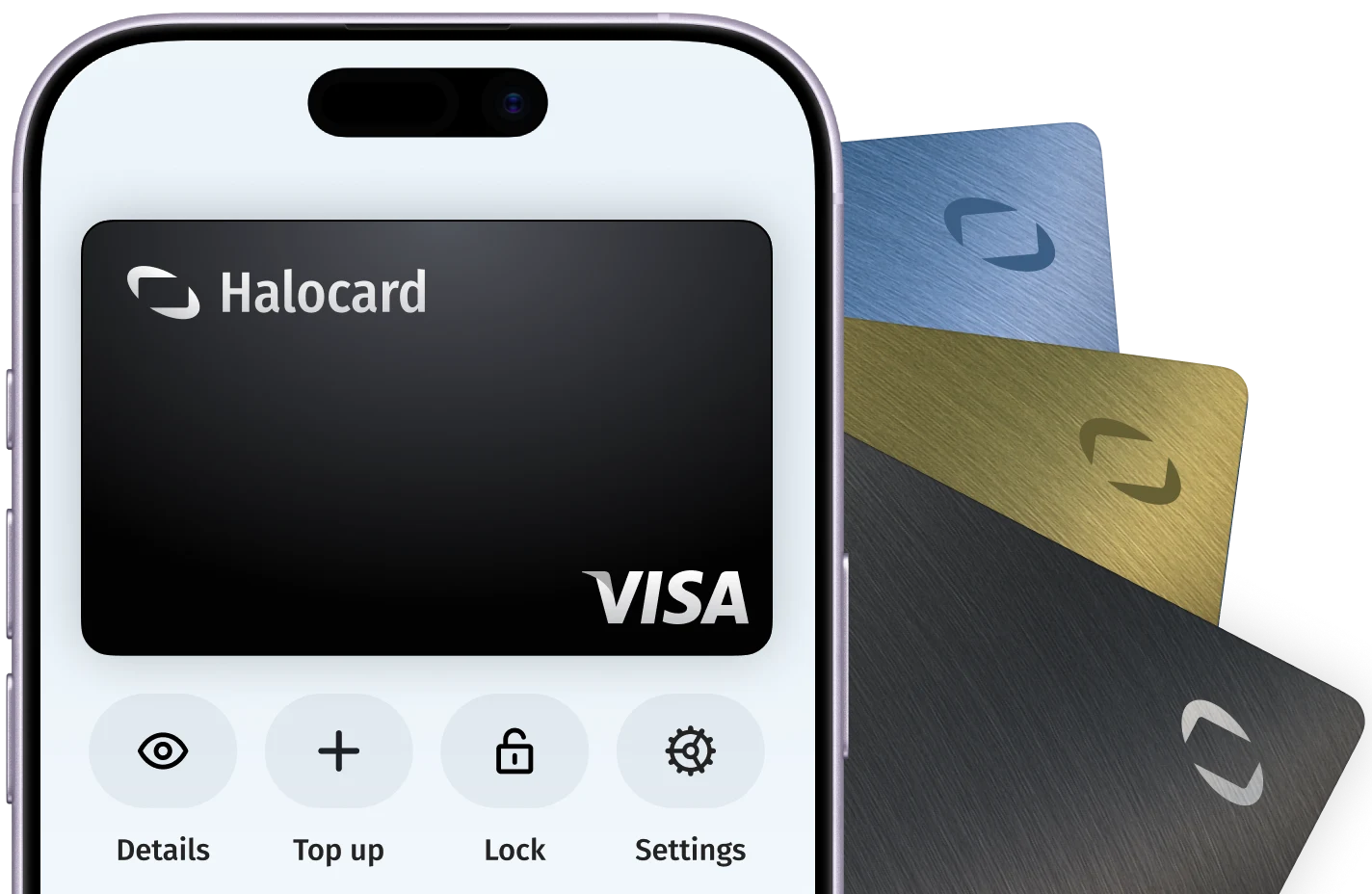
Halocard is the better Chime alternative for virtual cards and online spending: a US-issued Visa credit card for customers in the US and 120+ countries, with a separate card for each merchant and a limit you set on each. It works like a debit card: you fund one balance by debit/credit card, Apple Pay, Google Pay, bank transfer, stablecoins, or crypto, then make a card for each subscription or store, with a billing address you choose on every card. Halocard has no free plan, but Essential is free with 3 referrals, and every friend you refer earns you $5 or more a month.

Chime is a US fintech built around a free checking account: a Visa debit card, direct deposit up to two days early and 47,000+ fee-free ATMs, with no monthly fee and no foreign transaction fee. It gives each account one virtual card, which you can freeze or replace but not limit, and it is open only to US residents with a Social Security number.

Halocard pros and cons

  • Pros: A US-issued Visa credit card that works like a debit card
  • Pros: A separate card for each merchant, with limits you control
  • Pros: Any billing address you choose, on each card
  • Pros: Fund by debit/credit card, Apple Pay, Google Pay, bank transfer, stablecoins, or crypto
  • Pros: US residents and residents of 120+ countries
  • Cons: No free plan, though Essential is free with 3 referrals
  • Cons: No cashback
  • Cons: A minimum first deposit to activate your account

Chime pros and cons

  • Pros: No monthly fee and no foreign transaction fee
  • Pros: A checking account with direct deposit up to two days early
  • Pros: 47,000+ fee-free ATMs, and cash deposits at retailers
  • Pros: Phone and chat support, 24/7
  • Pros: Free physical card, plus Apple Pay, Google Pay and Samsung Pay
  • Pros: 2% or 5% cashback on its secured credit card, with direct deposits
  • Cons: US residents only
  • Cons: One virtual card per account, with no limit you can set
  • Cons: Freezing a card doesn't stop recurring payments
  • Cons: Your legal name and account address on the card

Halocard vs Chime compared

Chime is a free US checking account with a Visa debit card and one virtual card per account. Halocard is a dedicated virtual card platform for subscriptions, online spending, advertising and AI tools, with US-issued Visa credit cards, stablecoin funding and custom billing addresses, for customers in the US and 120+ countries.

Eligibility

HalocardAdvantage: US residents and residents of 120+ countriesChimeUS residents only
Customers outside the USHalocard120+ countriesChimeNot supported
Credit checkHalocardNoneChimeNone
ID for US residentsHalocardMay ask for an SSN or ITINChimeSSN required
Mobile numberHalocardFrom any countryChimeUS number required

Halocard is a US-issued Visa credit card for customers in the US and 120+ countries. Outside the US? You don't need an SSN, a US address or a US bank account. Chime is open to US citizens and legal residents aged 18 or over, with a Social Security number, a US mobile number and a US residential address; it doesn't accept P.O. boxes or commercial addresses. Neither runs a credit check to open an account. Chime says you can hold one checking account. See supported countries

Card type

HalocardAdvantage: US-issued Visa credit cardChimeUS Visa debit card, plus an optional secured credit card
What you spendHalocardThe balance you loadChimeYour checking balance, or a secured deposit
Credit lineHalocardNoneChimeNone
Reports to credit bureausHalocardNeverChimeChime Card only, every month
Card networkHalocardVisaChimeVisa

Halocard works like a debit card: you spend the balance you load, with no credit line and no credit check. Chime's main card is a Visa debit card on its checking account, and Chime says it is not a prepaid card. Its second card, the Chime Card, is a secured Visa credit card: the money you move into a secured deposit account is what you can spend, and Chime reports your payment history to Experian, TransUnion and Equifax each month, which is the point of the card. Halocard never reports to credit bureaus, so it neither helps nor hurts a credit score. Check merchant acceptance

Virtual cards

HalocardAdvantage: 3 to 60 cards, one for each merchantChimeOne per card account
Virtual cardsHalocard3 to 60 held at once, by planChimeOne per card account
A separate card for each merchantHalocardYesChimeNot supported
Ready when you sign upHalocardCreated in secondsChimeYes, in the app
Single-use cardsHalocardAnnual plans, from 2 a monthChimeNot supported
A new card numberHalocardCancel a card and create anotherChimeReplace the number once every 24 hours

Chime gives each card account one virtual card: a virtual debit card with your checking account, and a second if you also hold the Chime Card. It works online, for recurring payments and in a phone wallet, and you can replace its number once every 24 hours. Every merchant you pay holds the same number, though, and Chime says it issues one debit card per checking account and no secondary cards. Halocard is built the other way round: 3 to 60 cards depending on your plan, one for each merchant, so a problem at one merchant never touches the others. Compare Halocard plans

Funding

HalocardAdvantage: Card, Apple Pay, Google Pay, Bank Transfer, Stablecoins & CryptoChimeDirect deposit, bank transfer, checks and cash
Bank transferHalocardUSD, CAD, EUR or GBPChimeACH, in US dollars
Debit or credit cardHalocardVisa, MastercardChimeInstant transfer from a debit card
Digital walletsHalocardApple Pay and Google PayChimeNot supported
StablecoinsHalocardUSDC, USDTChimeNot supported
CryptoHalocardBTC, ETH, SOLChimeNot supported
CashHalocardNot supportedChimeFree at Walgreens; $3 to $5 elsewhere
ChecksHalocardNot supportedChimeMobile check deposit

Halocard keeps one balance you top up by debit/credit card, Apple Pay, Google Pay, bank transfer, stablecoins, or crypto. Chime is built around your paycheck: direct deposit can arrive up to two days early, depending on the payer, and you can also add money by ACH from another bank, by instant transfer from a debit card, by mobile check deposit, or in cash, free at Walgreens and Duane Reade and for a fee the retailer sets elsewhere, typically $3 to $5. The ways to add money that Chime lists don't include a credit card, a phone wallet, stablecoins or crypto. See how to deposit

USD bank account

HalocardAdvantage: Your own US account and routing numberChimeA checking account with FDIC pass-through insurance
Your own account and routing numberHalocardYesChimeYes
Receive ACH transfersHalocard1 to 3 business daysChimeYes
Receive same-day ACHHalocardYesChimeUnknown
Receive domestic wiresHalocardThe same dayChimeUnknown
Send ACH and wire transfersHalocardYesChimeACH transfers

Halocard includes a US bank account with its own account and routing numbers, so you can receive salary, transfers from friends and family, and any other payment you'd send to a US checking account. ACH transfers arrive in 1 to 3 business days and domestic wires the same day, straight into your Halocard balance and ready to spend. Chime is a checking account before it is a card: you get account and routing numbers, direct deposit up to two days early, and deposits insured up to $250,000 through its partner bank, where the conditions for pass-through insurance are met. It supports ACH transfers in and out, and doesn't confirm incoming or outgoing wires. Send and receive USD payments

Controls

HalocardAdvantage: Per-card limits, custom name and billing addressChimeFreeze the card or replace its number
Per-card spending limitsHalocardDaily, weekly or monthlyChimeNot supported
Lock or close a cardHalocardInstantChimeFreeze, in the app or on the web
A locked card stops recurring chargesHalocardYes, until you unlock itChimeRecurring charges can still go through
Custom billing addressHalocardYes, on each cardChimeNot supported
Custom cardholder nameHalocardYesChimeNot supported

Chime's controls stop at the account. You can freeze the virtual card and the physical card separately and replace the virtual number once every 24 hours, but spending limits are set by Chime and shown in the app, the card carries your legal name, and a purchase can be declined when the billing address doesn't match your account. Chime's help centre says freezing a card doesn't stop recurring payments: to stop one you contact Chime at least three business days before it is due, and Chime adds that a stop payment doesn't guarantee every future charge will stop. With Halocard you set daily, weekly or monthly limits on each card, lock or cancel any card instantly, and choose the billing address and cardholder name on each card, and a merchant can't charge a locked card until you unlock it. See card spending limits

In-person payments

HalocardAdvantage: Physical card, plus Apple Pay and Google PayChimeFree physical card, phone wallets and ATMs
Physical cardHalocardFree with any annual plan or $100 on a monthly planChimeFree; ships in 7 to 10 business days
Apple Pay and Google PayHalocardEvery cardChimeYes, plus Samsung Pay
Tap to pay in storesHalocardYesChimeYes
Cash from ATMsHalocardAt ATMs that accept phone walletsChime47,000+ fee-free ATMs; $2.50 elsewhere

Both work in person. Every Halocard can go in Apple Pay and Google Pay for tap to pay, including at ATMs that accept phone wallets, and you can add a physical card, free with any annual plan or $100 on a monthly plan. Chime is the stronger everyday card here: its physical debit card is free, its virtual card goes into Apple Pay, Google Pay and Samsung Pay, and you can take out cash without a fee at 47,000+ ATMs in its network. Outside the network, and abroad, Chime charges $2.50 a withdrawal on top of the ATM operator's own fee, and you need the physical card for ATMs and for cash back at a till. Set up Apple Pay and Google Pay

Rewards

HalocardNo cashback, but a monthly referral commissionChimeAdvantage: 2% or 5% cashback on the Chime Card, with direct deposits
CashbackHalocardNot supportedChime2% on Chime Plus, 5% on Chime Prime
Cashback without direct depositsHalocardNot supportedChimeNot supported
Cashback on the debit cardHalocardNot supportedChimeMerchant offers only
Referral commissionHalocard$5 to $25 a month per friend, for up to 12 monthsChimeUnknown

Chime pays cashback on its secured credit card, the Chime Card, to members who receive qualifying direct deposits: 2% with Chime Plus status and 5% with Chime Prime, which takes $3,000 or more in direct deposits within 34 days. It applies to one spending category you choose, on up to $1,500 of purchases a month. Without those deposits the card earns none, and the debit card earns only merchant offers through Chime Deals. Halocard pays no cashback on purchases. What it pays is a referral commission: $5 to $25 a month for every friend you refer, for up to 12 months, and Essential is free with 3 referrals. See how referrals work

Fees

HalocardAdvantage: No fee in USD; 1.5% + $0.30 in other currenciesChimeNo purchase or foreign transaction fee
Purchases in USDHalocardNo feeChimeNo fee
Purchases in other currenciesHalocard1.5% + $0.30ChimeNo fee
Overdraft feesHalocardNone: you spend your balanceChimeNone; SpotMe covers up to $200
InterestHalocardNone, no credit lineChimeNone

Halocard charges nothing on US-dollar purchases and 1.5% + $0.30 on others. Chime charges no fee on purchases and no foreign transaction fee, which makes it the cheaper card to spend with in another currency. Its fees sit around cash and speed: $2.50 at an ATM outside its network or abroad, plus the operator's fee, and 1.75% of the amount to move money out instantly. Neither charges overdraft fees or interest: Halocard spends only the balance you load, and Chime's optional SpotMe covers overdrafts from $20 up to $200 for members with qualifying direct deposits. See all Halocard fees

Pricing

HalocardAdvantage: From $12 a month, or free with 3 referralsChimeNo monthly fee
Entry planHalocard$12/mo, 3 cardsChimeFree, one virtual card per account
Middle planHalocard$15/mo, 12 cardsChimeChime Plus: free, with direct deposits
Largest personal planHalocard$75/mo, 60 cardsChimeChime Prime: free, with direct deposits
Minimum to get startedHalocard$30 first depositChimeNo minimum balance

Chime has no monthly fee, no minimum balance and no paid plans: Chime Plus and Chime Prime are statuses you reach by receiving direct deposits, not subscriptions. Halocard plans are $12, $15 and $75 a month, and what they buy is the thing Chime doesn't offer: 3 to 60 virtual cards, each with its own limit and billing address. Essential is free with 3 referrals, and each friend you refer pays you $5 or more a month. Compare Halocard plans

Support

HalocardAdvantage: Chat, email, and phone on every planChimePhone and chat, 24/7
ChatHalocardYesChimeYes, 24/7 in the app
EmailHalocardYesChimeUnknown
PhoneHalocardYesChimeYes, 24/7

Halocard answers by chat, email, and phone on every plan. Chime's help centre lists a phone line and in-app chat, both open 24 hours a day, every day. It lists no support email. Visit the help centre

Trust and transparency

HalocardAdvantage: A regulated US company and card issuerChimeAdvantage: A public US fintech with named partner banks
Company and countryHalocardHalocard LLC, USAChimeChime Financial, Inc., USA (public, Nasdaq: CHYM)
Registration or licenceHalocardFintech, not a bank. Registered MSB with FinCENChimeFintech, not a bank
Card issuerHalocardThird NationalChimeThe Bancorp Bank, N.A. or Stride Bank, N.A.
Account held atHalocardSSB, Member FDICChimeIts partner bank, with FDIC pass-through insurance
Founders namedHalocardEdward TaylorChimeChris Britt and Ryan King
FoundedHalocard2024Chime2012
TrustpilotHalocard4.2/5 (11 reviews)Chime3.5/5 (13,858 reviews)

Chime is a public company with a record since 2012, and it names the banks behind its accounts and cards. Its 3.5/5 from 13,858 Trustpilot reviews is weighed down by denied disputes over unauthorized charges and support that is hard to reach. Halocard names its company, card issuer, account bank and founder. About Halocard

Why Halocard is the better Chime alternative

A separate card for each merchant

Chime gives each account one virtual card, so every subscription and store you pay holds the same number. Halocard gives each merchant its own card, 3 to 60 depending on your plan, so replacing one never means updating the rest.

A limit you set on every card

Chime sets your spending limits for the account and shows them in the app. On Halocard you set a daily, weekly or monthly limit on each card, so a subscription can't take more than you allowed.

A lock that stops a recurring charge

Chime's help centre says freezing a card doesn't stop recurring payments, and that a stop payment has to be requested at least three business days ahead. Lock the Halocard a merchant holds and it can't be charged again until you unlock it.

Your own name and billing address on every card

Every Halocard carries the cardholder name and billing address you choose. A Chime card carries your legal name, and a purchase can be declined when the billing address doesn't match your account.

Not limited to US residents

Chime is open to US citizens and legal residents aged 18 or over, with a Social Security number, a US mobile number and a US residential address. Halocard is a US-issued Visa credit card for customers in the US and 120+ countries. Outside the US? You don't need an SSN, a US address or a US bank account.

Key drawbacks of Chime

One virtual card per account

Chime's virtual card is a single number shared by every merchant you pay. You can replace it once every 24 hours, but there is no way to give a subscription, a store or a free trial a card of its own.

Freezing doesn't stop subscriptions

Chime's help centre says freezing a card doesn't stop recurring payments: recurring charges can still go through on a frozen card. Stopping one means contacting Chime at least three business days before the payment is due.

Available to US residents only

Chime is for US citizens and legal residents aged 18 or over, with a Social Security number, a US mobile number and a US residential address.

Denied disputes lead its complaints

Chime is rated 3.5/5 on Trustpilot from 13,858 reviews. Trustpilot's own summary of them names unresolved unauthorized transactions and denied dispute claims, along with long waits for support.

Read our Chime review

About Halocard

Halocard is a US-issued Visa credit card for customers in the US and 120+ countries, with a separate virtual card for each merchant you pay. Halocard works like a debit card: you spend the balance you load, with no credit line and no credit check.

Create cards in seconds from a web browser, set daily, weekly or monthly limits on each card, lock or cancel any card instantly, and choose the billing address and cardholder name on each card. Fund your balance by debit/credit card, Apple Pay, Google Pay, bank transfer, stablecoins, or crypto. Outside the US? You don't need an SSN, a US address or a US bank account.

About Chime

Chime is a US financial technology company, Chime Financial, Inc., founded in 2012 by Chris Britt and Ryan King and listed on Nasdaq. It is not a bank: its accounts and cards are provided by The Bancorp Bank, N.A. or Stride Bank, N.A., both members of the FDIC. Its core product is a checking account with no monthly fee, a Visa debit card, direct deposit up to two days early and SpotMe, which covers small overdrafts without a fee.

Every account comes with a virtual card you can use straight away, online and in Apple Pay, Google Pay and Samsung Pay, while the physical card ships in 7 to 10 business days. Chime also offers the Chime Card, a secured Visa credit card with no annual fee and no credit check, which reports your payments to the three credit bureaus and pays cashback to members who receive qualifying direct deposits.

Chime is for US citizens and legal residents aged 18 or over, with a Social Security number, a US mobile number and a US residential address. Its accounts are for personal use only.

Halocard vs Chime FAQ

What is the best Chime alternative for virtual cards?

Halocard. Halocard is a US-issued Visa credit card for customers in the US and 120+ countries, with a separate card for each merchant, a daily, weekly or monthly limit on each, Apple Pay and Google Pay, and funding by debit/credit card, Apple Pay, Google Pay, bank transfer, stablecoins, or crypto.

Is Halocard better than Chime for virtual cards?

Yes. Halocard gives each merchant its own Visa credit card with a limit and a billing address you choose. Chime gives each account one virtual card with no limit you can set. Chime is the better pick for a free checking account with direct deposit, ATMs and cash deposits.

Does Halocard or Chime give you more virtual cards?

Halocard. Its plans include 3 to 60 cards held at once, and annual plans add single-use cards. Chime gives one virtual card with a checking account, and a second if you also hold its secured credit card, the Chime Card.

Can I use Halocard instead of Chime outside the US?

Yes. Halocard is for customers in the US and 120+ countries. Outside the US? You don't need an SSN, a US address or a US bank account. Chime is open to US citizens and legal residents aged 18 or over, with a Social Security number, a US mobile number and a US residential address.

Is there a Chime alternative that doesn't need a Social Security number?

Outside the US, yes: Halocard. Outside the US? You don't need an SSN, a US address or a US bank account. Phone numbers from any country are supported. US residents may be asked for an SSN or ITIN when they verify. Chime requires a Social Security number from everyone.

Which has lower fees, Chime or Halocard?

Chime, for everyday banking: it has no monthly fee and no foreign transaction fee, and charges $2.50 at ATMs outside its network. Halocard plans start at $12 a month with no fee on US-dollar purchases and 1.5% + $0.30 on others, and Essential is free with 3 referrals. What the plan pays for is a separate card for each merchant.

Does Halocard or Chime build credit?

Only Chime can. Its secured credit card, the Chime Card, reports your payment history to the three credit bureaus each month. Halocard never reports to credit bureaus, so it neither helps nor hurts a credit score.

Which is better for managing subscriptions, Chime or Halocard?

Halocard. Each subscription gets its own card with a daily, weekly or monthly limit, and locking that card stops the merchant charging it. Chime's help centre says freezing a card doesn't stop recurring payments, and every subscription shares its one virtual card.

Is Halocard a debit card like Chime?

No. Halocard is a US-issued Visa credit card that works like a debit card: you spend the balance you load, with no credit line and no credit check. Chime's main card is a Visa debit card on a checking account.

Does Halocard or Chime support Apple Pay and Google Pay?

Both do. Every Halocard can be added to Apple Pay and Google Pay, and either wallet can top up your Halocard balance. Chime's virtual card goes into Apple Pay, Google Pay and Samsung Pay.

Can I use Halocard alongside Chime?

Yes. Halocard takes top-ups by debit/credit card, Apple Pay, Google Pay, bank transfer, stablecoins, or crypto, so you can keep Chime for your paycheck, ATMs and cash, top up Halocard from it by debit card or bank transfer, and pay each online merchant with its own Halocard.

How do I switch my subscriptions from Chime to Halocard?

Sign up for Halocard, verify in under 3 minutes and add funds. Make one card for each subscription or store, set its limit and billing address, and update the payment method at each merchant. You don't need to close your Chime account to do it.

Sources

  • Chime Help, how do I open a Chime account?: help.chime.com/how-do-i-open-a-chime-account-bafa327e
  • Chime Help, what is Chime's virtual card?: help.chime.com/what-is-chimes-virtual-card-c96976c0
  • Chime Help, how can I replace my card?: help.chime.com/how-can-i-replace-my-card-33c67b3b
  • Chime Help, can I pause my Chime account?: help.chime.com/can-i-pause-my-chime-account-dc15cd79
  • Chime Help, how do I stop recurring payments from my debit or credit card?: help.chime.com/how-do-i-stop-recurring-payments-from-my-debit-or-credit-80c85e8c
  • Chime Help, why was my transaction declined?: help.chime.com/why-was-my-transaction-declined-f2174e0e
  • Chime Help, does Chime charge fees?: help.chime.com/does-chime-charge-fees-6393d58b
  • Chime Help, cash deposits and ATMs: help.chime.com/cash-deposits-and-atms-8eef0af0
  • Chime Help, can I use my card outside of the United States?: help.chime.com/can-i-use-my-card-outside-of-the-united-states-bd7df069
  • Chime Help, what type of account is my Chime account?: help.chime.com/what-type-of-account-is-my-chime-account-dba36bc1
  • Chime Help, what is the Chime Card?: help.chime.com/what-is-the-chime-card-8655725d
  • Chime Help, what is Chime Prime?: help.chime.com/what-is-chime-prime-91c38f1d
  • Chime Help, what is SpotMe?: help.chime.com/what-is-spotme-641bb07d
  • Chime Help, how do I contact Chime customer service?: help.chime.com/how-do-i-contact-chime-customer-service-731cb26b
  • Chime, debit card: chime.com/online-banking/debit-card
  • Chime, Chime Card: chime.com/credit/chime-card
  • Chime, membership tiers: chime.com/online-banking/chime-membership-tiers
  • Chime, fee schedule: chime.com/policies/chime/fees-info
  • Chime, disclosures: chime.com/disclosures
  • Chime Investor Relations, board of directors: investors.chime.com/corporate-governance/board-of-directors
  • Trustpilot, Chime reviews: trustpilot.com/review/www.chime.com

Disclaimer

Based on public information as of October 2026 (see Sources above); Chime's products, fees and terms may change, so check before you decide. Halocard publishes this page and makes one of the products compared, so verdicts and ticks are our opinion. Chime, its product names and its logos are trademarks of their respective owners. Their use here does not imply any affiliation with, sponsorship by or endorsement from Chime. Not financial, legal or tax advice.

Get a Halocard in less than 5 minutes