
PST.NET review
For media buyers outside the US, with a monthly fee on every cardPST.NET is a virtual card platform for media buyers outside the US, run by an offshore company that verifies every customer but names no card issuer, and it suits teams that need many ad cards far more than anyone who wants a card for personal spending.
Halocard is the better choice for most people: a US-issued Visa credit card for customers in the US and 120+ countries, with a named issuer and cards included in the plan. PST.NET gives you 20+ types of pre-funded card for ad platforms, with no cap on how many you issue, team accounts and up to 3% cashback on ad spend for subscribers. PST.NET doesn't serve US citizens or residents, and its terms say an account is for professional activity such as media buying or affiliate marketing, and is not available for personal, consumer or household use. Each card is billed monthly ($10 for an advertising card and $16 for its Ultima card), moving money onto a card costs 8%, and withdrawals are paid in USDT on the TRC-20 network, after a manual review that can take up to 14 days. Trustpilot shows no score for PST.NET: its profile says the rating is unavailable because of a breach of Trustpilot's guidelines, and that a number of fake reviews were removed. Halocard is a US-issued Visa credit card for customers in the US and 120+ countries, funded by debit/credit card, Apple Pay, Google Pay, bank transfer, stablecoins, or crypto.
Pros
- Pros: No cap on the number of cards
- Pros: 20+ card types for ad platforms
- Pros: Team accounts, an API and a browser extension
- Pros: Every customer is identity-verified
- Pros: Up to 3% cashback on ad spend, on PST Private's dearest plan
- Pros: No transaction fee, at US merchants
Cons
- Cons: No US citizens or residents
- Cons: Not for personal use, by its terms
- Cons: A monthly fee on every card, and 8% to top one up
- Cons: Crypto in, USDT out: withdrawals reviewed for up to 14 days
- Cons: Card issuer and founders not named
- Cons: No Trustpilot score, after a guidelines breach
How much does PST.NET cost?
- Each card
- $16 a month (Ultima), $10 (advertising)
- Topping up a card
- 8%; 4% to 6% with PST Private
- Fee to load $1,000 onto a card
- $86.96
- Merchants outside the US
- 1% to 3%
Is PST.NET legit?
- Company and country
- ADV Summit Advisors Limited, Turks and Caicos Islands
- Registration or licence
- Fintech, not a bank. Technology partner to its card issuers
- Card issuer
- Not disclosed
- Trustpilot
- No score shown after fake reviews were removed (379 reviews)
What PST.NET reviewers report
379 reviews on Trustpilot, which shows no score for this profile. The most common complaints:
Rating withheld by Trustpilot
Trustpilot shows no score for PST.NET, and says it removed fake reviews for the company.
“This company’s rating is unavailable due to a breach of our guidelines.”
“We’ve removed a number of fake reviews for this company.”
Withdrawals take two weeks
Users report crypto withdrawals held for up to 14 days.
STAY AWAY
“14 days time to process a cryptocurrency withdrawal. Unheard of.”
Unreliable service - terrible support
“They don't withdraw money, citing the terms of use, which state that withdrawals require 14 days.”
Card fees not refunded
Complaints about paying to issue a card that then failed at the merchant, with the fee kept.
They mislead with advertising and do not bear any responsibility!
“After that, I completed verification, paid a fee (around $10), and issued the card. … But when I tried to purchase a digital product on Amazon, the payment failed and the order was canceled. … Naturally, I requested a full refund, since this situation is not my fault but rather a failure on the service’s side.”
$29 for a non-functional card + $143 withdrawal stuck!
“I paid $29 to issue a card that was completely non-functional. … I had to close it immediately, and they refuse to refund the $29 fee for a service they didn't provide.”
Fees higher than expected
Reviews state that deposit and top-up fees took more of the money than expected.
do not recommend
“They also add a $10 deposit fee along with 8% of the deposited amount on most crypto deposits which is much more than I expected.”
Worst experience.
“I deposited a total of $25, but was only able to use $6.88 for my purpose. The remaining balance was taken up by fees.”
How does Halocard compare to PST.NET?
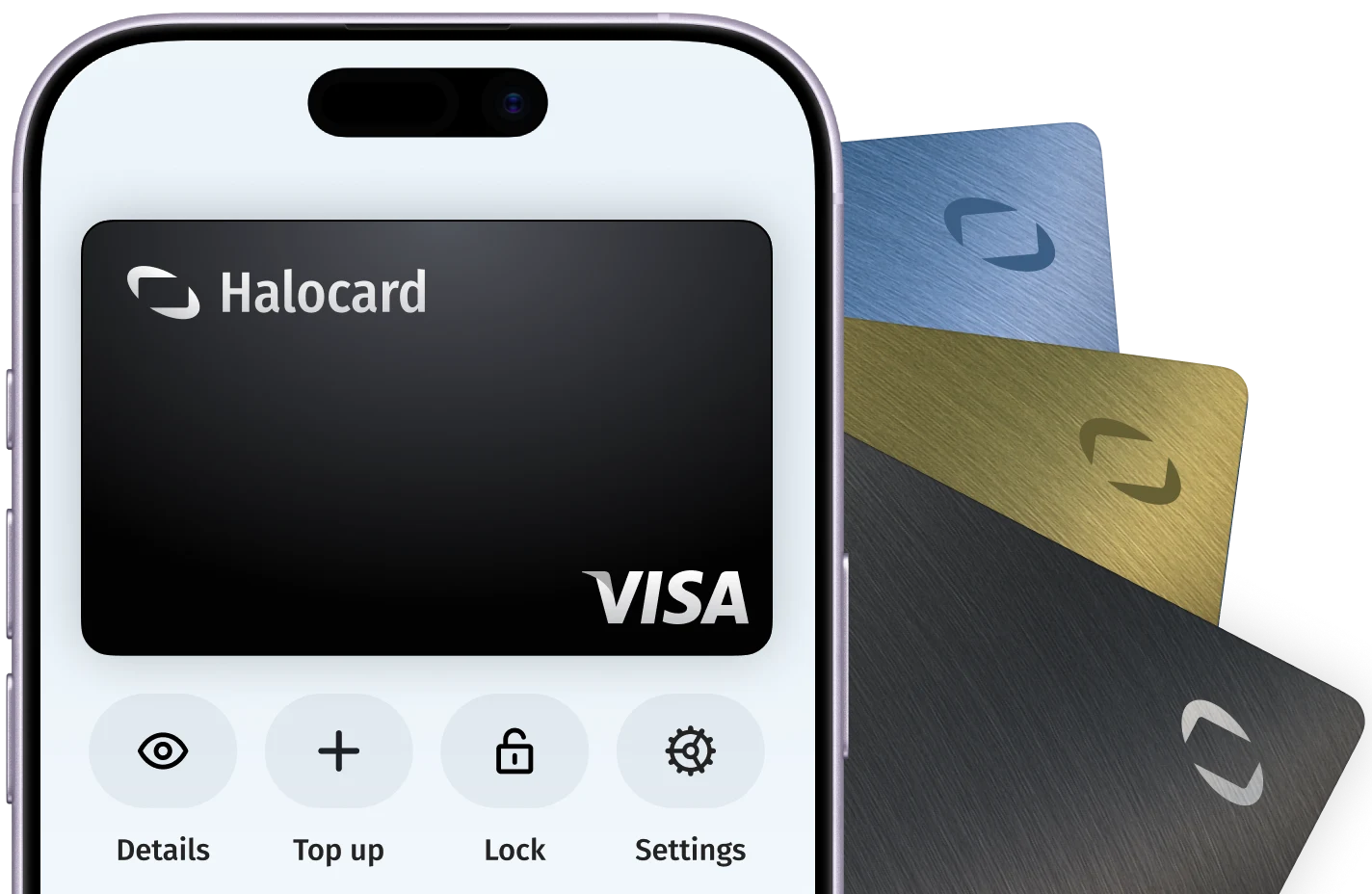
Halocard is the better choice than PST.NET for most people. It is a US-issued Visa credit card for customers in the US and 120+ countries, with a named card issuer, cards included in the plan, and funding by card, bank transfer or crypto.
Better choice | PST.NET | |
|---|---|---|
| Eligibility | Advantage: US residents and residents of 120+ countries | Outside the US and Canada |
| What the cards pay for | Advantage: Ads, subscriptions, software and shopping | Ad spend and business costs |
| Card type | Advantage: US-issued Visa credit card | Pre-funded virtual cards on Visa and Mastercard |
| Virtual cards | Advantage: 3 to 60 cards, included in your plan | No cap; each card billed monthly |
| Funding and withdrawals | Advantage: Card, Apple Pay, Google Pay, Bank Transfer, Stablecoins & Crypto | Crypto: USDT, Bitcoin and other coins |
| USD bank account | Advantage: Your own US account and routing number | None |
| Controls | Advantage: Per-card limits, custom name and billing address | Per-card balances, freeze and close |
| Rewards | No cashback, but a monthly referral commission | Advantage: 1% to 3% cashback on ad spend, for subscribers |
| Pricing | Advantage: From $12 a month, or free with 3 referrals | No plan; $10 to $16 a month for each card |
| Support | Advantage: Chat, email, and phone on every plan | Chat, Telegram, WhatsApp and email |
| Trust and transparency | Advantage: A regulated US company and card issuer | An offshore company; issuer not named |
PST.NET FAQ
Is PST.NET safe?
What is PST.NET?
Is PST.NET available in the US?
Can I use PST.NET for personal purchases?
Does PST.NET require KYC?
Who issues PST.NET cards?
What fees does PST.NET charge?
How do you fund PST.NET?
How long do PST.NET withdrawals take?
What happens to a refund on a closed PST.NET card?
What is PST Private?
Does PST.NET work with Apple Pay or Google Pay?
Can PST.NET cards be used anywhere?
Why does PST.NET have no Trustpilot score?
How do I contact PST.NET support?
Sources
- PST.NET, homepage: pst.net
- PST.NET, virtual cards: pst.net/cards
- PST.NET, Ultima card: pst.net/cards/ultima
- PST.NET, Google Ads card: pst.net/cards/google
- PST.NET, PST Private: pst.net/private
- PST.NET, FAQ: pst.net/faq
- PST.NET, terms of service: pst.net/legal/tos
- PST.NET, restrictions: pst.net/legal/restrictions
- PST.NET, AML policy: pst.net/legal/aml
- PST.NET, affiliate programme terms: pst.net/legal/affiliate
- Trustpilot, PST.NET reviews: trustpilot.com/review/pst.net
Disclaimer
Based on public information as of October 2026 (see Sources above); PST.NET's products, fees and terms may change, so check before you decide. Halocard publishes this page and makes one of the products compared, so verdicts and ticks are our opinion. PST.NET, its product names and its logos are trademarks of their respective owners. Their use here does not imply any affiliation with, sponsorship by or endorsement from PST.NET. Quoted reviews are verbatim Trustpilot excerpts of individual experiences, not verified by us. Not financial, legal or tax advice.