
-
Tunisian credit cards and bank debit cards are often restricted for most international online transactions, which makes it difficult to pay for online shopping, global subscriptions, SaaS tools, ads, and more.
-
The Carte Technologique is a useful option for limited technology related purchases, but the individual limit is just 1000 Tunisian dinar per year, which is enough for app purchases, hosting, or small software, but not much more.
-
Revolut and Wise are also not practical virtual card options for Tunisian residents, even though a lot of people search for them when looking for a virtual credit card for Tunisia.
-
A US-issued virtual Visa credit card such as Halocard provides users in Tunisia with a stronger option for international acceptance, without the need for a Tunisian bank account or an SSN (for non-US residents).
This is a guide comparing the best virtual cards in Tunisia for online shopping, subscription services, freelancer payments, and international online payments. The top virtual credit card options in Tunisia include Halocard, Grey, Payoneer, Buvei, Carte Technologique, and Flouci. Halocard is generally the best choice as far as secure online use and broad international acceptance are concerned.
This guide is for users in Tunisia who need a reliable way to manage global payments, pay online, buy from online international stores, or gain access to subscriptions that Tunisian bank cards will not support.
A common problem often faced by Tunisians is that local cards are restricted by Tunisian dinar rules and often are not usable for international websites. The government backed Technology Card often helps with some tech related online payments, but being capped at 1000 Tunisian Dinar per year for resident individuals is very problematic. So, the best virtual card in Tunisia depends on the use case, with Halocard being the top option for full international access.
Quick Comparison Overview
| Provider | Type | Fees | Funding | Limits | Acceptance | Best For |
|---|---|---|---|---|---|---|
| Halocard | Virtual secured credit card (US-issued Visa) | From $12/month or $1.25 per card. 1.5% FX fee on non-USD purchases. Stablecoin funding is free, card funding is 5% | Credit/debit card, Apple Pay, Google Pay, stablecoins, or bank transfers in USD, EUR or GBP | No preset limit. Spend what you load. Per-card transaction, daily, and monthly spending limits available | Excellent internationally. Very strong US acceptance due to US-issued credit BIN. 3D Secure by Visa | Tunisians needing full international access for subscriptions, SaaS, ad spend, e-commerce, freelancing tools, and online payments |
| Grey | Virtual debit card connected to USD, EUR, or GBP balances | $5 one-time card creation fee. $1 card funding fee. No monthly maintenance fee. 2% + $0.50 cross-border fee when the merchant currency differs from the card currency | Grey USD/EUR/GBP account balance | Balance-based. Users can create multiple cards and set card controls in app | Strong internationally where Visa is accepted. Not a US-issued credit card | Freelancers who receive money internationally and want to spend from foreign currency balances |
| Payoneer | Virtual or physical card options on Mastercard | Annual card fee often $29.95. Currency conversion up to 3.5%. Cross-border fee up to 1.8%. ATM withdrawals have separate fees | Payoneer balance from freelance platforms, marketplaces, clients, and bank transfers | Balance-based and tied to available Payoneer funds. Card and account limits depend on eligibility | Strong internationally where Mastercard is accepted. Established for freelancer and marketplace payments | Upwork, Fiverr, Toptal, and marketplace freelancers already receiving money through Payoneer |
| Buvei | Crypto-funded virtual Visa and Mastercard cards | Varies by BIN, card type, and usage. 20+ BIN options available. Some pages mention a $5 signup card-opening credit | USDT and other supported crypto top ups | Balance-based. Per-card spending limits, freeze controls, and team controls available | Moderate to strong depending on BIN selected. US BIN recommended for Tunisia and US platforms | Users comfortable with crypto funding for ads, SaaS, subscriptions, travel, and online transactions |
| Carte Technologique | Government-backed prepaid card for international tech payments | Varies by issuing bank. Some providers list around 20 TND/year for individuals | Tunisian Dinar deposit through La Poste or participating Tunisian bank providers | 1,000 Tunisian Dinar per year for individuals. 10,000 TND/year for eligible IT companies. 100,000 TND/year for qualifying startups | International acceptance for approved tech-related purchases only | Government-sanctioned option for hosting, software, app purchases, training, and small tech purchases under the annual limit |
| Flouci | Domestic virtual card and physical card linked to a TND wallet | Starter plan is free. Paid plans from 4.99 TND/month. Card and transaction fees depend on plan | TND bank transfer, card funding, wallet funding, and mobile top ups | Domestic wallet and card limits apply. Published plans show weekly and daily limits for payments, transfers, and withdrawals | Domestic only. Strong for Tunisian wallet payments and local card use, but no unrestricted international capability | Local Tunisian online shopping, wallet transfers, bill payments, contactless payments, and domestic personal finances |
Best Instant Access Virtual Card Available in Tunisia
Let's look at the top virtual cards available in Tunisia, starting with the top option, Halocard.
1. Halocard
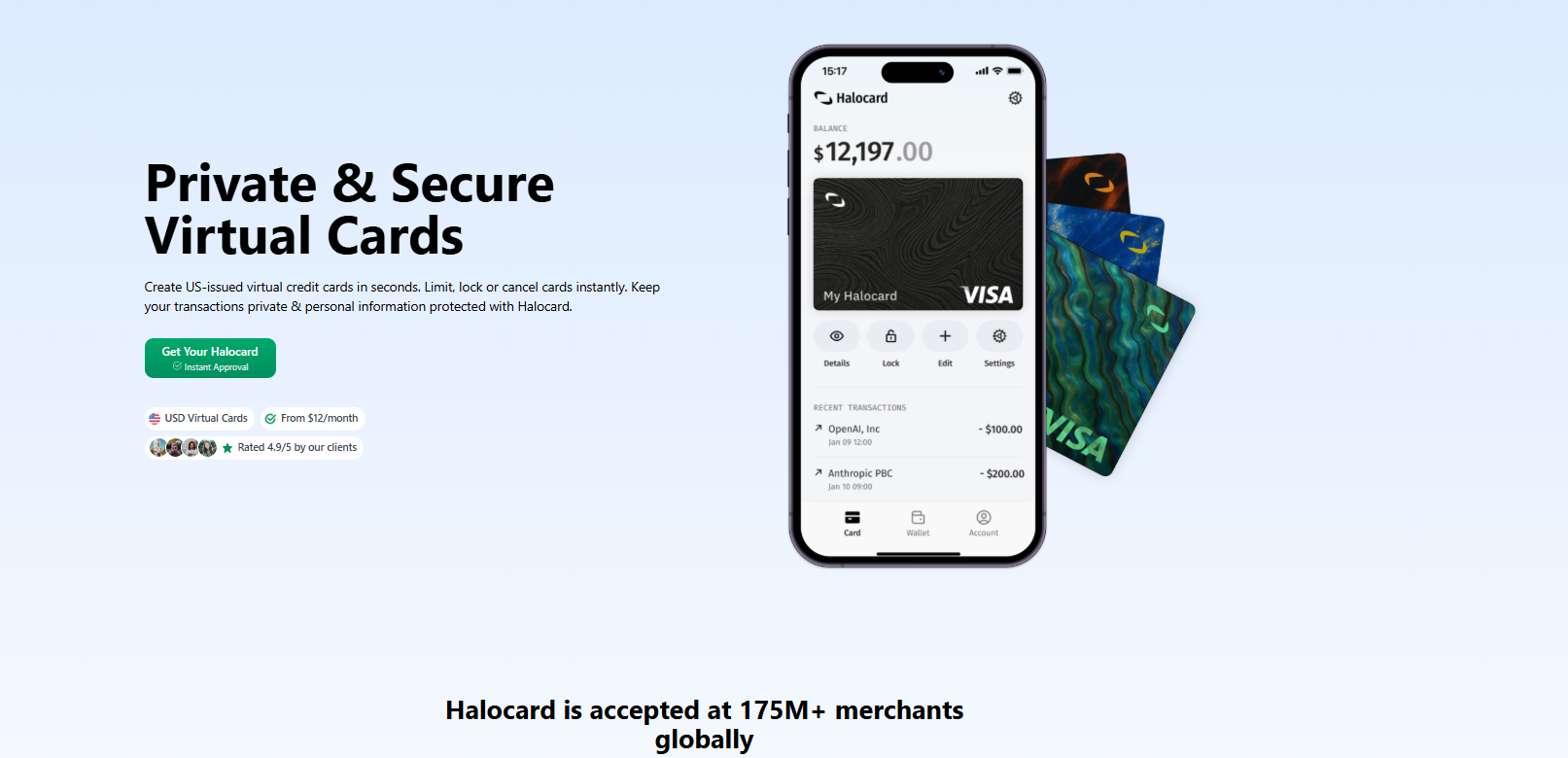
Halocard is a US issued secured Visa virtual credit card that is designed for secure online payments, subscriptions, international services, and ad spend. For users in Tunisia, the biggest pro is that it is not issued by a Tunisian bank, so it's not tied to the domestic Tunisian dinar restrictions that generally block local card payments.
Halocard is available in Tunisia and in 120+ countries worldwide. Users do not require US residency, a Tunisian bank account, or an SSN. Verification just uses a valid ID such as a national ID or a passport, plus a selfie. Once approved, users will get instant access to virtual card details and can start using the card online.
Halocard runs on the Visa network with a US issued credit BIN, meaning that many international platforms will accept it because it is treated as a secured Visa credit, rather than a prepaid card or a local debit card.
Halocard provides users with strong controls, as users can create multiple cards, set spending limits, cancel or lock cards instantly, and use custom billing addresses per card. You are able to use whatever address you feel most comfortable sharing with the merchant, which is useful for those who don't want to enter their personal home address to every store or service signed up for.
Halocard supports both Google Pay and Apple Pay, it features 3D secure authentication by Visa, allows for stablecoin funding, and features easy card topups. Stablecoin funding is free, whereas credit and debit card funding carries a 5% fee. There also happens to be a 1.5% FX fee on non-USD purchases.
Overall, Halocard is best for Tunisians who need full international access for Amazon style purchases, Google Ads, Facebook Ads, cloud hosting, freelancer software, SaaS tools, and other online transactions that local Tunisian cards cannot handle. It is not a free virtual card, but it does provide strong acceptance, added security, privacy controls, and flexible spending limits for people who need to spend money abroad.
2. Grey
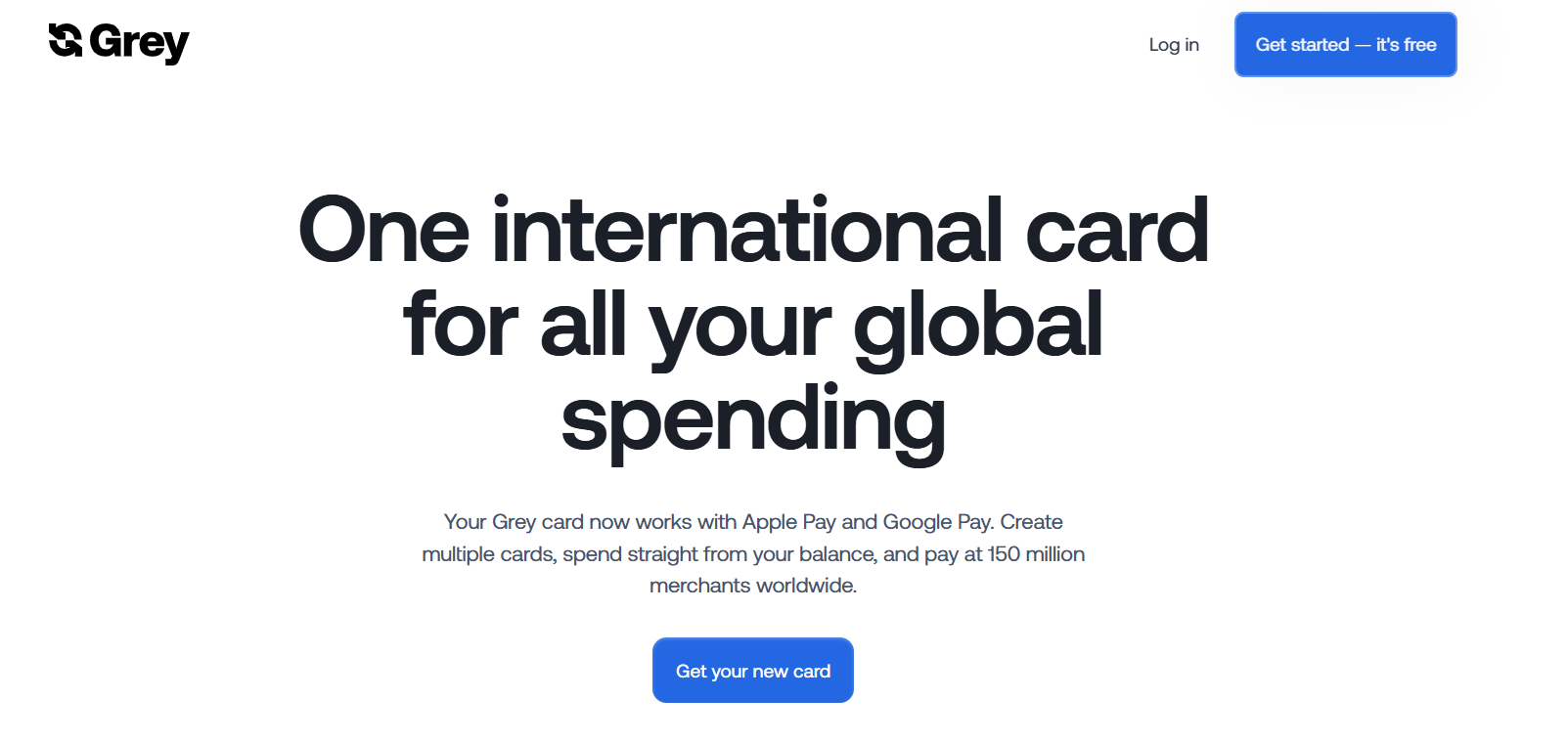
Grey is a good option for Tunisian freelancers, digital nomads, and remote workers who need to receive money in foreign currencies and spend it internationally. The Grey platform provides virtual cards that can be used with Google Pay and Apple Pay, and its card page says that users can create multiple cards, expense directly from their EUR, USD, or GBP balance, and pay at over 150 million merchants worldwide.
Important to note is that Grey is not a traditional virtual credit card, and is in fact closer to a virtual debit card that is connected to a foreign currency account. This makes it very useful for people who receive money from clients abroad and want to pay online without having to convert everything back into Tunisian dinar.
The app also includes in app controls, transaction tracking, 3D secure verification, and card management. For users in Tunisia, this helps with online payments for courses, software, subscriptions, and even some global merchants.
Grey has clear pricing with a low card creation fee, free card funding, and no monthly maintenance fee, although there is a cross-border transaction fee when the card currency differs from the merchant currency. All in all, this transparency helps to reduce hidden fees, since all costs are shown before transactions are confirmed.
The main limitation of Grey is the card type, as it is more of a virtual debit card than it is a virtual credit card. Moreover, for those in Tunisia, it is also not a US issued virtual credit card, meaning that some people may have problems purchasing from US and international merchants. However, for freelancers in Tunisia who need broader international wallet access with virtual cards, Grey can be of great value. However, for users who need strong US merchant acceptance, Grey may not be the best fit.
3. Payoneer
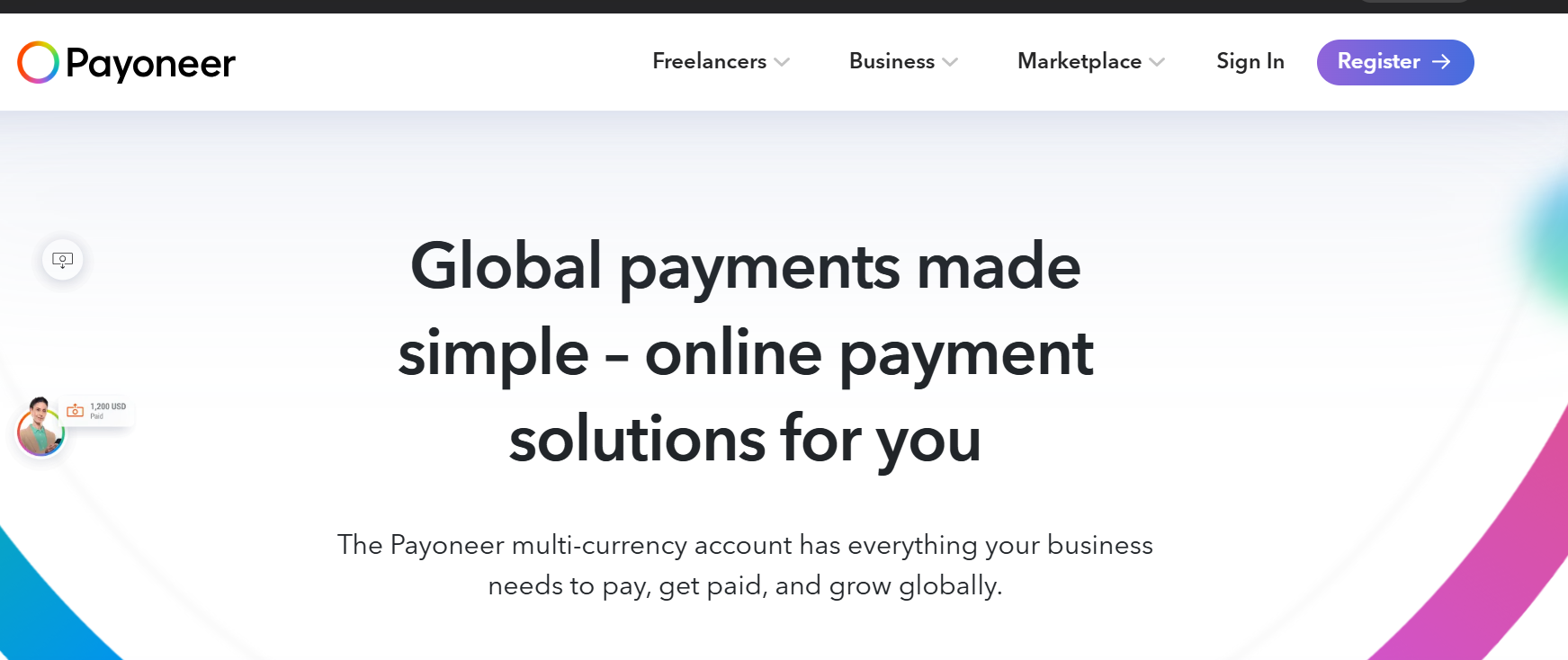
Payoneer is one of the most highly established global payment platforms for freelancers, business, and marketplace sellers. It's especially relevant for Tunisians because many freelancers already use Payoneer to receive money from platforms such as Upwork and other international marketplaces.
The Payoneer card can be a physical card or virtual depending on eligibility. Interesting to note is that it works on the MasterCard network and lets users spend their funds online, through ATM withdrawals where supported, and in stores. Payoneer is often used by businesses and freelancers that manage multiple currencies, making it useful for people who work with clients in various countries.
Payoneer can be used for various types of online payments, such as to pay for software, ads, subscriptions, travel, business services, and suppliers. It also supports custom spending limits for commercial cards, which is ideal for businesses that need to manage card payments across different expense categories and team members.
The fees are a main drawback with Payoneer, as it charges card and conversion fees, as well as expensive ATM withdrawals. For those in Tunisia, Payoneer may be convenient if your money is already inside your Payoneer account, but it does not always help you save money compared to a simpler virtual card.
Payoneer tends to be best for Tunisian freelancers and businesses that already receive money through Payoneer. If your income is landing in your Payoneer account, using the card can be convenient. However, if you only need a virtual card for online shopping and general international access, some of the other options on this list may be better.
4. Buvei
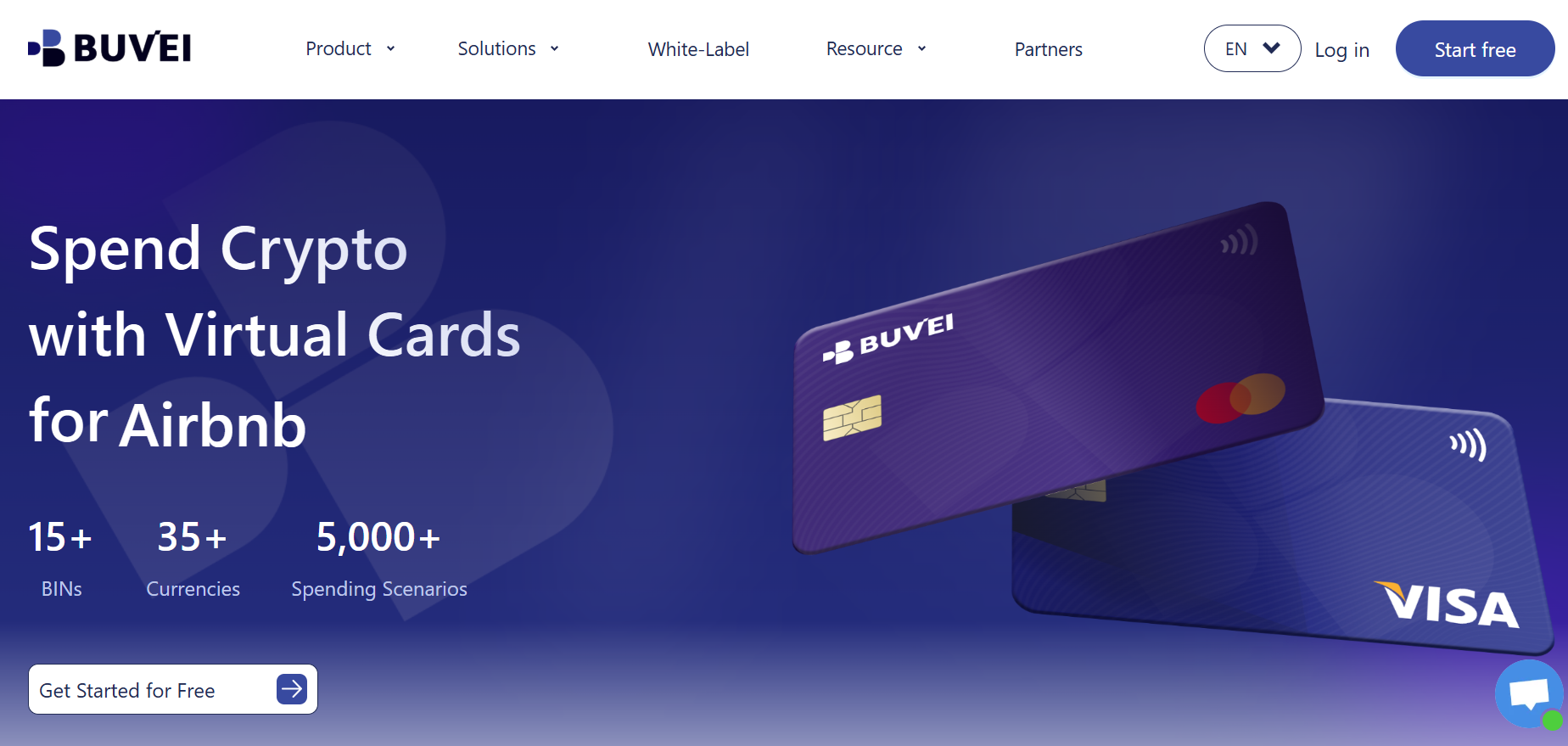
Buvei is a crypto funded virtual card provider that issues both MasterCard and Visa cards for ad accounts, subscriptions, global online payments, travel bookings, and e-commerce. For users in Tunisia, the main appeal of Buvei is that it supports USDT funding, which is useful for people who already hold crypto and want to pay for international services without using a local Tunisian bank card.
Interesting to note is that Buvei offers virtual Visa and MasterCards with over 20 different BIN options, with a US BIN being a strong choice for users in Tunisia, as this allows for improved acceptance on US based platforms. The platform also allows users to set spending limits, and manage multiple cards, freeze cards, and manage transactions in real time.
However, there is a legal caveat to consider here, which is that cryptocurrency is technically banned in Tunisia under the country's existing legal framework, with there being penalties for reported illegal crypto activity. However, there is a new digital asset regulatory framework being discussed for 2026, but until it is formally enacted, users need to be careful and understand the legal landscape.
This is of course where Halocard has an advantage, as it allows for non-crypto top ups, including bank transfers as well as credit and debit card funding. Buvei may work well for people who are already comfortable with crypto, but it's certainly not the easiest option for Tunisians.
5. Carte Technologique
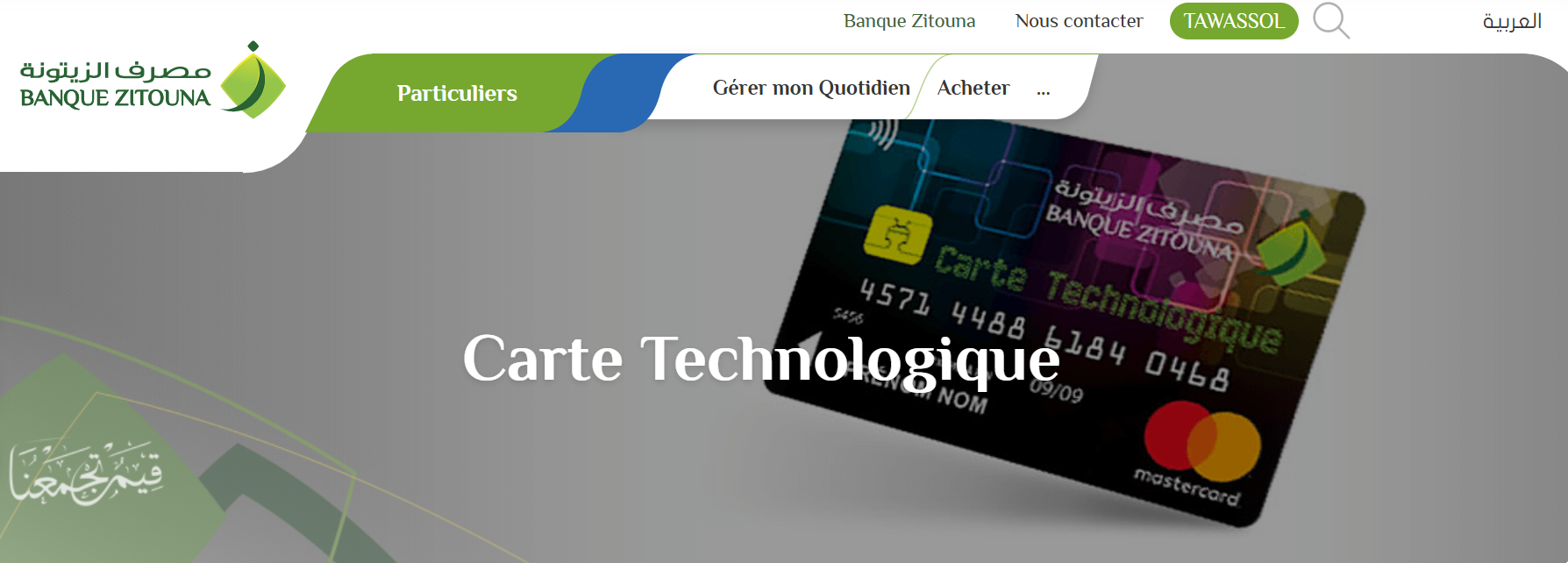
The Carte Technologique, also known as the Technology Card, is the official Tunisian workaround for limited international online payments. This is a government backed prepaid card that is available through several Tunisian bank providers. For many people, it's the first option they hear about when looking for virtual cards in Tunisia or looking for a way to pay online from Tunisia.
This card is designed for tech related purchases only, which includes domain names, hosting, mobile apps, software licenses, technical training, online advertising, and other similar digital services. It can be especially useful for freelancers, developers, students, and small businesses that need to cover basic digital expenses in foreign currencies.
That said, the biggest limit here for individuals is that the Technology Card is capped at just 1000 Tunisian dinar per year, which is about $340, depending on the exchange rate. There may be some eligible companies that can access higher annual limits, including up to 10,000 Tunisian dinar for certain IT related businesses, and potentially higher limits for qualifying startups, but these require formal registration and compliance.
The Carte Technologique may also require a baccalaureate diploma or equivalent documentation, as well as a CIN and an application through La Poste or an issuing bank. It's a practical option for small purchases such as basic hosting or domain registration, but it's not enough for regular subscriptions, online shopping, serious ad spend, or broader international payments. For anyone who needs to spend abroad beyond a small annual tech budget, the Technology Card is useful, albeit limited.
6. Flouci
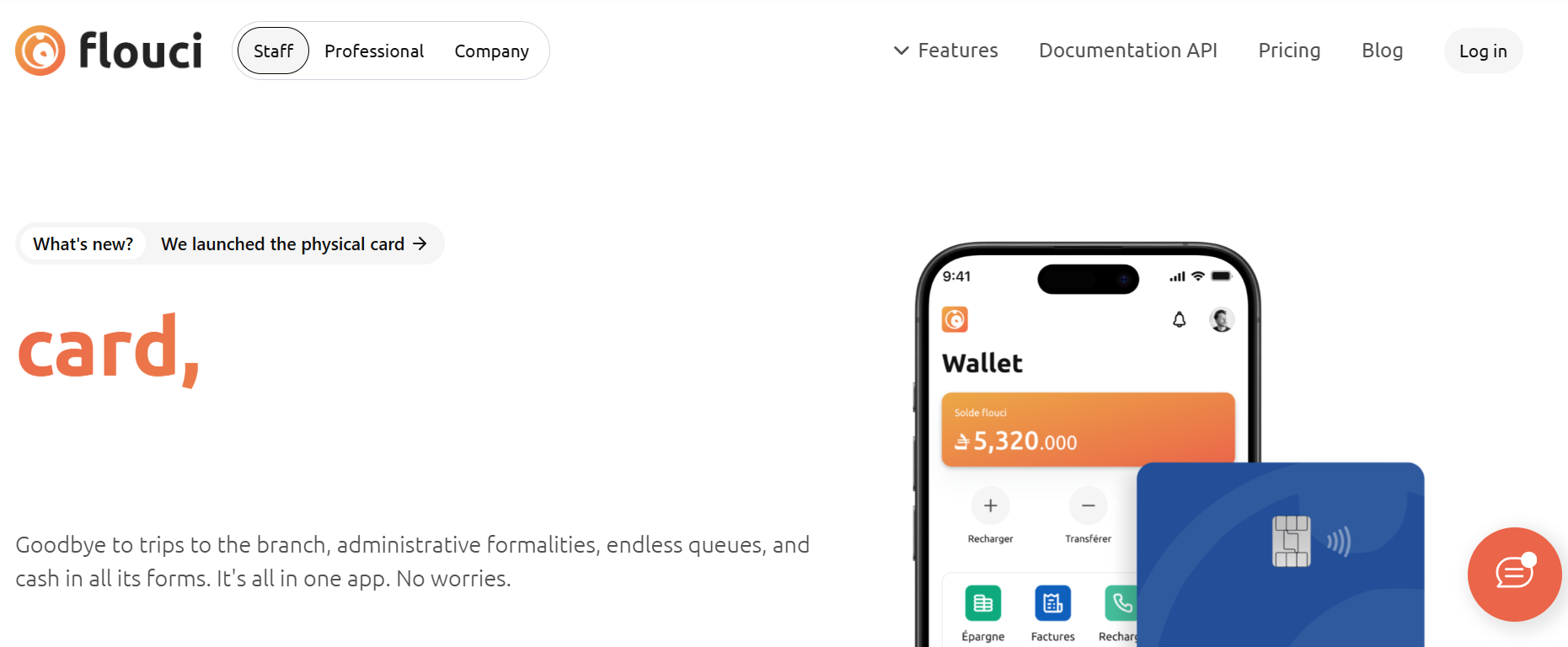
Flouci is one of Tunisia's best known digital wallet and neobank-style apps. It has been approved by the Central Bank of Tunisia and has since grown into a popular local option for managing domestic transfers, personal finances, wallet payments, and local online purchases. There are currently over 250,000 active accounts with a range of services for businesses, freelancers, and individuals.
Flouci offers both physical cards and virtual cards, with card access managed through the app. Users are able to open an account, manage a TND wallet, send money, receive local transfers, recharge mobile devices, pay bills, and make a variety of contactless payments with the Flouci Visa card. For local payments in Tunisia, it's a modern and convenient alternative to cash.
However, an important distinction is that Flouci is not an international virtual credit card solution. It's built around the Tunisian dinar, meaning that although it's useful for local Tunisian spending, it does not solve the issue of international payment problems. The bottom line is that Flouci is a strong option for domestic money management, but not for unrestricted international card payments.
The Technology Card: What It Actually Covers
First, the Technology Card is an official Tunisian option for limited international online payments, a government backed prepaid card that allows eligible Tunisian residents to pay in foreign currencies for specific technology and digitally related services.
In practice, the Technology Card is able to cover things like domain names, website hosting, SaaS subscriptions, software licenses, online training, App Store purchases, and online advertising. For students, marketers, developers, and small businesses, this makes it a useful starting point when a regular Tunisian bank card won't work internationally.
What the Technology Card Does Not Cover
One of the issues with the Technology Card is that it does not cover general international shopping. You cannot treat it like a full virtual credit card for clothing, electronics, non tech subscriptions, and Amazon shopping or everyday personal purchases.
Its purpose is very narrow, tech related spending. This makes it ideal for small digital purchases, but extremely limited for anybody who needs broader access to international online transactions, online shopping, or simple everyday card payments outside of Tunisia.
The Real Problem Is the Annual Limit
The biggest issue with the Technology Card is that it is capped at 1000 Tunisian dinar per year, which is just about $340. That means that a few small tools, a small advertising campaign, or a month of modest Google ads spend can use that up quickly.
There are certain IT companies who can access up to 10,000 Tunisian dinar per year, with some eligible startups qualifying for up to 100,000 Tunisian dinar per year, although these options require formal compliance and registration. For the vast majority of freelancers, marketers, developers, and online shoppers, the Technology Card is useful, but simply not enough.
Why Tunisian Cards Get Declined on International Platforms
There are several reasons why Tunisian cards may get declined on international platforms, including the following.
Tunisian Dinar Is Not Freely Convertible
First, Tunisian cards often get declined on international platforms because the Tunisian dinar is not freely convertible. Foreign currency movement is extremely restricted by the Central Bank of Tunisia, meaning that outgoing and incoming foreign currency flows usually require prior authorization. This is generally the root of all international payment problems for Tunisian residents. Even when somebody has enough money in the local bank account, that does not mean that they can freely convert it through other currencies.
Tunisian Bank Cards Are Usually Domestic Only
The next issue is that Tunisian cards are generally only domestic. They usually do not work for international online transactions, as they are usually designed for spending only inside of Tunisia. So, if a Tunisian resident tries to pay for Netflix, Google, Amazon, Facebook ads, or anything else from an overseas store, the transaction will likely be blocked.
The Technology Card Is Useful But Limited
Now, the Technology Card exists because of this gap, as it provides eligible users with a sanctioned way to make some international payments, but the issue is that the limits are extremely low, and the card is only designed for tech related purposes. This makes the Technology Card fairly helpful, but also very limited. It's okay for domain name purchasing, software licenses, basic hosting, or a training course or two, but it doesn't work as a full replacement for normal international virtual cards, physical cards, or bank accounts for global spending.
Forex Reform Is Starting, But Access Is Still Narrow
Although there has been some movement on foreign exchange reform, not every Tunisian has simple access to international card payments.
Cash Still Dominates Local E-Commerce
The other issue to consider is that the local payment culture reflects the same issue. Tunisia still relies extremely heavily on cash and cash on delivery for e-commerce. Domestic payment apps and local wallets are improving, but they do not fully solve international acceptance. This is why many Tunisians look for virtual cards that work outside of the local banking system, such as a US issued Visa like Halocard.
Frequently Asked Questions
Can I Use My Tunisian Bank Card on International Websites?
No, most Tunisian bank debit and credit cards are restricted to domestic Tunisian Dinar transactions, and generally cannot be used for international websites or international online payments.
Is Wise Available in Tunisia?
No, Wise currently does not provide full account and card access for Tunisian residents.
Is Revolut Available in Tunisia?
No, Revolut does not currently serve Tunisian residents.
What Is the Carte Technologique?
The Carte Technologique is a government backed prepaid card that is available through La Poste and several Tunisian bank providers. It allows for approved tech related international purchases, although its limits are extremely low.
Can I Use a Virtual Card for Google Ads or Facebook Ads From Tunisia?
Yes, you can use a US-issued Visa virtual card such as Halocard for Facebook ads and Google ads from Tunisia.
Do I Need an SSN to Get Halocard From Tunisia?
No, if you are a resident of Tunisia, you do not need an SSN to get Halocard. Non-US residents do not need an SSN to get Halocard.
Is Cryptocurrency Legal in Tunisia?
As of 2026, Tunisia's cryptocurrency rules are extremely restrictive, and users have to be careful with crypto funded cards.
Sources
-
Halocard. Instant, Private & Secure Virtual Cards | Halocard
-
Payoneer. Global Payment Solutions & Online Payment Services | Payoneer
-
Payoneer. Pay business expenses with Payoneer Card | Payoneer
-
Buvei. Global Virtual Cards for Crypto, Ads & Subscriptions | Buvei
-
Buvei. Global Virtual Cards for Online Payments & Advertising Spend | Buvei
-
Buvei. Everything You Need to Know About Buvei Virtual Cards
-
Banquezitouna. Cartes Spéciales : Carte Technologique | Banque Zitouna
-
Tunisian Saudi Bank. International technological card Tunisia | TSB bank
-
Flouci. Obtenez votre carte
Sources checked on May 5, 2026.
*Please see Halocard's Terms of Service or Pricing for the most up to date pricing and fee information. This publication is provided for general information purposes and does not constitute legal, tax or other professional advice from Halocard LLC or its subsidiaries and its affiliates, and it is not intended as a substitute for obtaining advice from a financial advisor or any other professional. We make no representations, warranties or guarantees, whether expressed or implied, that the content in the publication is accurate, complete or up to date.
Halocard Virtual Cards

Instant approval
Create your first card in under 5 minutes.

Private purchases
Purchases never appear on your bank account.

Powered by Visa
Accepted at 175M+ merchants globally.
3 steps to create your virtual credit card
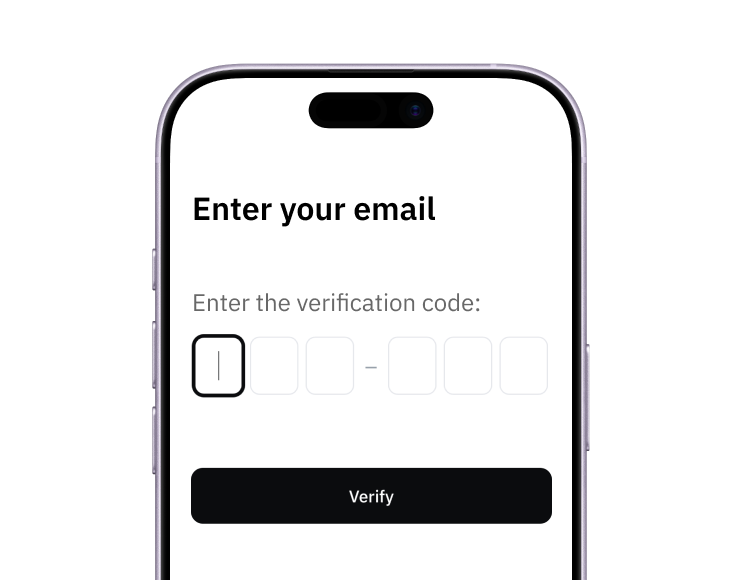
1. Sign up
Create your account from a web browser. No need to download an app.
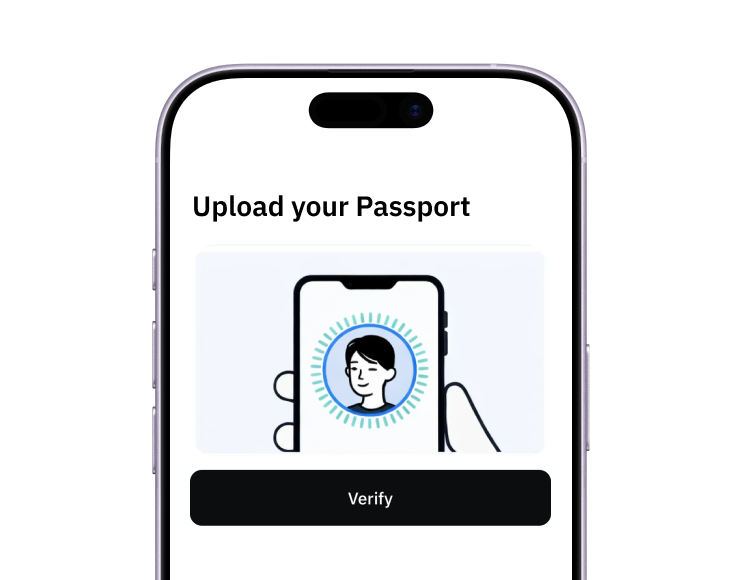
2. Verify
Verify you're a real person in 3 minutes. No US residency required.
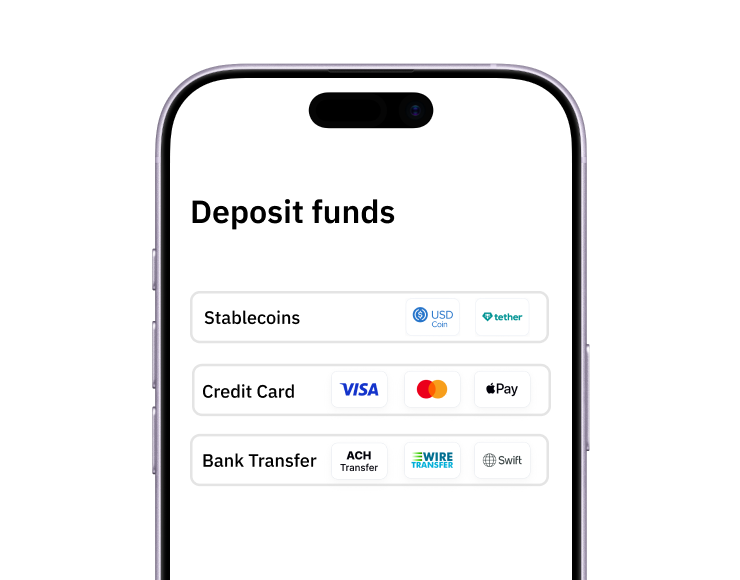
3. Fund
Add funds with a debit/credit card, bank transfer, stablecoins, or crypto.
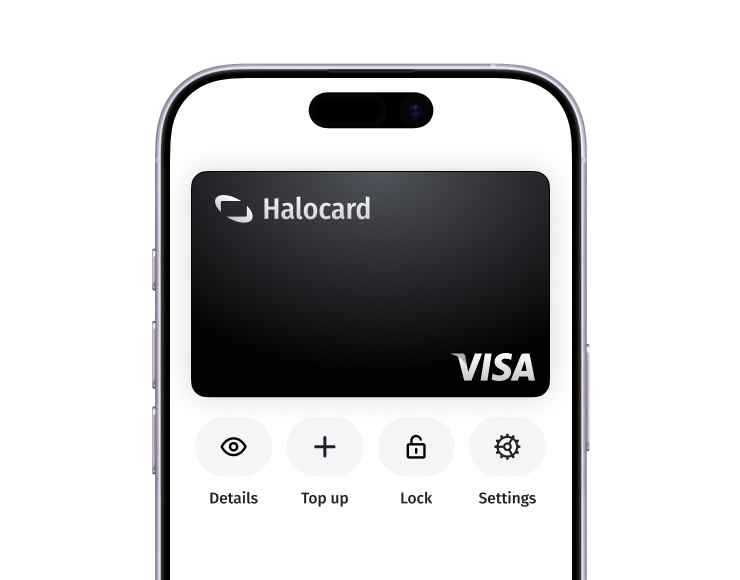
Pay with Halocard
Pay online and in-person wherever Visa is accepted. You can also order a physical Halocard if you prefer.